

PART THREE: FOLLOW THE MONEY. THEN FOLLOW THE RISK.
Let’s talk about money because conversations about breeding always seem to land in one of two places. Either ethical breeders are expected to lose money because breeding should be done only for love, or anyone questioning the price of a puppy is told they do not understand what responsible breeding costs. Neither position tells the whole truth.
Health testing, veterinary and reproductive care, quality food, grooming, equipment, training, travel, stud fees, neonatal supplies and raising puppies properly require substantial resources. Knowledge, labor, lost sleep and decades spent studying a family of dogs also have value. There is nothing dishonorable about earning a profit from skilled work, and no accomplished breeder should apologize for charging an appropriate price.
Before comparing breeding with veterinary medicine, dentistry, education or any other profession, however, we need to admit something that does not get said nearly enough. “Breeder” is a self-given title.
Veterinarians must complete accredited education, pass examinations, obtain licenses and answer to professional oversight. Dog breeding has no universal credential demonstrating competence in genetics, structure, reproduction, pedigree analysis or generational stewardship. Some jurisdictions license commercial establishments, but permission to operate is not proof of mastery. One person may have studied for thirty years and followed several generations into old age, while another may have studied for thirty minutes, ordered a DNA panel and built an impressive website. The public is still handed the same word for both people: breeder.
That does not mean genuine expertise has no value. It means the title itself proves nothing.
Here is where money becomes interesting because buyers cannot always distinguish experience from the appearance of it. A clean nursery, testing logos, socialization videos, beautiful photographs and current language about enrichment are visible immediately. Recurring illness, unstable temperament, infertility, poor longevity and the breeder’s willingness to record problems honestly may not become apparent for years. Good grief, almost anything can be made to look professional online.
The puppy is sold today. The truth about the breeding may arrive much later.
So who receives the money now, and who pays afterward?
A family may eventually carry the veterinary expense of inherited disease or the cost of managing difficult behavior. Rescue may inherit a failed placement, while future breeders and the breed itself absorb the consequences of poorly selected or inaccurately documented dogs. A program can appear successful because many of its real expenses have been postponed and transferred to other people.
Profit is not the enemy. The revealing questions concern who receives the reward, who accepts the risk and who absorbs the loss when a decision goes wrong.
A failed health result, unsuitable mating or female needing more recovery may require retirement, returned deposits or an abandoned litter. Admitting that a puppy’s serious condition is part of a larger pattern may affect future sales, and older dogs continue needing excellent care after contributing nothing financially. Character becomes visible when responsibility requires losing money, surrendering an opportunity or acknowledging something the breeder would rather not see.
Breeding also allows people to collect immediate rewards and leave before the consequences become known. Some stop after experiencing parvo, emergency surgery, fading puppies, irresponsible families or overwhelming expenses. There is no shame in discovering that breeding is not the life someone expected, but the decisions already made do not disappear. The descendants continue, sometimes without anyone remaining long enough to recognize repeated disease, temperament or reproductive weakness.
The number of litters produced should never be confused with experience. Meaningful knowledge is found in the generations followed, the accuracy of the records maintained and the changes made after uncomfortable results appear. Longevity alone does not prove excellence because poor choices can be repeated for thirty years, but generational stewardship cannot exist without time. Genetics has never agreed to reveal everything according to our selling schedule.
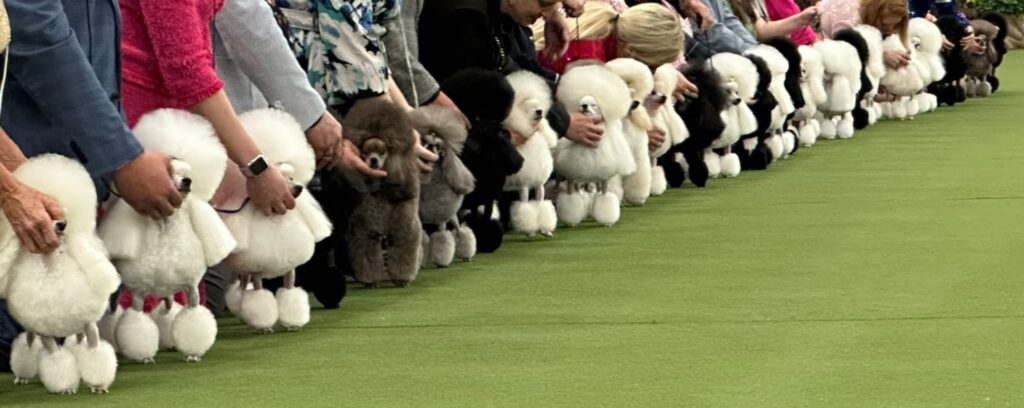
The Standard Poodle’s mid-century bottleneck demonstrates what can happen when immediate rewards overpower population thinking. Successful bloodlines became heavily represented, leaving considerable diversity badly distributed and contributing to increased inbreeding associated with Addison’s disease and sebaceous adenitis. Those breeders were not necessarily trying to cause harm. Many were pursuing beautiful, winning dogs, but the reward was immediate while the biological cost required generations to become visible.
Cash is not the only return capable of distorting judgment. Winning, recognition, social standing, control and the need to remain important can influence breeding just as powerfully. Someone may lose money on every litter while keeping too many dogs, repeating questionable combinations or producing more puppies because the desired reward is identity rather than income. Claiming never to make a profit proves very little. Tax returns cannot measure stewardship, and poverty does not prove sincerity any more than wealth establishes competence.
Price offers no reliable answer either. A modestly priced puppy may represent decades of knowledge, while an expensive one may reflect thorough evaluation and lifelong support or simply fashionable demand and excellent branding. “Rare” may be one of the most profitable words in modern breeding because unusual colors, extreme sizes and fashionable crosses photograph beautifully and create urgency. Restraint is harder to sell because nobody can photograph the litter that was never produced, the unsuitable home refused or the valuable dog retired after a disappointing result.
Doodles illustrate this market particularly well. Buyers are promised intelligence, reduced shedding, family friendliness and hybrid vigor, while labels such as F1, F1B and multigenerational make the process sound exact. Those labels describe a sequence of crosses without guaranteeing structure, coat, temperament or health. Mixing breeds may reduce the expression of certain recessive conditions, but it can also introduce risks from both populations. Greater diversity is not an automatic guarantee of health any more than purebred status is.
Some doodle breeders invest heavily in testing, puppy development and family support, and that care should be acknowledged. It still does not answer why the cross occurred, what stable population is being created or who will remain accountable several generations later. Raising a litter well and stewarding a breed are not the same responsibility.
Different countries create different obstacles. In the parts of Europe where I lived and bred, space was more limited, specialized testing sometimes required sending samples from Romania to laboratories in countries such as Germany, and registration systems gave breeders varying levels of influence over whether descendants reproduced. Many people bred briefly without the room or resources to maintain several generations.
The United States generally offers easier access to laboratories, health databases, reproductive services, physical space and AKC limited registration. That restriction prevents offspring from being registered rather than physically stopping reproduction, so it remains a tool rather than complete control. America provides better infrastructure for long-term programs while maintaining an enormous marketplace where polished presentation can make almost anyone appear established. Neither system reliably separates the person producing puppies from the one accepting responsibility for generations.
It is easy for breeders to question what veterinarians, professors and other professionals earn, then argue that choosing a vocation should place service above money. Service matters, but fulfillment does not repay debt, employ staff or maintain a practice. Breeders must apply the same examination to themselves while remembering that those professions require education and credentials before someone may claim the title.
Before asking what a breeder deserves to earn, perhaps we should ask what she has done to establish the value being claimed. Education, mentorship, independent evaluation, records, generations followed, failures acknowledged and costly opportunities surrendered reveal far more than a website or purchase price.
A sustainable program should be capable of caring for every dog through an unsuccessful mating, a small litter, an emergency or an entire year without puppies. Breeding may help support the dogs, but reproduction should never become the condition upon which their safety depends. The clearest measure may be whether the breeder can say no when yes would bring money, attention or another opportunity to grow.
I have always believed that we should live for our dogs, not off our dogs. That does not require financial struggle or denying the value of our labor. It means dogs must never become units of production expected to maintain a lifestyle, finance expansion or satisfy ambition.
Follow the money, but do not stop after finding the person who received it. The risk may have traveled elsewhere, and accountability may not be tested until the photographs are forgotten, the payment has been spent and responsibility has become terribly expensive.
The breeder receives the money today. The family, the veterinarian and the breed may not receive the bill until years later.
What kind of breeder are you really?
The answer may be found in who is still standing there when that bill finally arrives. ♥️🐾♥️


Leave a Reply