

Part 6 of The Breeder You Become series
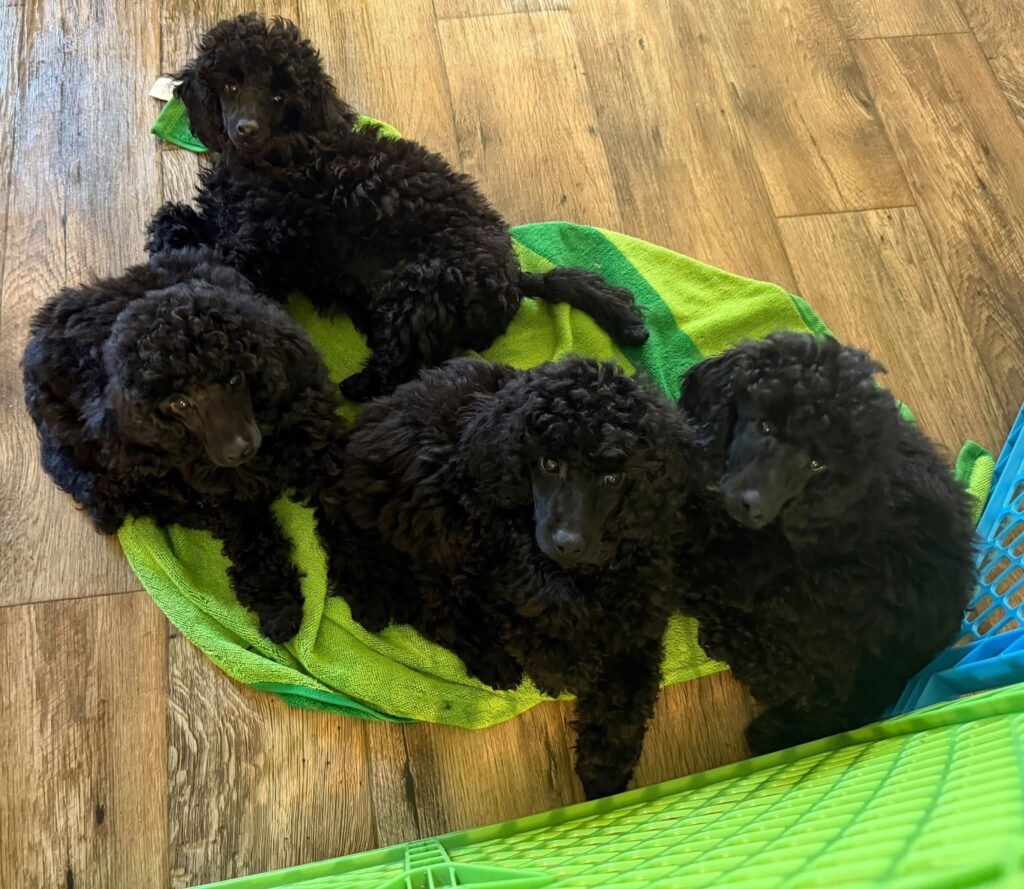
I was sitting on the floor beside a litter one evening, watching puppies who were still young enough to move with more determination than coordination, when one of them stopped in the middle of the pen and studied me. Nothing miraculous happened. She did not strike a pose or perform some brilliant little behavior proving that generations of planning had finally delivered greatness into my living room. She simply lifted her head, settled her eyes upon my face and appeared to consider whether I was worth the trouble of walking toward. Another puppy had already climbed into my lap without conducting any investigation at all, while a third was attacking a towel with enough conviction to suggest that the towel had somehow offended his entire family. Eventually, the thoughtful puppy came over, sat beside my knee and watched the others for a while before joining them.
Breeders notice these small moments, although experience should teach us not to turn every ordinary puppy behavior into prophecy. Puppies change, confidence comes and goes through developmental stages, and one quiet afternoon cannot tell us what an adult dog will become. Still, there was something familiar in the way that puppy studied the room before entering it, something I remembered seeing in another dog several generations behind her. The resemblance was not obvious enough to photograph and probably would have meant nothing to anyone else, but for a few seconds several generations felt as though they were sitting in the room with me.
That may be one of the most difficult parts of breeding to explain to someone who has never carried a family of dogs through time. A breeder can spend years looking for a particular quality and then catch the faintest glimpse of it in an unfinished puppy doing something completely ordinary. The moment passes, the puppy runs off to help murder the towel, and there you are wondering whether you have just recognized something important or merely seen what you hoped to see.
This is the dog breeders mean when they say they are trying to produce something they cannot simply go out and buy. The complete dog does not exist yet. Pieces of that possibility live in different families, in old pedigrees and in the memories of people who knew the ancestors before photographs and health databases told only part of their story. One line may carry longevity, another beautiful structure, while a less fashionable branch quietly holds the fertility, mothering ability, stable nerves or physical resilience nobody bothered celebrating until those qualities became scarce. The breeder begins with those fragments and builds a picture of what they might become if brought together wisely.
Of course, this is also where trouble begins, because the picture in the breeder’s mind is always much more cooperative than genetics.
We speak easily about improving a breed, but improving it toward what? The person preparing dogs for the show ring may place tremendous weight on type and movement. A performance breeder will notice drive, trainability and endurance. Families living with the dog every day may care most about temperament, adaptability and whether that beautiful body will remain comfortable at twelve or fourteen years old. A preservation breeder has to care about all of it, which sounds noble until the qualities refuse to arrive together.
An extraordinary example of breed type may come from a family carrying health concerns. A dog with valuable genetic diversity may lack the fashionable finish currently winning in the ring. Excellent temperament can stand beside mediocre structure, and remarkable longevity sometimes belongs to dogs nobody would feature in an advertisement. Meanwhile, the magnificent male everyone wants may already appear in so many pedigrees that using him again offers the population less than the plain but valuable dog standing outside the spotlight. No mating gathers virtues without gathering risk, and no amount of enthusiasm changes that.
The imagined dog therefore needs more than a list of attractive features. The breeder must know which compromises remain tolerable and which would betray the program. Health and stable temperament create moral boundaries. Functional structure affects how the dog will experience life inside its own body. Diversity determines whether breeders twenty years from now will still have meaningful choices. Beauty matters too, because breed type is not decoration added after everything serious has been considered. Preserving a breed while allowing it to become unrecognizable makes no more sense than preserving its appearance while health, temperament and reproductive strength disappear underneath it.
Everyone says health matters when the healthy dog is also the beautiful one they want. The statement becomes meaningful when the most exciting prospect carries a concern. Stable temperament is easy to praise until the difficult dog keeps winning, while diversity sounds important until using a less fashionable family threatens the predictability of a litter. Convictions reveal themselves when keeping them costs us something.
The dog that does not exist yet becomes dangerous when the dream begins editing the evidence. A beautiful pedigree encourages optimism, money already spent creates pressure, and years of waiting can make postponement feel unbearable. Photographs travel back and forth, health records are studied, contracts are discussed, and travel, timing, semen and costs begin fitting together. By the time troubling information appears, the imagined puppies can feel so real that stopping resembles losing something, even though no puppy has been conceived.
I understand that pull because planning creates emotional momentum. Once we can see the puppy in our mind, we may begin defending the possibility of that puppy instead of evaluating the dogs standing in front of us. The question quietly changes from “Is this breeding reasonable?” to “Can I find enough reasons to go forward?” That is where stewardship must become stronger than imagination, because a dream should never be allowed to correct the evidence on its own behalf.
Nearly every mating contains the possibility of one wonderful puppy, but biology does not produce only the puppy the breeder plans to keep. It produces the entire range. One may inherit the desired structure without the temperament, another the coat and movement along with a health weakness from both directions, while several become lovely companions who offer nothing the program needs in another generation. Two individually excellent parents can still produce a disappointing combination because inheritance does not consult the breeder’s vision before distributing its pieces.
None of this makes those puppies worthless. It makes the breeder responsible for what was actually produced and not merely for what was intended.
People often call breeding an art, and I understand the comparison. Selection requires an eye, intuition, historical knowledge and the ability to imagine how qualities from different families might meet. Years at the piano taught me how much judgment lives between what can be written on a page and what must be understood through practice. A musician learns where strength belongs, where restraint serves the whole, and when something technically correct still has no life in it. Breeders develop a similar instinct, but the comparison ends at a very important place. A pianist can repeat a passage after playing it badly because the wrong notes disappear into the air. A painter can cover an unsatisfactory section. A puppy cannot be erased because the combination failed to resemble the picture.
Working with living material changes the moral terms of creativity. Every puppy arrives with needs, relationships and a future independent of the breeder’s ambition. The one who will never enter a show ring still deserves a functional body, a temperament suited to life and a family selected with care. A prospect removed from a program after health testing has not become a failed dog, and the breeder’s disappointment cannot be allowed to reduce that animal’s value. Whatever creative satisfaction breeding gives us must remain contained by the fact that we are not designing products.
Working within a recognized breed brings a different responsibility because improvement must occur without discarding the identity entrusted to us by those who came before. Classical music has form, harmony has relationships and rhythm imposes order, yet those boundaries do not destroy expression; they make expression meaningful. A breed standard cannot describe every genetic, medical or ethical duty, but it prevents personal taste from becoming the only authority. Without that larger reference, repeated traits become “our look,” weaknesses acquire affectionate explanations, and the dog being pursued slowly turns into a private invention.
Looking forward responsibly also requires searching backward with discipline. Grandparents, siblings, previous offspring and maternal families contribute to the probability long before the parents meet. Fertility, puppy survival, mothering ability, chronic disease and cause of death belong beside titles and photographs, while judges, veterinarians, fellow breeders and puppy families each hold different pieces of the evidence. Silence cannot be mistaken for proof of health; it may only mean nobody asked, recorded, diagnosed or wanted to tell the breeder.
Much of the truth lives in pet homes. Those families see allergies, anxiety, digestion, trainability, recovery after stress, orthopedic comfort and the shape of aging long after the show photograph has been taken. The dog of the future cannot be built responsibly from show dogs alone because a breed is lived with far more often than it is exhibited.
The market and the show ring create their own momentum. Social media can make an eight-week-old puppy more influential than a twelve-year-old relative still moving comfortably, because dramatic photographs travel farther than quiet reports about longevity, fertility and stable nerves. Winning can confirm genuine strengths, but it also makes a family harder to question. The popular-sire effect rarely begins with a poor animal; it begins with an excellent one used so widely that the next generation can scarcely find a pedigree without him. Preservation may require the less fashionable dog, fewer inquiries and no immediate prestige, because demand proves only that people want something and not that producing it serves the breed.
Nature further complicates the plan by refusing to obey our confidence. A carefully studied litter can rearrange every expectation. One puppy resembles an ancestor nobody considered influential, a quality thought to be fixed disappears, or the weakness targeted by the mating improves while an unrelated concern surfaces elsewhere. Preparation changes probability, but it does not issue orders to life.
Good husbandry matters before conception, throughout pregnancy, during development and for the rest of the dog’s life. Nutrition, maternal health, stress, movement, environment and early experience influence how genetic potential is expressed because genes do not enter an empty room. Even so, no rearing method, including the natural practices closest to my own heart, should be used to explain away inherited patterns that ought to change selection. We can prepare the soil with great care, but we cannot command the weather or decide how every seed will grow. Nature deserves respect, not romanticism.
Perhaps the most honest breeding goals describe direction rather than perfection. A program can move toward greater longevity, steadier temperament, more functional structure, broader diversity and stronger reproductive health without achieving every goal in every puppy. Correcting one weakness may uncover another, and progress can be real without being complete. A breeder who needs every puppy to validate the mating will eventually distort the evaluation, excuse faults and keep unsuitable prospects because changing direction feels too much like admitting failure. Maturity allows disappointment without turning the dog into the disappointment.
The hoped-for puppy may never arrive, and that possibility belongs in the decision before the breeding occurs. Money, years of planning and emotional investment do not create an entitlement to the result. The bitch may remain empty, the litter may contain no keeper, or the beautiful prospect may fail a health test. Starting again hurts, but producing another litter immediately to repair that feeling can do far more damage than accepting the loss. Sometimes the dog that does not exist yet should remain nonexistent for another year.
Biology will argue against waiting. A female’s reproductive window is limited, a particular male may become unavailable, and valuable genetics really can disappear. Those facts deserve weight, but urgency cannot receive automatic authority merely because an opportunity has an expiration date. Scarcity makes ordinary judgment feel optional, and the word preservation becomes especially convenient when a breeder already wants the time-sensitive thing.
The vision needs enough strength to guide choices and enough flexibility to yield when evidence changes. Imagination helps us see the dog that might be possible; stewardship keeps our eyes on all the other dogs who may arrive instead. Many breeding programs mature or lose their way in the distance between those two responsibilities.
The dog in the breeder’s imagination should change as the breeder changes. A litter may offer information instead of the keeper hoped for, sometimes at a price nobody would willingly pay, and an honest breeder uses that information rather than hiding or dismissing it. Years spent in veterinary medicine pull health into sharper focus, living with seniors changes the meaning of sound structure and longevity, and reports from puppy families deepen our understanding of adaptable temperament. Wisdom revises the picture; stubbornness keeps defending the first draft.
Personal ambition should occupy less of that picture as the breeder matures, leaving room for what the breed actually needs from the program. Wanting to produce the best dog we have ever owned is understandable, but the kind of dog one person wants may already exist abundantly while a less fashionable family holds something the population is losing. Population thinking rearranges personal preference, and accepting that may be one of the clearest differences between producing puppies and becoming a preservation breeder.
The vision can no longer end at the boundary of one kennel. Sharing a valuable dog may matter more than owning every important descendant. Preserving semen may accomplish more than keeping another male at home, while placing an exceptional prospect with the right person can protect a family better than holding the dog where opportunities are limited. Nobody preserves a breed by creating one perfect family and guarding it until it disappears. A living inheritance has to move.
When I think back to the puppy who paused to study me, I know that the quality I noticed may become important or may remain one small moment in an unfinished life. Time will decide how much meaning the observation deserves, and uncertainty does not make the moment empty; it makes careful watching necessary. Breeders live in the space between what they recognize and what they cannot yet know, trying to hold enough imagination to see possibility, enough knowledge to shape probability and enough humility to accept the result as a living dog rather than a verdict upon their talent.
Every so often, generations do come together in a way that feels almost impossible. Structure holds, temperament settles into the balance hoped for, health remains strong and movement stays free as the dog grows old. A family writes years later to say that the promise seen in the puppy survived ordinary life, which may be the most meaningful report of all. Such a dog did not appear through magic or through the breeder’s will alone. Study, selection, sacrifice, previous breeders, puppy families, environment, chance and grace all had a hand in bringing that animal into the world.
The purpose was never to manufacture an ideal dog who could prove that we were clever enough to imagine it. Our responsibility is to guide a living population carefully enough that something valuable becomes more possible without forcing the real dogs born along the way to pay for the picture in our minds.
The dog who does not exist yet may give the breeding direction, but the dogs who do exist must give it conscience. Stewardship begins when the breeder knows which one must matter more.


Leave a Reply