

Part 12 of The Breeder You Become series
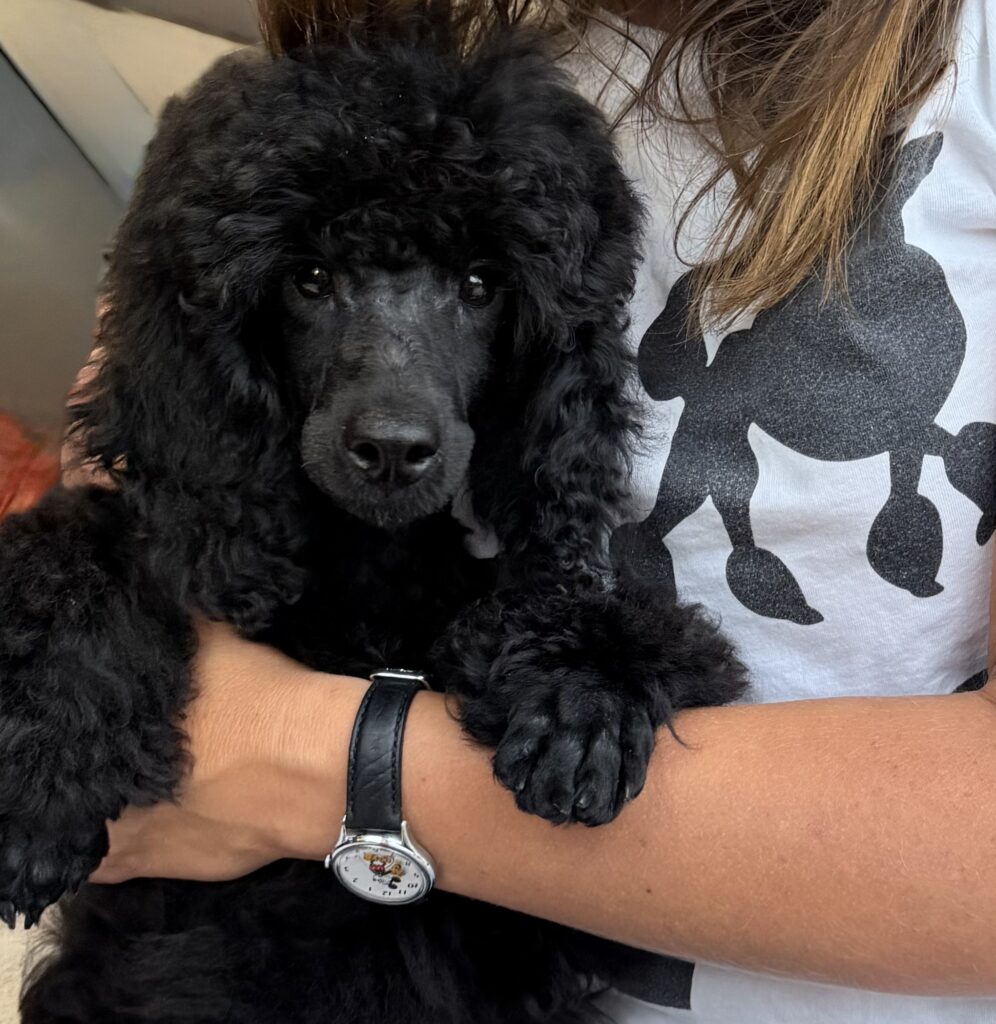
I watched another puppy leave recently and, as always, I had already said everything I could think of saying before the car ever pulled away. I had talked about food, sleep, travel, stools, stress, adjustment, what was normal, what might not be normal and when to call me, and I am fairly certain I repeated several things because sending a puppy home has never felt to me like handing somebody a bag, wishing them luck and going back inside. I know how that puppy was conceived, what his mother ate while she carried him, how he entered the world, which puppy first opened his eyes, who startled at a new sound, who recovered quickly and who needed a little more time. I have watched every meal, every interaction and every small piece of personality come together, so when one leaves there is a part of me that wants to reach through the car window and go along just to make sure everybody does it right.
The car eventually disappeared down the road, because of course it did, and I went back into a house that felt different without that puppy in it. The family would now be the one watching him sleep, learning what his eyes meant, discovering the silly things that made him happy and figuring out what he needed on an ordinary Tuesday when no breeder was standing nearby with instructions. I could remain available, answer questions and care deeply about every decision, but the relationship had changed because the puppy could not build his new life while I continued trying to live it for him from a distance. That is a mighty uncomfortable truth for somebody who has spent months being responsible for every breath, bite and bowel movement, yet somewhere between raising a puppy well and placing him well, a breeder has to open her hands.
I have thought about that moment quite a bit because breeders use the word “my” all day long without thinking much about what it means. My dog, my puppy, my line, my breeding, my kennel, my contract, my family of dogs. Most of the time the language is perfectly reasonable since dogs are property under the law, breeding programs require someone to make decisions and years of sacrifice do not suddenly become less personal because we call the work preservation. Still, there is a difference between saying, “This has been placed in my care,” and saying, “This exists for me to control,” and the distance between those two thoughts is not nearly as wide as we would like to believe. Preservation can become possession while the breeder is still using all the correct words and believing with her whole heart that she is only protecting what she built.
Nobody begins by announcing that she intends to control every person, dog and decision for the next thirty years. Control usually walks in wearing the clothes of protection, and frankly it has plenty of good reasons to look convincing. A breeder spends years building a family, makes expensive mistakes, learns lessons the hard way and then watches other people breed dogs without testing, ignore contracts, hide health information or take carefully developed genetics and behave as though the work began with them. After enough disappointment, the natural response is to tighten the gate because once you have watched something valuable handled carelessly, trusting anybody with it again feels a whole lot like volunteering to be hurt twice. The trouble is that a gate built to keep irresponsibility out can eventually keep the future out too, especially when nobody remembers to build a way through it.
Protection matters. Most puppies should live wonderful lives as companions without ever producing a litter, and a family wanting a pet does not need breeding rights just because they paid for a puppy. Careless matings can spread disease, unstable temperament and structural problems far beyond one household, so limited registration, carefully written contracts, co-ownerships and breeding restrictions all have legitimate purposes. Saying no does not automatically make somebody a gatekeeper, and refusing a mating does not mean a breeder is selfish. Sometimes no is the most responsible answer available. The question is whether no protects the dog and the breed for a reason that can be explained, or whether no has become the only answer unless the original breeder remains in charge forever.
Established breeders often say they are worried about losing genetic diversity, valuable families disappearing and younger people not stepping forward, yet some of those same breeders will not place anything useful unless every meaningful decision remains under their authority. A newcomer can attend shows, study pedigrees, help with litters, complete health testing and spend years proving that she is serious, only to receive dogs nobody established wants to use while being told she must first demonstrate what she can produce. Come on. If a person is expected to prove her value to preservation with dogs that cannot meaningfully contribute to it, there is no pathway into the work. There is an entrance guarded by people insisting the door is open while standing directly in front of it.
Trust should be earned, but opportunity has to appear somewhere. A beginner needs help reading health results, understanding what a pedigree does not say, evaluating puppies and learning that the most exciting dog in the room is not always the wisest dog to breed. Shared decisions and appropriate safeguards can protect everyone while judgment develops, and there is nothing insulting about admitting that experience matters. What should change is the amount of freedom granted as competence grows. Years of responsible work ought to mean something. When a learner is no more trusted after demonstrating sound judgment than she was on the day she arrived, the relationship was likely designed to create a permanent follower rather than another steward.
A good mentor should hope to become less necessary, which is not the same thing as becoming unimportant. Wisdom remains valuable after authority is gone, and advice freely requested probably means more than permission demanded by a contract. The younger breeder may eventually choose a different male, keep a puppy the mentor would have placed, emphasize another quality or reject a breeding everybody expected her to make. Some decisions may turn out to be mistakes because every breeder makes mistakes, including the experienced one who now finds it convenient to forget her own. The possibility of error cannot justify permanent control because a program governed forever by one person has no successor. It has assistants waiting for instructions, and when the person giving those instructions is no longer able to speak, the whole thing stops.
Part 12 looked at what happens when the program and the person become so closely connected that questioning a breeding decision feels like questioning the breeder herself. Possession is one of the places where that confusion shows up because sharing genetics begins to feel like giving away a piece of one’s identity. Another kennel may succeed with descendants of dogs we bred. A younger person may produce the dog everybody notices. Future generations may carry different names and reflect choices we would not have made, and that can sting because we do not see a few names printed on a pedigree when we look at our dogs. We see the old girl who slept beside the whelping box, the breeding that failed, the puppy we could not save, the years spent waiting and the nights nobody else knew we were awake.
That history deserves acknowledgment. Erasing the breeder who built the foundation is dishonest, and younger breeders should not behave as though a family appeared under their kennel name through divine delivery with no work behind it. Recognition, however, is not ownership of every future success. Once genetics travel through generations and other people make careful selections of their own, the work belongs to a chain of stewardship in which each person received something, changed something and hopefully passed forward something useful. Nobody created the breed alone, no kennel owns the ending and, like it or not, genetics do not lose value because somebody else receives the applause. Credit matters to people while continuation matters to populations, and confusing those two can leave us protecting our contribution until there is nothing left for anybody to credit.
Contracts tell us a great deal about which purpose is leading. A stewardship contract protects the dog from abandonment, irresponsible reproduction and serious neglect, clarifies what happens when life changes and makes expectations honest before somebody falls in love with a puppy. That is responsible breeding. Trouble starts when the document reaches into every ordinary household decision and treats any disagreement as evidence that the family does not love the dog enough. Food, vaccines, grooming, training and veterinary care deserve thoughtful conversations, especially when a breeder has built a program around particular health practices, but education cannot become lifelong surveillance. The family lives with the adult dog every day, forms the deepest attachment and eventually knows that individual in ways the breeder cannot know from several states away. Their judgment has to matter because one cannot transfer the daily work, the expense and the worry while pretending no authority was transferred with it.
I understand how hard that is because I want updates, details about what the puppy is eating, a picture of the stool when something looks wrong and a phone call before a small problem becomes a large one. Caring does not end when the puppy leaves, nor should it. The work is learning how to remain close enough to help without hovering so heavily that the family never feels trusted to know their own dog. If every mistake brings threats, punishment or reminders about who bred the animal, people eventually stop calling, and then the contract that was supposed to protect the dog has destroyed the honest relationship most likely to keep the dog safe. Families should be able to bring us uncomfortable news without first wondering whether we will use their honesty against them.
Serious neglect, abuse or danger may require intervention, but disagreement is not automatically danger and a dog should never become a weapon in a fight between people. Removing an animal from the only family it remembers may satisfy a clause while causing the very harm the document was meant to prevent. Legal authority answers what somebody can do, not always what she should do, and those are not the same question no matter how impressive the contract sounds. Stewardship keeps the living dog in the center of the decision. Possession keeps the breeder’s right to win there.
Co-ownerships make the difference even more important because ownership may be shared on paper while power is anything but equal. One person often holds the reputation, experience and connections needed to move comfortably through the breed community, while the newer breeder provides daily care, pays expenses and worries that one disagreement could cost the dog along with every future opportunity. A signature obtained years earlier does not turn fear into consent for the rest of the animal’s life. Healthy collaboration defines who pays, who works, who benefits, who carries the physical risk and how either person can say no without retaliation, then returns to those questions as the dog matures. Plans written for an eight-week-old prospect cannot outrank the adult standing in front of everybody now.
Guardian homes carry a similar promise because a dog can receive an individual family while the breeder avoids keeping more animals than one household can serve well. Done thoughtfully, the arrangement can be a beautiful answer to a very real problem. Done poorly, it allows a program to expand while somebody else provides the housing, food, grooming and love, yet has little voice when reproductive decisions are made. Calling a person a guardian does not settle whether the arrangement serves the dog. We still have to ask how easily the dog leaves her household, who recognizes when the disruption has become too much, whether the family can advocate without fearing permanent loss and who has the courage to say she has had enough even when the contract permits one more litter. Another person’s attachment should never become leverage for extracting every possible reproductive contribution from a dog.
Males are easier to overlook because they do not carry pregnancies, but possession can distort their use just as quickly. An outstanding stud begins producing beautiful offspring, requests increase, his name appears across pedigrees and influence starts feeling an awful lot like importance. Popular sire effect is a population-genetics problem, although sometimes it is also a very human problem wearing scientific clothes. Owning a valuable male does not mean owning unlimited space in the breed’s future. The sensible question is not how many acceptable females could be bred to him, but how much of his contribution the population needs before other families and less fashionable answers deserve room. Too much of something good can still narrow the road until everybody discovers they have traveled through the same dog.
Careful stewardship does not require approving every stud request or sharing rare genetics with anybody who knows how to ask nicely. Health, temperament, structure, relatedness, the purpose of the mating and the honesty of the people involved should all influence the decision. Friendship and social rank should not quietly outweigh population need, nor should access depend upon whether a breeder has learned whom to flatter. Nobody is entitled to another person’s dog, but individual rights do not erase collective consequences. When useful families move only among a shrinking circle of people who already own similar dogs, everyone may be exercising a legitimate right while the breed pays the bill.
Frozen semen lets the same problem outlive the dog. Stored collections can preserve valuable options, provide distance from what later becomes common and allow future breeders to use genetics with information that did not exist during the male’s lifetime. Storage by itself is not preservation. Semen held until the owner dies, records disappear and heirs have no idea what is sitting in the tank has preserved control rather than a family. Caution may be justified for years while health information develops or the right use has not appeared, but caution still needs a plan. Somebody else should know where the collection is, why it matters, who can make decisions during illness and what circumstances would allow its use. “I own it” may be legally correct, but it is mighty poor succession planning.
Records need the same open hand because breeders know far more about their families than public databases will ever show. A pedigree and a row of health certificates cannot tell another person about the fertility trouble, the odd temperament pattern, the failed breeding, the relative who lived to seventeen or the one who seemed healthy until she did not. Privacy matters because puppy families should not have their personal lives published and rumors should never be polished into facts. Secrecy protecting status is different from privacy protecting people. When another breeder is considering the same family, relevant health, temperament, reproductive and longevity information belongs in the conversation. The consequences will be shared by the breed, so the truth needed to make the decision cannot remain one person’s private property.
I do not think the answer is for breeders to throw every gate open, hand out breeding dogs like candy and hope everybody behaves, because that is not an open hand but an absent mind. A better answer begins with knowing why the hand is closed, what would allow it to loosen and whether anything valuable can survive if it never does. Before keeping control over a dog, a person, a contract or a piece of genetic material, we ought to be honest about what we are protecting. The concern may be the dog’s welfare, incomplete health information, a rare family vulnerable to careless use or the uneasy possibility that another breeder may succeed without needing our permission. Only one of those becomes smaller when hidden behind prettier words.
Time belongs in that evaluation because restrictions without a point of reassessment have a sneaky way of becoming permanent. A young dog may remain unavailable until testing is complete. A developing breeder may begin with shared decisions and earn greater freedom through responsible work. Frozen material may be held until a suitable female or a genuine population need appears. A co-ownership may protect a beginner while including a clear path toward independence. Protection makes sense when it is moving toward something. Possession simply keeps adding locks and calls the room secure.
Creating more than one responsible branch may be one of the strongest ways to protect a valuable family. A line held in a single kennel remains vulnerable to illness, financial trouble, infertility, conflict, disaster and the ordinary truth that breeders age. Carefully selected collaborative homes can give individual dogs more attention while giving the genetics more than one road into the future. Those branches will not remain identical, and honestly they should not. Different breeders notice different strengths, face different problems and make different choices. Shared information and honest conversation can keep the work connected without requiring every branch to grow in the same direction or beneath one person’s shadow.
Possession notices the danger of letting go while ignoring the danger of holding too much. A breeder can look around a full house and find a perfectly reasonable explanation for why every dog must remain because each one carries something valuable and nobody else feels completely trustworthy. Well, complete trust does not exist. Keeping every dog does not remove human fallibility because the breeder is human too, with limited time, money, space, strength and attention. The real comparison is not between a risky placement and perfect personal control. It is between different kinds of risk, including the risk that an overwhelmed home reduces the quality of life for every dog already in it. Some dogs must remain because they are deeply bonded, difficult to place or genuinely essential to the next step. Others may live better and make the family more secure in a thoughtfully chosen collaborative home. Holding tighter is not always the safer choice.
The breeder who shares everything is not necessarily generous, and the breeder who refuses something is not necessarily controlling. The safest person is the one who can explain what is being protected, what evidence might change the decision and how the valuable thing in her care will live beyond her. A preservation plan should contain a door even when wisdom says the door needs to stay closed today. Written succession instructions, honest records, growing authority for competent mentees, fair agreements and genetics established in more than one household are not signs that standards were lowered. They are signs that the program was built to survive ordinary human vulnerability.
Opening the hand can sound like surrender to people who have spent a lifetime being told that responsible breeders must control every possible outcome. That is not what it means. An open hand can hold, guide, protect and sometimes refuse. It simply does not squeeze until the thing being protected can no longer move or breathe. Loving a family of dogs does not give us the ability to govern it forever, and admitting that is not an insult to the work. It may be the final responsibility created by the work.
The irony is that rarity often makes possession more tempting. As a family becomes harder to find, fear increases, access narrows and the breeder waits for a person or mating perfect enough to deserve it. Years pass while the last intact dogs age. Eventually one older breeder holds the remaining representatives, trusts nobody completely and runs out of time. The line was never misused or bred badly, and nobody stole the credit. Nothing terrible happened except that nothing happened at all, and preservation quietly became remembrance while everybody was still protecting it.
Moving back toward stewardship does not require one dramatic giveaway. It may begin with reviewing a contract and removing authority that no longer protects the dog, allowing a responsible co-owner to make decisions she has already proved capable of making or telling another breeder the uncomfortable health information she needs before choosing a mating. A guardian agreement can define reproductive limits and retirement before ambition enters the room. A stud owner can decide that enough offspring exist even while requests keep arriving. Frozen semen and private records can receive written instructions before an emergency. Trusted people can be invited into the real work while there is still time to teach them rather than being handed a mess after illness or death leaves no other choice.
The person who eventually carries the work forward will not become a copy of the breeder who opened the door. She will have different experiences, ask questions the mentor did not ask and perhaps leave behind ideas the original breeder once considered essential. Future breeders will face problems we cannot see and possess information we never had, so they need standards, history and room to think rather than a script they are forbidden to question. The dogs remain the boundary. Any collaboration reducing their welfare is wrong. A contract turning them into leverage is wrong. Repeatedly using an animal to protect a kennel’s relevance is wrong. Hiding information to defend a reputation is wrong. Beyond those boundaries, capable people have to be allowed to develop judgment of their own.
Preservation and possession can produce the same answer for a while. A dog stays with the breeder, a mating is refused, genetics remain unavailable and records are kept private until facts are confirmed. The difference appears over time because stewardship prepares what is valuable to survive beyond the steward, while possession keeps tightening until nothing can move without permission. One creates people capable of continuing the work, including people capable of disagreeing. The other creates dependence and calls it loyalty.
When I think again about that puppy leaving, I know opening my hands did not mean I stopped loving him, caring what happened or feeling responsible for the decision that placed him there. It meant accepting that his life had to become larger than my home and that the family waiting to love him needed room to become his family rather than permanent guests in my breeding program. I could give them everything I knew, remain one phone call away and step forward when they needed me, but I also had to let them learn him. That was not losing the puppy. That was completing the placement.
The same is true of a breeding program. Its greatest success is not measured by how much one person owned, how many decisions required her approval or how carefully every piece remained beneath her name. The better measure is what remains capable of living well and continuing honestly when she is no longer able to carry it. Trusted people should understand the dogs. Important information should exist beyond one person’s memory. Valuable genetics should not depend upon one household surviving every crisis. Relationships should be strong enough to hold honest disagreement, and the dogs should remain safe when money, health, family or age changes the plan.
Nobody stays strong forever, and a preservation program should understand that before life proves it.
Opening the hand does not erase the breeder’s contribution. It completes it. Healthy dogs living well, honest knowledge guiding future decisions, useful genetics remaining available and capable people carrying the work forward are not evidence that control was lost. They are evidence that preservation succeeded.


Leave a Reply