

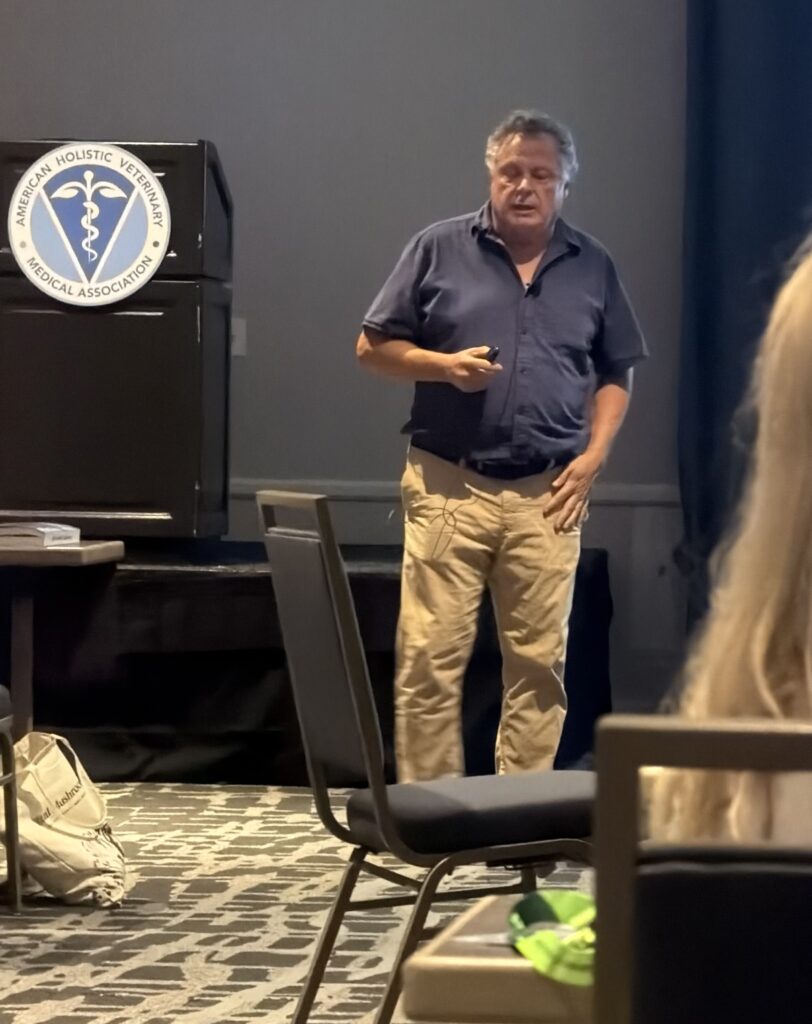
What Dr. Steve Marsden’s AHVMA presentation brought into focus about tick-borne disease, immune function, Chinese herbal medicine, and the dogs behind the bloodwork
By Timea R. Bodi
By the time I sat down to listen to Dr. Steve Marsden at AHVMA, I had already accepted that my notebook was going home heavier than it arrived, my phone was probably going to ask for additional storage, and my brain, bless its heart, was going to need a little more time than the conference schedule allowed. Then he started talking about tick-borne infections, immune cells, herbal formulas with names I would have to practice before saying out loud, and dogs who looked perfectly pleased with themselves while their bloodwork was telling a very different story, and there went any hope that this was going to be a lecture I could summarize in three sentences and a green heart.
I know some of my peeps like the short version, and I love you for hanging in there, but this one deserves some room. There were actual dogs behind these slides, actual families making difficult decisions, and enough medical information to remind me why I keep coming to these conferences even when getting away from my own dogs requires an operation that ought to come with its own logistics department.
I would have loved to listen to his wife, Dr. Kären Marsden, too, because choosing one lecture at a conference generally means missing another one you also wanted to hear, and apparently wanting very badly to be in two rooms does not make it physically possible. Fortunately, I had the privilege of listening to both of them at Dr. Judy Morgan’s seminar in Florida last year, so I already knew these were teachers who could give me plenty to think about long after I put the notebook away. Hearing Dr. Steve Marsden again felt like picking up a conversation I was nowhere near finished having.
Dr. Steve Marsden’s credentials include DVM, ND, MSOM, Dipl.CH, and Dipl.Ac, reflecting training in veterinary medicine, naturopathic medicine, Oriental medicine, Chinese herbology, and acupuncture. He is a co-founder of the College of Integrative Veterinary Therapies and a director emeritus of the National University of Natural Medicine. AHVMA identifies him as its 2010 Teacher of the Year, and he also received the Canadian Veterinary Medical Association’s Small Animal Veterinarian of the Year recognition in 2009. Dr. Kären Marsden, BA, DVM, CVA, is a Tufts veterinary graduate with decades of integrative practice and teaching experience. Both were speakers at this year’s conference. These are veterinarians with extensive clinical and educational backgrounds, and that context matters when discussing what they bring to the room.
His lecture, “Resolving Latent Infections Using Chinese Medicine,” kept returning to the relationship between an organism and the body carrying it: what the pathogen is doing, what the immune system is doing in response, what is happening in the intestine, and whether the animal has the resources to recover. That connected view of the patient is what made the lecture interesting to me, because a dog does not stop having nutritional needs, an intestinal ecosystem, or inflammatory problems just because we have identified an infection.
I am sharing the presentation as I understood it from the slides, with added explanations so the medical language makes sense. The cases are Dr. Marsden’s reported clinical experiences; the proposed herbal mechanisms come from his lecture and related research. I will keep those distinctions clear where they affect the meaning of a result, because I want the information we take home to be useful and accurate.
🦠 What does it mean for an infection to remain quiet?
In his slide “To Thrive, a Latent Infection Must…”, Dr. Marsden described three advantages for a persistent pathogen: it causes sufficiently limited early damage to allow transmission, evades immune detection or elimination, and interferes with the host’s defenses. The underlying idea is that an organism’s survival depends partly on how it interacts with the animal carrying it.
There are some distinctions to keep straight. A subclinical infection produces no obvious outward illness; a persistent infection remains over time; and latency can refer more specifically to a dormant state with potential reactivation. Those terms are not interchangeable for every organism. In this presentation, “latent” was used broadly for infections that remain quiet or difficult to resolve. Not every persistent organism has to disable the entire immune system, and apparently healthy dogs can carry evidence of exposure without having clinical disease.
The organisms discussed also behave differently. Borrelia burgdorferi, associated with Lyme disease, is a spirochete, a spiral-shaped bacterium that can persist in tissues. Anaplasma phagocytophilum infects neutrophils, while Anaplasma platys infects platelets. Ehrlichia canis primarily infects monocytes and can produce chronic disease with blood-cell abnormalities. It would be a mistake to treat all three as having one identical hiding place or one identical immune-evasion strategy.
🧭 Before we get to the herbs, let’s make the language less intimidating
If words such as Qi, Yang, and Blood deficiency make you feel as though you walked into the middle of a conversation everybody else has been having for twenty years, you are in good company. Understanding the vocabulary makes the rest of the lecture much easier to follow, and it helps keep a traditional description from being mistaken for a laboratory diagnosis.
Qi, often pronounced “chee,” is a traditional way of describing the body’s activity and functional capacity, including the processes involved in movement, digestion, and defense. It is commonly translated as energy, but that translation can make it sound as though someone is measuring a battery level. Qi is not a laboratory value, and it is not simply another name for ATP, the molecule cells use to transfer energy. When a practitioner discusses Qi deficiency, they are describing a traditional pattern of reduced function or vitality.
Yang refers to qualities such as warmth, activity, and movement, in relationship with Yin, which emphasizes nourishment, substance, cooling, and rest. These are interdependent categories within Chinese medicine. Describing Yang as constrained or moving improperly is part of that framework; it does not mean that a veterinarian has identified a particular hormone or a substance circulating in the bloodstream.
Source Qi, also called Yuan Qi, describes a deeper foundation of functional vitality in the traditional system. In Dr. Marsden’s explanation, restoring it was part of helping a depleted patient regain the capacity to respond. The connection to recovery is understandable, but it is still a traditional concept rather than a direct measurement of marrow function, immunity, or metabolism.
Blood deficiency, with a capital B when referring to the traditional pattern, includes inadequate nourishment of tissues and can be associated with pallor, fatigue, and other findings. It can overlap with anemia, as it did in Nessa’s assessment, but the two are not synonyms. Anemia is established through conventional blood testing; a traditional Blood deficiency pattern may be identified even when the red blood cell count is normal.
One more distinction helps: the Chinese medicine Spleen and Liver describe broader functional systems than the anatomical organs carrying those names. The traditional Spleen is strongly connected with extracting nourishment from food. That is why a formula described as supporting Spleen Qi may be discussed in relation to digestion and recovery, without implying that it is directly treating the anatomical spleen.
🧭 Shao Yang disharmony: the pivot that needs to move
In traditional Chinese medicine, Shao Yang is a functional pattern associated with the Gallbladder and San Jiao, also called the Triple Burner. It is often described as a pivot between exterior and interior. These terms belong to a traditional diagnostic system; they do not mean that a dog with this pattern necessarily has anatomical gallbladder disease, or that San Jiao is an organ that would appear on an ultrasound.
Dr. Marsden used this framework to discuss a patient whose defenses seem to remain caught in an unresolved response. The image of a pivot helped me understand his reasoning: a hinge should permit movement between positions, and when it catches, the whole process becomes awkward. In traditional terms, harmonizing Shao Yang means restoring that movement; in the biomedical discussion that followed, he was interested in immune regulation, inflammation, and the patient’s response to an organism. In his “Key Clinical Findings of Shao Yang Disharmony” slide, he emphasized that the practitioner might have relatively few obvious clues, but could find a wiry or full pulse that changes after stimulation of Shao Yang points, particularly Gallbladder points. A wiry pulse is traditionally compared with the tension of a taut string, while a full pulse conveys a more forceful quality.
He referred to Zhang Zhong-jing’s historical use of pulse findings to guide treatment and described similar observations in modern practice. Pulse and tongue assessment were part of how he selected a traditional pattern and formula, while examination and laboratory testing supplied the conventional medical information about the animal. Those methods answer different questions: the pulse description is not an organism-specific test for Lyme, Anaplasma, or Ehrlichia.
His next slide listed findings he commonly associates with this pattern: lymphadenopathy, enlarged lymph nodes; splenomegaly, an enlarged spleen; increased platelet counts; increased globulins; and hypervigilance or reactivity. Globulins include antibodies and other proteins, so elevations can accompany immune stimulation or chronic inflammation, although they are not specific to an infection.
The medical histories he associated with the pattern included cruciate ligament tears, hip dysplasia, dysbiosis, atopic dermatitis with spring or fall aggravation, reported worsening after vaccination, a tendency toward immune-mediated disease, and raw diets containing no plant material. These were presented as clinical associations, not proof that any one of those factors causes a tick-borne infection or that their presence diagnoses Shao Yang disharmony. The diet observation becomes especially relevant later, when he discusses fermentable substrates for intestinal microbes.
🌿 Minor Bupleurum: seven ingredients, one formula
The central formula in the lecture was Minor Bupleurum, also called Xiao Chai Hu Tang. The slide listed seven ingredients:
Chai Hu is Bupleurum root, the ingredient associated with restoring movement at the Shao Yang pivot. Huang Qin is Scutellaria root, or Chinese skullcap, discussed for its traditional interior-clearing role and potential antimicrobial activity. Ren Shen is ginseng root, included in the lecture’s explanation of Source Qi and the patient’s ability to mount a response.
The remaining four ingredients complete the formula rather than merely filling out the label: Ban Xia is Pinellia rhizome; Gan Cao is licorice root; Sheng Jiang is ginger rhizome; and Da Zao is jujube fruit. In traditional formulation, these ingredients contribute to digestive support, fluid regulation, nourishment, and harmonization. Properly processed Pinellia is particularly relevant; the preparation of an herb is part of the medicine.
I found it helpful to think about why a practitioner would choose a formula rather than a single herb. The ingredients are intended to work together within a particular pattern, so “contains ginseng” is not the same thing as “does everything this formula was selected to do.” The identity, preparation, and concentration of the whole product matter.
His first formula slide described aromatic Bupleurum as moving a pathogen toward the exterior by mobilizing Yang, while bitter, cold Scutellaria addresses the interior and helps internalize Yang. Ginseng was described as restoring Source Qi damaged by disrupted Yang movement. Together, these opposing directions were his explanation of how the formula harmonizes a disrupted pivot. The wording describes a traditional therapeutic pattern, not a literal movement of bacteria through the skin.
Later, he presented the formula through three biomedical goals: antimicrobial activity, regulation of immune responses, and support for the microbiome. His “An Ideal Solution” slide organized those same goals into three boxes. The appeal of this approach is easy to understand: a patient may need help controlling a pathogen while also recovering immune and intestinal function. Whether a particular preparation reliably achieves all three goals in dogs is a separate research question.
Formula identity matters. A commercial extract, a modified formula, and a product containing the formula can differ in ingredients, processing, concentration, and dose. Pinellia requires appropriate processing, and using a professionally manufactured veterinary preparation is different from combining raw ingredients at home. Product names in this article identify what appeared in the cases; they are not interchangeable dosing instructions.
🔬 “Killing Microbes”: what the laboratory work can tell us
Dr. Marsden’s antimicrobial slide attributed bacteriostatic and bactericidal activity to ginseng and activity against Borrelia to Scutellaria. Bacteriostatic means inhibiting bacterial growth; bactericidal means killing bacteria under the conditions being tested. A substance’s classification or effect can depend on the organism, concentration, and experimental setting.
There is published laboratory research relevant to the Scutellaria discussion. A 2020 study tested botanical extracts against growing and non-growing B. burgdorferi and found activity from Chinese skullcap, Scutellaria baicalensis, against stationary-phase cultures. That supports further investigation. It does not establish that oral Minor Bupleurum clears Lyme infection in dogs: the study tested extracts in culture, and activity at a laboratory concentration does not tell us what concentration reaches canine tissues after digestion and metabolism. In that study, Scutellaria was not the extract that achieved complete eradication in the follow-up subculture experiment.
The same slide discussed biofilms, communities of microbes within a protective matrix that can make antimicrobial treatment more difficult. The photograph records a statement that organisms in biofilms may be up to 1,000 times more resistant, plus the claim that ginseng and Bupleurum disrupt biofilms. That number should be understood as a context-dependent estimate from biofilm research, not a universal multiplier for every organism or every dog. Biofilm disruption in an experimental system also does not by itself demonstrate clinical cure.
🧫 Following the immune response from recognition to destruction
The immune slides become easier to understand if we follow the process from the beginning. The body first has to recognize that something requires attention. Cells such as macrophages and dendritic cells can take up material, process it, and display fragments called antigens to other immune cells. That display, called antigen presentation, helps coordinate a more targeted response. An antigen is the piece being recognized, not the antibody made in response to it.
Different defensive cells then do different jobs. Neutrophils are rapid responders that can engulf microbes and use several killing mechanisms. Macrophages also engulf material, clear debris, and help regulate the ongoing response. T cells can direct other immune cells or attack infected cells, while B cells can develop into antibody-producing cells. Cytokines carry signals among these participants, helping influence what sort of response develops and how strongly it proceeds.
This is why “supporting immunity” needs a more specific explanation than simply making everything stronger. A patient may need better recognition or intracellular killing while also needing less tissue-damaging inflammation. Those goals can coexist. That was the relationship Dr. Marsden was trying to address when he connected antimicrobial treatment with immune regulation.
🧫 How an organism can survive inside an immune cell
The slide “How to Survive a White Blood Cell” illustrated phagocytosis, the process by which a defensive cell engulfs material. Normally, an engulfed microbe is enclosed in a compartment that can interact with lysosomes, structures containing destructive enzymes. Some intracellular pathogens interfere with maturation of these compartments or other killing mechanisms, allowing them to persist despite being taken up by a cell.
Imagine a defensive cell taking an organism into an enclosed compartment, then bringing its enzyme-containing lysosomes into contact with that compartment. The sequence should help destroy what has been swallowed. An intracellular pathogen can interfere with steps in that sequence, turning a place intended for destruction into a place where it can survive. The diagram was a simplified illustration, labeled with a macrophage while the slide text mentioned neutrophils; the exact cell and survival mechanism depend on the organism. Anaplasma and Ehrlichia make this part of the discussion particularly relevant.
🛡️ Immune regulation: the cytokine discussion
In “Minor Bupleurum: Targeted Immune Therapy,” Dr. Marsden discussed interferon-gamma, IFN-γ, and interleukin-4, IL-4. Cytokines are signaling proteins that help coordinate immune responses. IFN-γ can promote antimicrobial activity in macrophages and support defenses against certain intracellular organisms. IL-4 participates in other immune programs, including aspects of antibody responses and allergic inflammation.
Dr. Marsden’s proposed mechanism was that Minor Bupleurum helps shift signaling toward the response needed for intracellular defense, including greater IFN-γ activity, lower IL-4 activity, and more effective interaction between lysosomes and pathogen-containing compartments. In ordinary language, his goal was to help the defensive cell finish the job after taking the organism inside. The slide also referred to vacuoles bursting, a simplified description within a much more complex set of cellular processes.
Research gives this explanation some context without reducing it to a simple switch. A 2009 experimental study of the related formula found increases in both IFN-γ and IL-4 at the antigen-presenting-cell level, while other work examined interferon production or macrophage function in rodents. The effects can therefore depend on the model and circumstances. I take the lecture’s mechanism as a therapeutic explanation to investigate, rather than a promise that the same two cytokines change in the same direction in every dog. Those cytokines were not measured in the photographed cases.
💊 Doxycycline: useful, with a patient around it
The “Doxycycline Pros and Cons” slide described the drug’s tissue and intracellular penetration as an advantage. Doxycycline inhibits bacterial protein synthesis and is generally considered bacteriostatic. Dr. Marsden emphasized the host immune response as part of successful recovery and raised concern about gastrointestinal dysbiosis during treatment.
That concern deserves consideration, but being bacteriostatic does not make a drug inherently inadequate. Doxycycline remains a recommended treatment for clinical canine Lyme disease, ehrlichiosis, and anaplasmosis. Its intracellular penetration is one reason it is useful for rickettsial infections. An animal’s lack of an immediate return to normal blood counts also does not automatically prove that the antibiotic failed to control the organism.
The intestinal side of the discussion is equally relevant. Dysbiosis refers to an alteration in the gut microbial ecosystem and its functions. Antibiotics can affect microbial populations, and canine studies with some antibiotics have documented changes in fecal organisms, bile acids, and other metabolites. Those findings justify thoughtful prescribing and follow-up; studies of metronidazole or antibiotic combinations do not quantify the exact effect of doxycycline in every patient.
If a dog remains unwell, the next question is broader than whether to give another course. Persistent infection, coinfection, immune-mediated injury, marrow disease, drug effects, and unrelated illness may all deserve investigation. Supporting the intestine and reassessing the diagnosis can be part of good care alongside antimicrobial treatment.
🥣 The microbiome: feeding the organisms that help feed the dog
His “The Microbiome in Lyme Disease” slide discussed prolonged fatigue, cognitive problems, pain, and immune or neurological symptoms in some human Lyme patients, along with associations involving reduced beneficial intestinal organisms. Human post-treatment Lyme symptoms are real, but their cause remains incompletely understood. Microbiome changes are one area of investigation; neither ongoing infection nor antibiotic-induced dysbiosis explains every case, and human estimates should not be transferred directly to dogs.
In “Healing the Microbiome,” he moved to food, probiotics, fermentable carbohydrates, and soluble fiber. Commensals are organisms that normally coexist with the host. Some intestinal bacteria ferment dietary substrates into compounds such as short-chain fatty acids, which can contribute to intestinal function. This makes the discussion about plant material more specific than a general argument over raw feeding: what substrates does this individual diet provide for this individual animal’s intestinal ecosystem?
The slide described commensals as supporting the intestinal barrier and modulating immunity. It also proposed that Minor Bupleurum reduces damaging immune activity inside the gut wall while supporting defense on its luminal side, where intestinal contents are located. That is the therapeutic model he presented, not a result confirmed by intestinal biopsy or microbiome testing in the photographed cases. Probiotic effects depend on the preparation, and food and fiber changes need to account for the patient’s tolerance and overall nutritional balance.
🐕 Case one: Wolfgang Puck, a therapy dog with a positive Lyme test
“Wolfgang Puck” was a male Miniature Schnauzer who worked as a nursing-home therapy dog. A routine annual examination produced a positive Lyme result with a C6 value of 157. His veterinarian prescribed doxycycline, but the owner, who had noticed that Puck was a little quieter than normal, chose VOLTREX, described in the presentation as containing Minor Bupleurum. The slide also identified Harmonize the Qi from Kan Essentials as another source of the formula.
A follow-up slide showed an owner’s email, dated September 7, 2026, confirming that she had never given the doxycycline. A photograph highlighted Puck’s Fast CAT participation and ranking, and the slide asked how an ancient formula could produce a result as good as or better than modern medicine.
Puck’s story brought a real dog into a discussion that could otherwise have stayed rather abstract: a therapy dog, an observant owner, a treatment decision, and continued participation in an active life. The important testing detail is that C6 measures an antibody response, not a direct bacterial count, and a high result alone does not tell us how ill a dog is. Many positive dogs remain clinically well, so symptoms, urinary protein testing, and possible coinfections help determine what the result means. The photographed follow-up supports the account of Puck doing well; proving infection clearance or comparing treatments would require more information.
🐾 Case two: a Norfolk Terrier and a declining antibody result
The next dog was a six-year-old spayed female Norfolk Terrier, presented with a chief complaint of Lyme disease. Her history slide described an increasing quantitative C6 result, now above 30, treatment with a Jing Tang Lyme formula, no observed improvement, and mucus appearing in the stool.
Dr. Marsden reported changing treatment to Minor Bupleurum, Xiao Chai Hu Tang, using Harmonize the Qi. The outcome slide described a decline in quantitative C6 until Lyme was no longer detected by the reported test. It attributed antimicrobial activity to Scutellaria and biofilm-related and inflammatory effects to Panax ginseng, including an effect on IL-10.
IL-10 is another immune-regulating cytokine, with roles that include limiting inflammation. The importance of changing it depends on the infection, stage, and tissue involved; it is not simply an undesirable signal to suppress. The clinical story illustrates his decision to change formulas when the first approach was not helping.
The useful lesson in this case was the reassessment when the first formula did not produce the desired response, followed by the declining antibody result Dr. Marsden reported after the change. A negative antibody result still cannot establish that no organisms remain in any tissue. The complete timeline and long-term follow-up were not included in these photographs, so the result is best described as an improvement in the reported test rather than proof of eradication.
🩸 Case three: Nessa, a nursing mother with severe bleeding and anemia
Nessa’s case was the one that brought the breeder in me right to the front of the room. When you have sat beside a whelping box and watched a mother devote herself to her puppies, it is difficult to hear about a nursing dog who is seriously ill and still determined to keep caring for them without thinking about the mothers in your own home. The fact that she is eating, watching her litter, and refusing to surrender her responsibilities can be reassuring, but it can also make the seriousness of what is happening harder to take in.
Nessa was a six-and-a-half-year-old female English Shepherd who had whelped five puppies three weeks earlier. The history recorded the loss of one puppy a day later. When the puppies were one week old, she had four episodes of epistaxis, meaning nosebleeds, involving both nostrils. Two weeks later, severe bleeding was accompanied by pallor and panting. She continued eating and remained intensely devoted to her puppies, while her owners struggled to keep her quiet because she was so vigilant.
Her objective findings slide listed severe anemia, thrombocytopenia, marked enlargement of the liver and spleen, and positive tests for Lyme and anaplasmosis. Blood transfusion was recommended. The owners elected alternative treatment without doxycycline.
Those details describe a seriously ill animal. Anemia means reduced circulating red cells or hemoglobin, compromising oxygen delivery. Thrombocytopenia means low platelets, which can increase bleeding risk. Vascular inflammation, platelet dysfunction, and other clotting problems can also contribute to hemorrhage. Positive infectious tests help guide investigation, but do not automatically identify the cause of every abnormality. Severe anemia with pallor and rapid breathing can require urgent stabilization and transfusion; an encouraging later case report does not remove that need in another patient.
The holistic examination slide described Nessa as bright and alert but breathing rapidly, tiring easily, avoiding heat, and drinking substantially during peak lactation. Her mucous membranes were almost white, liver and spleen enlargement persisted, and she became frantic if the owners attempted to remove or hand-nurse her puppies. The traditional assessment included a pale, slightly lavender-tinged tongue and a thin, wiry, somewhat deep pulse that improved with massage of Gallbladder points.
Dr. Marsden’s assessment connected several parts of Nessa’s illness. Anaplasmosis was considered a contributor to bleeding through vasculitis, inflammation of blood vessels, or interference with platelet function. Severe anemia was also described within the traditional Blood deficiency pattern, and the pulse and other findings supported his Shao Yang assessment. He discussed Four Materials Combination for Blood support and Minor Bupleurum to address the infection-related pattern and immune response.
The slide explicitly acknowledged the lack of lactation safety data and recorded the owner and veterinarian choosing somewhat below-normal doses. That uncertainty matters because the treatment decision involved a nursing mother and her puppies; a smaller dose alone cannot establish safety. This was an individualized clinical decision in a seriously ill dog.
🌿 What Four Materials Combination was intended to contribute
Four Materials Combination generally refers to Si Wu Tang, also translated as Four Substances Decoction. Its classical core contains prepared Rehmannia root, dong quai root, white peony root, and Sichuan lovage rhizome. In traditional formulation, Rehmannia and white peony contribute nourishing roles, while dong quai and lovage also contribute a moving or circulating quality. The traditional aim is to nourish Blood while maintaining its movement.
This explains why a Blood-supporting formula entered Nessa’s assessment alongside a formula directed at Shao Yang. Dr. Marsden was considering both the ongoing disease process and the depleted patient. The slide proposed supporting marrow production and addressing vasculitis, but it did not show the exact product ingredients or confirm the contribution of each component. The classical formula description supplies background, not verification of Nessa’s dispensed preparation.
For a conventionally assessed anemic dog, the essential questions remain whether red cells are being lost, destroyed, or inadequately produced, and whether the marrow is responding. Those distinctions guide the need for transfusion, infectious-disease treatment, and investigation of other causes. Describing a formula as a Blood tonic does not mean that it supplies replacement red cells or corrects every cause of anemia.
🩸 Nessa’s follow-up: improvement and the numbers behind it
At the six-week follow-up, the presentation reported normal energy and activity, substantially reduced liver and spleen enlargement, and puppies that had been weaned and were thriving. Occasional mild nosebleeds remained, as did dryness of the nasal planum, the external nose surface. The plan included Yunnan Bai Yao as needed for bleeding and higher doses of the existing herbs after weaning. That follow-up matters because improvement was assessed in her behavior, examination, and bloodwork rather than through one observation alone. As a breeder, the report that the puppies were weaned and thriving was especially meaningful to me, while the remaining nosebleeds made continued monitoring equally important.
The laboratory slide is essential to understanding the extent of recovery:
On April 25, her red blood cell count was 1.43, compared with a displayed reference interval of 4.8–8.5, and her hematocrit was 12.4, compared with 39–56. Reticulocytes were 110, above the displayed interval of 0–85, and platelets were greater than 1,000, compared with 150–400. The table did not give globulin or ALT results for that date.
On April 27, the red cell count had risen to 1.82 and hematocrit to 16.0. Reticulocytes were 202, platelets 951, globulins 52, compared with the displayed interval of 20–40, and ALT 233, compared with 10–125.
By June 9, the red cell count was 3.99 and hematocrit 26.0, with reticulocytes 81.1, platelets 495, globulins 53, and ALT 667. Reading the dates together shows substantial red cell improvement alongside findings that still needed attention.
Units were not supplied on this slide. RBC is the red blood cell count; HCT, hematocrit, is the proportion of blood occupied by red cells. Reticulocytes are immature red cells that can indicate marrow response. Her rising RBC and HCT show improvement, but both were still below the displayed reference intervals on June 9. The initial elevation in reticulocytes supports a regenerative response, meaning the marrow was producing replacement cells.
One detail would be useful to clarify with the presenter: the initial findings slide listed thrombocytopenia, while this table records high platelet counts at all three displayed checks. An earlier low count or a slide error could explain the difference, but neither is documented in the photographs. I have preserved both details rather than guessing how they fit together.
Globulins remained elevated, and ALT rose from 233 to 667. ALT is a marker of hepatocellular injury and does not, by itself, measure total liver function or identify the cause. That increase deserved follow-up even though the clinical account described considerable improvement. The statement that the other liver parameters were normal does not make an elevated ALT normal. Nessa’s story is therefore a report of meaningful improvement with ongoing abnormalities, rather than documentation of complete laboratory recovery or proven elimination of both infections.
🩹 Where Yunnan Bai Yao fits into a bleeding case
Because it appeared in Nessa’s follow-up plan, Yunnan Bai Yao, also spelled Yunnan Baiyao, deserves its own explanation. This is a proprietary Chinese preparation used in veterinary practice as an adjunct for bleeding. It serves a different purpose from a Shao Yang formula or a Blood-supporting tonic: the immediate question is hemostasis, the process that limits blood loss.
Hemostasis depends on several interacting steps. Blood vessels respond to injury, platelets help form an initial plug, and coagulation proteins produce fibrin that helps stabilize it. A problem in one part of that process can cause bleeding even if another part looks normal on a test. That is one reason Nessa’s assessment considered platelet function and vascular inflammation as well as platelet number.
Yunnan Baiyao’s use should not be described as a guarantee that it corrects every bleeding disorder. In a randomized crossover study of eight healthy beagles, the tested regimen did not produce a clinically significant improvement in the measured clotting parameters or mucosal bleeding times. That study does not settle its usefulness in every actively bleeding patient, but it shows why clinical experience and research must be considered together. In the presentation it was part of Nessa’s continuing veterinarian-directed plan, not a substitute for stabilization or transfusion when needed.
🐶 Case four: Calle, who looked well while her bloodwork did not
Calle was a four-year-old spayed mixed-breed rescue from Mexico, described as very sweet and outwardly asymptomatic. Pre-dental testing revealed positive Ehrlichia and anaplasmosis results, a platelet count of 48, with a displayed reference interval of 150–300, and a white blood cell count of 2.4, compared with 5.0–17.0. The owner reportedly found the results difficult to believe because Calle seemed normal.
This is precisely why outward appearance and laboratory testing both matter. Leukopenia is a low white cell count. Combined with low platelets, it can prompt investigation of infectious disease, marrow dysfunction, immune destruction, and other causes. A blood-smear review also helps determine whether platelet clumping has distorted an automated count. The normal-looking dog is still entitled to a careful explanation of abnormal results.
One slide showed the acupuncture points used in Calle’s care: GB25, described as the Kidney alarm point and related to Triple Burner activity; BL19, the Gallbladder association point; GB34, associated with harmonizing Shao Yang; and ST36, traditionally used to support the Stomach and Spleen functions involved in generating Qi and Blood. That is the traditional rationale for point selection. The points show how the traditional assessment informed her care alongside the laboratory results. Because several treatments were involved, the case does not let us assign a separate effect to the acupuncture.
Calle began doxycycline, with an initial 30-day course described and bloodwork repeated at approximately two-week intervals before checks were spaced farther apart. The slide reported no CBC change after six weeks, discontinuation, and a switch to Minor Bupleurum. Whole-food feeding was encouraged.
The graph showed platelet and white-cell trends through successive checks, labeled with doxycycline, Minor Bupleurum, and later added ginseng and astragalus. The lines conveyed a rising trend, especially in platelets, with some fluctuations rather than a perfectly straight climb. The photographed axes were incomplete, so I cannot responsibly supply exact numbers or time intervals from the graph. It shows the course Dr. Marsden reported while treatment changed, without separating the contributions of each intervention.
That qualification is medically relevant: chronic ehrlichiosis can leave blood abnormalities that persist for months even after appropriate antibiotic therapy. Six weeks without CBC normalization warrants reassessment, but does not independently prove continued infection or antibiotic failure.
🌱 Why add Bu Zhong Yi Qi Tang?
Bu Zhong Yi Qi Tang is a separate classical formula, often described in English as Ginseng and Astragalus Combination. “Lift the Qi” reflects its traditional use for deficient or sinking Spleen Qi. In that framework, the goal is to strengthen the patient’s functional and digestive support so nourishment can contribute to recovery. It is a multi-herb formula, not simply two roots mixed together.
The manufacturer’s ingredient list for Lift the Qi includes astragalus, red ginseng, white atractylodes, dong quai, Bupleurum, mature tangerine peel, licorice, and cimicifuga. Its traditional formulation combines nourishing, digestive-supporting, and Qi-moving roles. This product description explains the preparation mentioned in the lecture; it does not establish that every commercial product with the formula’s name has the same concentration or composition.
In Calle’s case, adding a second formula reflected an additional goal: supporting the animal’s blood-cell recovery while continuing to address the infection-related pattern. The interesting question was no longer simply which organism had been identified, but why the low counts were persisting and what the patient might need to maintain improvement.
🌱 Ginseng and astragalus: supporting blood-cell recovery
Dr. Marsden added Bu Zhong Yi Qi Tang, identified as “Ginseng and Astragalus,” alongside Minor Bupleurum. Commercial preparations shown were Lift the Qi from Kan Essentials and Galvanex from Gold Standard. The slide described Calle continuing to act normally, blood counts falling if either formula was stopped, and the owner being willing to continue long term. She eventually adopted the recommended real-food diet, with the presenter describing that change as the result of earned trust.
The next slide grouped proposed effects of Bu Zhong Yi Qi Tang into immune support, antigen presentation and macrophage activation, local intestinal immunity, antimicrobial activity attributed to ginseng, and platelet synthesis. Those proposed actions connect back to the recognition and signaling steps discussed earlier: helping defensive cells identify what needs attention, then supporting the response they make.
The “Ginseng, Astragalus and Platelet Synthesis” slide proposed improved marrow production, reduced platelet consumption, and reduced immune-mediated destruction. These are different routes to a higher circulating platelet count. Platelets are produced from marrow megakaryocytes, and their number reflects both production and removal. ITP, immune thrombocytopenia, involves immune-associated platelet destruction and sometimes impaired production; it is not diagnosed simply because platelets are low in a tick-exposed dog.
The accompanying research graphic linked blood-nourishing herbs with blood-cell production and immune regulation. Its paper citation was not readable in the photograph, so the study model cannot be verified from the slide alone. Calle’s improvement, together with the reported fall in counts when either formula was withdrawn, makes the follow-up especially interesting. It also suggests that maintaining good counts and demonstrating elimination of an organism are different goals; the case documented the former more clearly than the latter.
📋 “Don’t Just Do Doxy”: the closing message
Dr. Marsden’s final slide described doxycycline as useful but incomplete when a patient’s immune function also needs attention. He presented Minor Bupleurum as a traditional formula relevant to Lyme disease, anaplasmosis, and ehrlichiosis, potentially used alone or alongside doxycycline, with ginseng and astragalus considered for platelet recovery. His larger message was to keep examining the patient’s ability to recover as carefully as we examine the organism. The cases illustrate that reasoning, while controlled clinical research is still needed to establish how reliably these herbal approaches work for each infection.
For me, that means paying attention to the examination, the complete history, the actual laboratory trends, the intestine, nutrition, and possible immune-mediated complications. It also means recognizing that a dog who looks better may still need monitoring, and that a positive test requires interpretation rather than a reflex response. A useful treatment plan can include antimicrobial care, nutrition, and selected adjuncts, with monitoring that tells us whether the dog is progressing. When the results do not fit, that is a reason to ask another question and reassess.
Herbal treatment deserves the same seriousness we give other treatments. Human reports have linked Sho-saiko-to, a related preparation of Xiao Chai Hu Tang, to rare liver injury. That does not establish the cause of Nessa’s ALT increase, but it makes liver monitoring relevant rather than optional when abnormalities arise. Product quality, interactions, overlapping ingredients, and the absence of lactation data all matter. Calling a preparation natural tells us its origin; its safety and effectiveness still depend on what is in it and how it is used.
What stayed with me was the invitation to keep looking at the whole patient, because the infection, the immune response, and the recovery process do not always move on the same timetable. Puck, the Norfolk Terrier, Nessa, and Calle each illustrated a different question, and the most useful way to share their stories is to explain both the reported improvements and what the available information leaves unanswered.
As a breeder and veterinary technician, I kept thinking about how much responsibility sits inside the ordinary sentence, “My dog seems fine.” Sometimes that is reassuring, and sometimes the bloodwork tells us we need to look closer. I also kept thinking about Nessa, still determined to mother her puppies while her own body was struggling, because anyone who has cared for a devoted dam understands how easily her commitment can make us underestimate what she needs from us.
That is what I want to bring home from a lecture like this: better questions, a clearer understanding of the processes involved, and more attention to the dog standing in front of me. There is a great deal here to keep learning, and I am grateful to teachers who make me want to do that work.
I would still happily have borrowed a second body to attend Dr. Kären Marsden’s lectures too, but until somebody gets that sorted out, I will be grateful that I heard them both in Florida and had another opportunity to learn from Dr. Steve Marsden at AHVMA. My notebook may need a vacation. My curiosity, apparently, has declined the offer. 💚🐾


Leave a Reply