

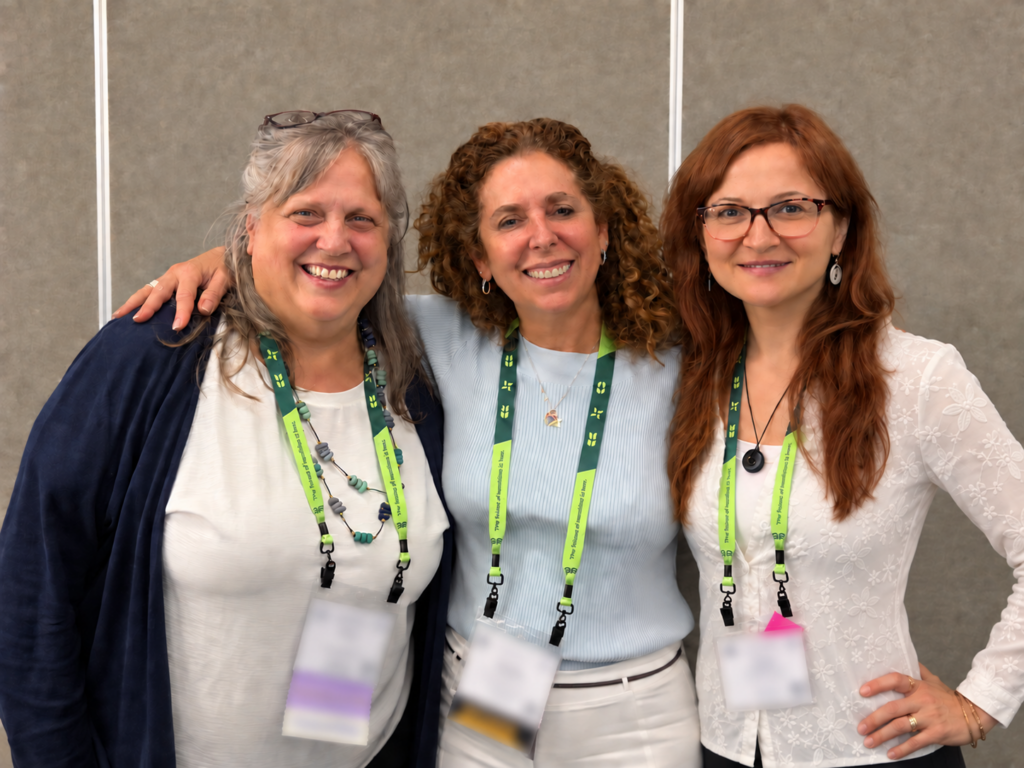
Anyone who has followed me for a while knows that I ask a lot of questions, and being told “this is how we do it” generally gives me a few more. I have been using mistletoe with my own dogs for a couple of years now, and I listened to Dr. Cláudia Costa speak about it at last year’s AHVMA, so I wasn’t walking into this lecture wondering what the heck mistletoe had to do with veterinary medicine. I already had some experience with it. What I wanted was to understand more about what I was using, why different preparations are chosen, and what we ought to be paying attention to once treatment starts, because having something in my toolbox and knowing everything about it are two very different things.
And yes, before anybody says it, I probably need another toolbox about as much as I need another freezer. Those who know me can go ahead and laugh. I know. But the reason I keep coming to these conferences is that I can sit through a lecture on something I am already doing and realize there were details I hadn’t connected, or questions I didn’t even know to ask last year. You spend another year caring for your dogs, dealing with what comes along, and trying to make decisions for them, and suddenly you hear the same subject differently. There is a lot more riding on those notes when you have a dog at home who needs you to understand them.
Cláudia has been working with mistletoe and integrative oncology since 2008, according to her introductory slide, and she had plenty to say about chemistry, immune cells, preparations, and administration. But she also kept bringing us back to the animal. What condition is this patient in? What can they tolerate? What are we trying to accomplish? We can talk all day about what a treatment might do to a tumor, but if the dog receiving it is seventeen years old, weak, barely eating, and already having a rough time, we had better be thinking about more than how strong a reaction we can get.
The plant we were discussing is European mistletoe, Viscum album. Yes, mistletoe, although this conversation had considerably less to do with Christmas and kissing and considerably more to do with cancer cells and plant chemistry. It grows on trees and takes water and nutrients from its host through a structure called a haustorium, while still doing its own photosynthesis. That makes it hemiparasitic, and before anybody’s eyes glaze over, the point is that the tree it grows on matters. So do the season, the parts of the plant harvested, and what happens during manufacturing.
This is where I think we get a little too casual about natural products. Somebody says a plant helped their dog, somebody else buys a bottle with that plant’s name on it, and pretty soon everybody is talking like they are using the same thing. Well, are they? Were the same parts harvested? Was it collected in the same season? Was it extracted the same way? What is actually in the bottle? The leaves, stems, and berries don’t all have identical chemistry, and a summer harvest can differ from a winter harvest. Cláudia discussed the anthroposophic practice of combining summer and winter material, with her slides describing more emphasis on viscotoxins in summer and lectins in winter. The precise amounts depend on the material and preparation, but there is a whole lot happening before anybody opens an ampoule.
And please, this is not where we decide to go outside, pull mistletoe off a tree, and whip something up in the kitchen. The raw plant can be toxic. A manufactured medicinal preparation has a concentration, a method of preparation, and an intended use, and those things matter. Natural products can cause reactions too, including inflammation, fever, and allergic reactions. I am all for having more options, but I want to know what I am putting into my dogs and who is helping me make those decisions.
Now, the chemistry was pretty darn interesting once you got past the names. The two components she spent the most time discussing were lectins and viscotoxins, and they don’t work the same way. Mistletoe lectins are sugar-binding proteins classified as type II ribosome-inactivating proteins. I know, that sounds like somebody just handed us a surprise exam, but stay with me. Ribosomes are part of the machinery cells use to make proteins. These lectins have two linked parts, with the B chain helping the lectin bind to and enter a cell and the A chain interfering with that protein-making machinery. In experimental systems, that can contribute to apoptosis, an organized process of cell death.
Viscotoxins are much smaller peptides belonging to a group called thionins, and their studied activity includes disrupting cell membranes, which can lead to necrosis, a different form of cell death. So when people talk about mistletoe affecting cancer cells, there is more than one possible mechanism involved. Researchers have also found that lectin content alone does not always explain the cell-killing activity of an extract. The other components and the preparation itself deserve attention too, which makes a lot more sense to me than assuming one number on a product tells us the whole story.
She also discussed natural killer cells, T cells, macrophages, and cytokines, which help cells communicate. This is the part that often gets shortened to “boosting the immune system,” and I wish we would stop acting like that phrase explains everything. Which part of the immune system? Doing what? With what result? There are different cells with different jobs, and when I am caring for a dog, I need more than a nice-sounding description. I want to know whether the dog is eating, how they are feeling, what their tests show, and what the disease is doing.
There were other compounds on those slides too, including polysaccharides, flavonoids, polyphenols, triterpenoids, and phenylpropanoid glycosides. One detail that caught my attention was that triterpenoids such as oleanolic acid, ursolic acid, and betulinic acid are lipophilic, meaning they associate more readily with fats than water. Ordinary water-based extraction doesn’t capture them efficiently, so researchers have developed specialized preparations and studied combinations with lectin-containing extracts in cells and mice. A plant can contain something without every bottle made from that plant delivering much of it. That is a useful thing to remember the next time we see an impressive list of compounds used to sell a product.
Of course, experiments in cells and mice don’t tell us everything we need to know about treating a living dog, and clinical stories don’t settle that question either. I want the research, and I want to hear the experiences, but I also want to know which is which. There is published veterinary work, including a 2017 study of 56 female dogs with mammary adenocarcinoma after surgery. Twenty-three received mistletoe and thirty-three made up a retrospective control group. The treated dogs were reported to tolerate it well and maintain stable quality of life, and there were trends toward lower mortality risk, but the differences were not statistically significant and the study was not randomized.
Cláudia also mentioned Johns Hopkins, where a phase I trial studied intravenous Helixor M in twenty-one people with advanced, previously treated cancers. That was primarily a safety and dosing study, with some disease stabilization and improved quality-of-life scores reported. It wasn’t proof of cancer-treatment efficacy, and it certainly wasn’t a dog trial. Mistletoe extracts are not FDA-approved cancer treatments, and the National Cancer Institute identifies substantial weaknesses in much of the human evidence. That is where the evidence stands. I still want people studying it, because there are questions worth answering.
When Cláudia got into choosing preparations, the host-tree discussion started coming together. A, Abietis, comes from fir trees; M, Mali, from apple trees; and P, Pini, from pine trees. In her practice, A was presented as a gentler option for older, weaker, debilitated animals or situations where a strong reaction could cause trouble. M came up around abdominal and digestive tumors and female reproductive tissues, while P was described as more stimulating and something she considers for animals in better physical condition, including certain lymphatic diseases, skin tumors, and sarcomas. Those are her clinical and anthroposophic selection principles, rather than a proven rule that every dog with a particular tumor needs a particular tree preparation.
What stuck with me was how often she asked us to think about the condition of the patient. If a dog is already struggling to eat, losing weight, and barely getting through the day, why would the goal be to provoke the biggest response possible? What is that going to ask of the dog? Age, vitality, disease stage, inflammatory responsiveness, and the goal of care all came into her discussion, along with homeopathic constitutional descriptions and body types. Those constitutional ideas belong to that framework and haven’t been established as predictors of cancer-treatment response, but looking at what an animal can tolerate is something we should all be doing.
And that can change. The dog who is too weak for something at the beginning might be doing better later, while the dog who handled a treatment well last month might be struggling now. We have to notice that. We don’t get to pick a plan, congratulate ourselves for having one, and stop watching.
One of her cases was Chanel, a senior Shih Tzu with a stomach tumor. In August 2024, the slides described vomiting, diarrhea, and a weight of 4.66 kilograms. Later updates described better appetite, more energy, no vomiting at one visit, and a weight of about 5.1 kilograms. Her family reported days when she seemed rejuvenated, and there was a picture of her seventeenth birthday before the final update reporting euthanasia in August 2026 because of senile dementia.
When you have an old dog, you understand why those updates matter. You know what it feels like to watch them refuse food, and you know how much attention you pay when they start showing interest in things again. I wanted to hear about that dog’s days, what else she was receiving, and how they followed her condition. There is a family behind those weights and dates, and they were seeing changes that mattered to them.
Then there was Tico, a Golden Retriever with histologically diagnosed hepatic hemangiosarcoma. He had an emergency involving bleeding, followed by updates describing more energy and periods of maintained or improved weight. The final slide reported approximately sixteen months without chemotherapy and without further hemorrhages, with euthanasia eventually chosen because of hip dysplasia. Of course that got my attention. He also received nutritional care and another anthroposophic preparation, and I would want fuller staging and follow-up information before drawing conclusions. I would also be careful comparing a liver case with survival figures from splenic hemangiosarcoma studies. But yes, I wanted to hear more about him.
Some of the most useful things Cláudia said were about what happens after you start. Begin cautiously. Explain possible reactions. Follow the patient. Adjust. She emphasized that an animal not developing a fever doesn’t automatically mean the treatment isn’t working, and we shouldn’t treat fever as proof that a tumor is responding either. If there is a reaction, we need to understand it. Inflammation near the brain or around something that could be compressed by swelling is a different problem from a reaction in a less sensitive location, and wishing for a treatment to work doesn’t change the anatomy.
She was also willing to talk about things that hadn’t gone well, including unfavorable experiences after direct injections into sarcomas in two cats. I appreciated that. Give me the part where you had to rethink what you were doing too. We need to hear what somebody tried, what happened, and what they changed afterward, especially when the treatment involves a procedure that could create a significant local reaction.
There were different routes of administration discussed, including injections under the skin, intravenous use, and specialized local approaches. I still have more slides to add before getting into those details properly, but a lot of her discussion came down to whether the procedure made sense for that particular animal and could be performed properly. Can the patient tolerate the handling? Is there an effusion? Are there other health problems? Do we have the training and conditions needed? An animal who is already miserable doesn’t need extra stress just because we have thought of another thing we could do.
And cancer patients can get other illnesses. That sounds obvious, but it is awfully easy to become so focused on the cancer that everything gets shoved into the same explanation. A dog starts coughing, develops a persistent unexpected fever, or suddenly acts differently, and somebody needs to find out why. There can be an infection, a heart problem, or pain that needs attention right then. We can’t keep calling every new problem a treatment reaction because that is the explanation we were hoping for.
She talked about the owners too, and this is where a plan can fall apart even when it looked perfectly reasonable in the clinic. Can they afford repeated visits? Can they manage injections at home? Did anybody actually watch them do it? Do they know what should prompt a call? She described teaching people and checking their technique, and I kept thinking about the person standing in their kitchen with an ampoule, a needle, and a dog they are scared of losing. It is one thing to understand an explanation while somebody is beside you. It is another to do it by yourself and wonder whether you got it right.
The anthroposophic side of her lecture included the history of Rudolf Steiner and physician Ita Wegman, along with physical, etheric, and spiritual ideas about the patient and the family system. Those are philosophical ideas, rather than established biological explanations for cancer, and people will hear them differently. What I connected with was her attention to the family and the relationship with the animal. There is a dog receiving treatment, but there are also people living with that dog every day, trying to notice changes, make decisions, and cope with what is happening. They need somebody willing to listen.
Cláudia had plenty to say about protocols, and she certainly wasn’t shy about it. What I took away was that learning the steps doesn’t relieve us of the responsibility to think. We need good technique, evidence, monitoring, and clear instructions, but we also need to recognize when the patient is telling us that something needs to change. That applies to integrative care too. If I am so attached to a treatment that I won’t reconsider it when my dog is struggling, then my attachment has become part of the problem.
I already have enough equipment, bottles, and things to find room for at home. What I want from these lectures is a better understanding of when to use what I have, when to change course, and when to ask for help. Hearing Cláudia again gave me plenty to think about, even after a couple of years of using mistletoe with my own dogs, and I expect I will have more questions once I go through the rest of my notes.
Because when I get home, there won’t be a slide telling me exactly what to do. There will be my dogs, their needs that day, and decisions to make. I want to understand as much as I can before I make them, and I want to keep paying attention afterward. If one of my old dogs is eating, sleeping comfortably, and getting up because something in the day still interests them, that matters a whole lot to me. That is why I keep learning, even when I thought I already knew the subject. 💚🐾


Leave a Reply