

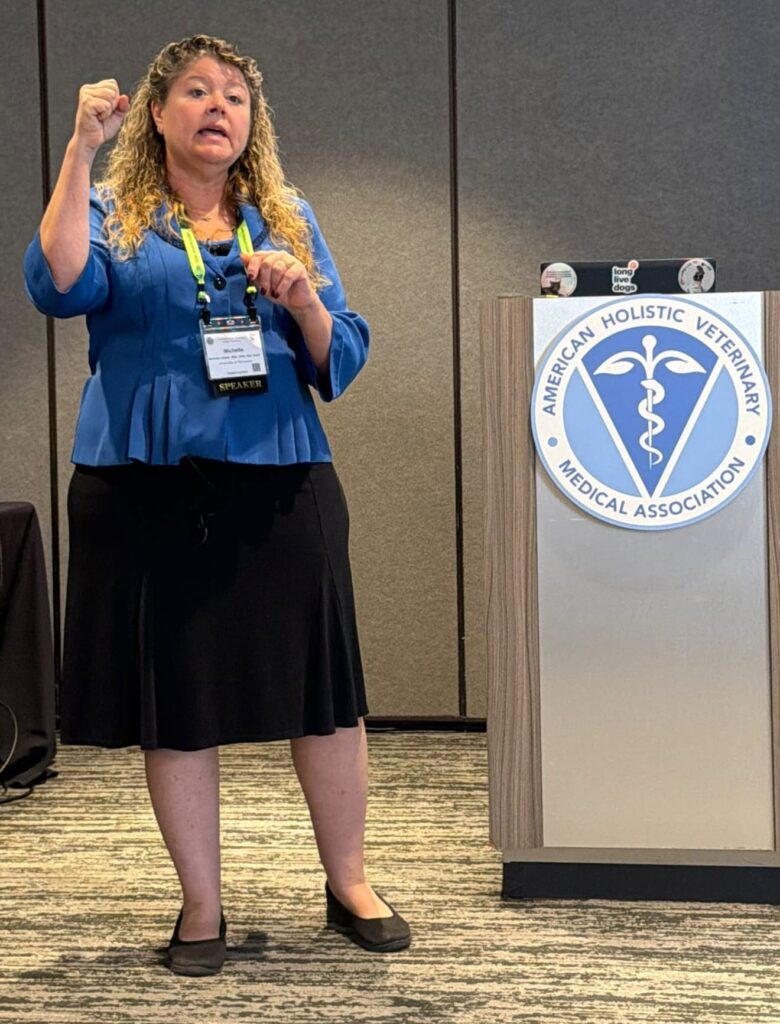
Listening to Dr. Michelle Kutzler at the AHVMA conference brought me back to a question that sits at the heart of preservation breeding: when we make a permanent decision for a puppy, are we considering the adult dog that puppy will become, and the older dog that adult will eventually be? We spend so much time discussing pedigrees, health testing, structure, nutrition, temperament, and the prevention of unwanted litters, yet the endocrine system that helps coordinate growth, metabolism, reproduction, and the function of tissues throughout the body can receive remarkably little attention in conversations about spaying and neutering. Her lectures asked us to look much more closely at that system, at what changes when the ovaries or testicles are removed, and at whether preventing reproduction always needs to involve removing the organs that produce reproductive hormones.
Before going further, I want to introduce the person behind these lectures properly. Dr. Michelle Anne Kutzler, MBA, DVM, PhD, DACT, is a veterinarian, a Cornell-trained reproductive physiologist, and a board-certified Diplomate of the American College of Theriogenologists, the veterinary specialty devoted to animal reproduction. She earned her veterinary science bachelor’s degree in 1990 and DVM in 1993 at Washington State University, completed her theriogenology residency at Cornell, earned her PhD in physiology there in 2002, and completed an MBA in organizational leadership at Oregon State in 2019. She is currently a professor in the University of Minnesota’s Department of Veterinary Population Medicine and a professor emerita at Oregon State. Her university biography credits her with more than 100 peer-reviewed publications, more than 30 book chapters, and two books. She chairs the World Small Animal Veterinary Association’s Reproduction Control Committee and co-chairs the scientific committee of the International Symposium on Canine and Feline Reproduction. Her recognition includes Oregon State’s Distinguished Professor of the Year and Eminent Mentor awards, Society for Theriogenology service recognition, and the Llama Association of North America’s HummDinger Lifetime Achievement Award.
Her experience also reaches into the world that breeders live in every day. Oregon State identifies her as an AKC Breeder of Merit who breeds, trains, and shows Dachshunds, and her clinical biography identifies her as an AKC judge with experience breeding conformation and field champions. She has contributed to books including Small Animal Pediatrics and Feline Reproduction. For those who might dismiss a lecture because it was presented at a holistic veterinary conference, these are substantial credentials in veterinary medicine, physiology, reproduction, teaching, and research. They give us a very good reason to examine her work carefully, while evaluating each scientific claim on the evidence supporting it.
Her university biography also lists scientific advisory roles with the Alliance for Contraception in Cats and Dogs, Virbac, which makes Suprelorin, and Epivara. Those relationships are relevant when discussing contraceptive products and belong alongside her qualifications. This account brings together her lectures, the slides I photographed, and published sources. Throughout these discussions, three kinds of evidence need to remain distinct: an association observed in a population of dogs, a biological mechanism demonstrated in tissue or cell culture, and a treatment shown to improve outcomes in living patients. All three matter, but they answer different questions.
The foundation of her presentation was the hypothalamic-pituitary-gonadal axis, often shortened to the HPG axis. The hypothalamus releases gonadotropin-releasing hormone, or GnRH, a small peptide that reaches the anterior pituitary through the local portal circulation. The pituitary responds by releasing luteinizing hormone, LH, and follicle-stimulating hormone, FSH. These hormones act on the gonads, the ovaries and testicles, which produce sex steroids and other feedback signals. Estradiol, testosterone, and the other participants in this system communicate back to the brain and pituitary, helping regulate further hormone release. It is a coordinated feedback system that changes across development, reproductive cycles, and reproductive activity.
When the gonads are removed, part of that feedback disappears. LH can consequently remain at concentrations far above those ordinarily present between reproductive surges in an intact adult dog. Her slides described increases of up to approximately thirtyfold, a finding discussed in her published review. That change is central to her research: gonadectomy creates both a loss of gonadal hormones and a persistent change in the hormones coming from the pituitary. Her concern extends beyond the familiar question of what happens when testosterone or estrogen is absent, to what happens when other tissues experience sustained, unusually high LH. The endocrine change is established; the extent to which it causes particular diseases remains an active research question.
Calling these substances “reproductive hormones” can make their reach sound much narrower than it is. Dr. Kutzler showed LH receptor expression in tissues outside the reproductive tract, including parts of the lower urinary tract, lymphocytes, thyroid tissue, joint support structures, and certain tumors. She also discussed receptors reported in brain and adrenal tissues. A receptor is a way for a cell to receive a signal, and finding that receptor provides a reason to investigate whether a circulating hormone can affect the tissue. Her work is trying to move from identifying those receptors to understanding their activity, their responses to different hormone concentrations, and their possible importance in the dog as a whole.
She explained LH receptor signaling through a G protein-coupled receptor, with intracellular pathways that can influence cell activity. Among the effects she discussed were nitric oxide signaling, tissue relaxation, cell proliferation, and the formation of blood vessels. Those processes can be useful in normal physiology, while being undesirable in a different tissue or context. Relaxation has a different significance in a blood vessel than it does in a ligament supporting a joint or a sphincter maintaining urinary continence, and proliferation has a different significance in normal tissue than it does in a tumor. Her proposed framework is that sustained high LH may activate receptors outside the gonads in ways that help explain some of the associations reported after gonadectomy.
The urinary tract was one of the first practical examples. Her slides showed receptor staining in bladder tissues, and she discussed both urinary sphincter mechanism incompetence and urinary calculi. These are different problems, and the distinction matters. A leaking dog needs an assessment of the reason for the leakage; a dog with crystals or stones needs identification of the stone type and contributing factors. In the lecture she cited large veterinary record studies associating neuter status with stone risk, including a Banfield study concerning calcium oxalate urolithiasis. The broader lesson was to consider the animal’s physiology when a problem recurs, alongside nutrition, water intake, infection, anatomy, urine chemistry, and the nature of the stone. The study’s findings about calcium oxalate should not be generalized to every kind of urinary crystal or stone.
Urinary incontinence also provided an example in which hormonal approaches have some clinical research behind them. A published study of GnRH analogue treatment in thirteen spayed bitches reported restored continence with the analogue alone in seven, with additional responses when phenylpropanolamine was added in some of the others. That is a small study, but it gives a more concrete clinical foundation than receptor staining alone. It still does not establish that lowering LH explains every improvement, because GnRH analogues can have additional effects. The useful question is whether a particular dog’s diagnosis, treatment history, and response justify discussing this approach with a veterinarian familiar with reproductive endocrinology.
For a breeder, that discussion reaches beyond the immediate inconvenience of leakage. Continence problems can affect sleep, skin comfort, household relationships, and a family’s ability to care for an older dog. We should be thinking about those possibilities when discussing long-term health, while continuing to investigate the actual cause of a urinary problem. In one surgical question, Dr. Kutzler specifically discussed the possibility of an ectopic ureter entering vaginal tissue, illustrating why knowledge of the individual dog’s anatomy and history matters even when the conversation begins with hormones.
The immune discussion was equally significant. She showed a study associating gonadectomy with increased occurrence of several immune-related disorders, including atopic dermatitis, autoimmune hemolytic anemia, immune-mediated thrombocytopenia, inflammatory bowel disease, hypothyroidism, and hypoadrenocorticism in particular comparisons. The magnitude and significance of the findings differed by disorder and sex, so the table cannot be reduced to a claim that every immune disease increases equally in every neutered animal. These were associations in medical records, with the limitations that accompany retrospective data. They nevertheless raise questions that deserve attention when we discuss lifelong health.
Her own lymphocyte research added a more specific piece of the puzzle. B lymphocytes participate in antibody-mediated immunity, while T lymphocytes have multiple roles in coordinating immune responses and acting against target cells. Her slides described a higher percentage of LH receptor-positive circulating T lymphocytes in gonadectomized dogs than in sexually intact dogs, while the corresponding B-cell comparison did not show the same reproductive-status difference. A tendency toward higher B-cell receptor expression in males was presented as a trend, rather than a statistically established sex difference. Accurate descriptions matter: these findings provide a basis for further investigation of immune regulation, while leaving the question of whether LH suppression prevents autoimmune disease .
Hypothyroidism was another substantial part of the lecture. Dr. Kutzler showed images of thyroid follicles and described LH receptors in the thyroid cells surrounding them. The thyroid receptor-expression study reported an average of approximately 46.5 percent positive thyrocytes in the small group examined. She then discussed preliminary work exploring whether high LH could interfere with the thyroid’s response to thyroid-stimulating hormone, TSH, through pathways used within the cell. The possibility of overlapping signaling pathways is scientifically interesting, but it must be kept separate from proof that a particular dog’s low thyroid function is caused by LH or can be corrected by lowering it.
That distinction is especially relevant to breeders who carefully manage food, body condition, activity, and environmental exposures yet still encounter dogs with unexplained weight changes, skin problems, lethargy, or reduced vitality. Endocrine assessment can belong in that conversation, alongside appropriate investigation of thyroid disease and other diagnoses. A normal-range thyroid result, a low result, and clinically confirmed hypothyroidism are not interchangeable findings. The practical value of her lecture was to broaden the questions we ask while continuing to diagnose the individual dog properly.
The orthopedic discussion was particularly difficult to ignore because it connected anatomy, development, family finances, and the daily life of a dog. She spoke about cranial cruciate ligament disease, the canine condition often casually compared with ACL injury in people. Her teaching examples included the heavy Labrador that suddenly becomes lame after a seemingly ordinary movement and the athletic Border Collie that completes a demanding activity before injuring a knee during a turn. These examples made the point that a dramatic sporting accident is not required, and that the appearance of an acute rupture does not tell us everything about the process that preceded it.
One of her slides drew on the 2013 Golden Retriever study. In that study, “early” neutering meant before twelve months of age, and “late” meant twelve months or older. Cruciate tears were recorded in about five percent of early-neutered males and eight percent of early-neutered females, compared with none in the intact groups studied. There was also a case in a late-neutered male. Those are findings in a particular retrospective population, rather than guarantees about an individual Golden Retriever or a prediction for every other breed. The same study reported differences in hip dysplasia and some cancers across sex and neutering-age groups, reinforcing how much detail can be lost when all spay-and-neuter decisions are discussed together. (pmc.ncbi.nlm.nih.gov)
Her research on joint support tissues found LH receptor expression in structures associated with the knee and hip, including the cranial cruciate ligament and the ligament of the head of the femur. Receptor expression varied, and the published work did not establish a simple, uniform difference between intact and neutered dogs in every tissue examined. Functional studies are needed to determine what those receptors do under relevant conditions. Her proposed concern is that hormone-associated changes in supporting tissues could contribute to instability or disease, adding an endocrine dimension to the familiar discussions about structure and weight. For preservation breeders, that is a reason to consider developmental physiology alongside genetic and orthopedic screening.
She also made the financial consequences feel very real. Her local example placed cruciate surgery and immediate postoperative care in the range of five to eight thousand dollars, with rehabilitation potentially adding more. A family may stretch its finances to treat one knee and then face another injury later. That possibility deserves to be part of an honest discussion of lifetime welfare, even when a percentage looks small on a slide. The cost she quoted was a local clinical example, and treatment needs differ between patients, but the burden she described was recognizable: a preventable or reducible risk, if research eventually establishes one, could matter enormously to the dog and its family.
Hip dysplasia requires its own careful discussion because it is a developmental condition with complex genetic and environmental contributions. Excellent hip evaluations in parents and previous generations reduce uncertainty, but they do not guarantee unaffected offspring. Dr. Kutzler emphasized the support structures around the joint, the importance of muscle, and the distinction between radiographic changes and the pain or loss of function an owner notices. An owner may first describe a dog struggling to rise, hesitating to jump, or shortening its walks. Endocrine questions may add to that assessment, alongside genetic selection, appropriate growth, lean body condition, and orthopedic care. She also mentioned her interest in Dachshunds and intervertebral disease, while acknowledging that her ligament collection had not included the intervertebral tissues she later wished she had studied. That acknowledgement identifies a next question without pretending it has already been answered.
Behavior was another area where her message challenged a familiar shortcut. Removing the gonads can reduce certain sexually influenced behaviors, including some forms of male-to-male aggression, but aggression and fear are not single diagnoses with one hormonal explanation. She discussed research reporting increased fearful or aggressive behavior in some populations after gonadectomy, and described the familiar clinical situation of a sociable puppy returning later as a dog that is frightened of the examination room. Her question was whether endocrine changes could contribute to some of those responses, given receptor findings and the role of brain systems involved in emotion and memory. That is different from proving that surgery caused the change in an individual dog.
For breeders and owners, the practical implication is to resist promising that neutering will solve a temperament problem. Pain, learned fear, genetic predisposition, developmental stage, social experience, environment, and handling can all contribute to the behavior we see. Owner-directed aggression, stranger-directed aggression, fear, and reproductive behavior require different assessments. A dog that is struggling deserves a medical and behavioral evaluation, with support from appropriately qualified professionals when necessary. Dr. Kutzler’s broader point was that permanent endocrine intervention should be discussed with as much specificity as the behavior that prompted the recommendation.
The cancer lectures were emotionally heavy, and she explicitly cautioned against interpreting her presentation as a claim that intact dogs cannot develop cancer. They can. Her slides discussed associations involving mast cell tumors, lymphoma, hemangiosarcoma, osteosarcoma, prostate carcinoma, and urothelial carcinoma, also called transitional cell carcinoma. The relationships differ by cancer, breed, sex, age, and study design. What interested her was whether receptor expression and hormone signaling could help explain some of the patterns, and whether those pathways might eventually provide useful adjuncts to established cancer treatment.
One of the most memorable clinical accounts concerned a digital mast cell tumor, a tumor involving the toe area. She described removing the mass with a toe, seeing recurrence, removing another toe, and eventually proceeding to limb amputation. It was a reminder that even a tumor discussed as manageable can become devastating when its location makes complete excision difficult. The face, toes, and other areas with limited tissue available for surgical margins create challenges that are not captured by a casual description of a cancer as relatively low risk. She discussed receptor expression and more aggressive tumors, and proposed considering LH reduction as an additional strategy in selected cases. That proposal belongs in a veterinary oncology discussion; the case does not establish that LH suppression would have prevented recurrence or avoided amputation.
Osteosarcoma brought a different kind of fear into the room. Her teaching scenario began with a limp that an owner might attribute to a busy day, an outing, or daycare, followed by persistent discomfort, swelling, and radiographs that reveal a much more serious problem. She discussed studies associating gonadectomy with osteosarcoma in certain populations and raised the possibility of LH-reducing treatment as an adjunct after amputation. Her interest in the endocrine pathway is a reason to study an additional treatment approach, while continuing to use appropriate oncology staging and established treatment.
Her account of her son’s twelve-year-old Boxer made the hemangiosarcoma discussion especially personal. She described a dog that appeared well, greeted its family, and then collapsed, followed by emergency assessment and discovery of a mass. Her description captured that terrible gap between an apparently normal morning and a life-threatening emergency. She discussed how short survival can be after a crisis involving an aggressive visceral tumor, while prognosis for any individual dog depends on staging, tumor location, treatment, and other factors. She also distinguished the behavior of visceral disease from tumors occurring in the skin or subcutaneous tissues.
There is published laboratory work behind part of that discussion. In a study of three canine splenic hemangiosarcoma cell lines, LH receptor activation increased proliferation in two of the lines, with differences in responses between them. That provides evidence that the pathway can be functionally active in certain cultured tumor cells. It does not show that a deslorelin implant improves survival in dogs with hemangiosarcoma, nor that high LH explains every case. For me, its significance is that it identifies a specific, testable mechanism in a disease for which better options are desperately needed.
The lymphoma material followed a similar progression from observation to mechanism to the need for clinical trials. A study published online in 2024 examined three canine T-cell lymphoma cell lines and used human chorionic gonadotropin, an LH receptor agonist, to activate the receptor. Proliferation increased in all three lines, while adhesion and transmigration increased in two, with responses differing across the lines. Those results support further investigation of LH receptor signaling in malignant lymphocytes. They do not establish that suppressing LH prolongs remission or survival in dogs undergoing chemotherapy.
Dr. Kutzler described the difficulty of obtaining funding for the controlled clinical trial she would like to conduct, comparing conventional treatment with conventional treatment plus an endocrine intervention. That missing trial is important to the message. A promising pathway can justify research and a thoughtful discussion of individual treatment, while still leaving unanswered questions about benefit, duration, selection of patients, and adverse effects. Her remarks about seeing lymphoma in very young dogs were striking, but observations from clinical experience cannot, on their own, establish a historical rise in disease or identify its cause. I want breeders and owners to take these possibilities seriously enough to support investigation, without turning a lecture about an emerging field into promises that the field cannot yet deliver.
The next lecture returned to prevention and to a distinction that should be part of every informed conversation: sterilization prevents reproduction; gonadectomy removes the gonads. These can occur together, as in conventional spaying or castration, but there are other surgical options. A vasectomy interrupts sperm transport while preserving the testicles. An ovary-sparing hysterectomy removes the uterus while preserving one or both ovaries. The AVMA includes these alternatives in its public materials, and the WSAVA reproduction guidelines discuss a range of surgical and nonsurgical approaches. The appropriate choice depends on the dog, the household, health considerations, and access to a veterinarian with the relevant skills.
That distinction is particularly relevant to breeders placing puppies in companion homes. We have a responsibility to prevent unintended breeding, including the use of a carefully bred puppy in a program we never intended to support. At the same time, we have a responsibility to consider that puppy’s development and future welfare. Dr. Kutzler described breeders using vasectomy to prevent reproduction while preserving testicular function, including the example of a Bernese Mountain Dog puppy whose breeder wanted to prevent its future use to produce Bernedoodles. This example illustrates a possible option; it does not mean every puppy should undergo an early alternative surgery. Age, health, anesthetic considerations, anatomy, owner reliability, and the veterinarian’s judgment still belong in the decision.
She presented vasectomy as an operation that can become efficient with training and experience, while acknowledging that unfamiliarity can initially make it take longer. Her anatomical discussion focused on identifying the vas deferens, protecting the major blood supply to the testicle, and securely addressing both ends of the divided duct. She emphasized preventing recanalization and leakage of sperm, which can produce an inflammatory response and contribute to sperm granuloma or spermatocele. A vasectomized male still has testicles, still produces hormones, and may retain mating behavior; he is not behaviorally or endocrinologically equivalent to a castrated male. If castration becomes appropriate later, a prior vasectomy does not remove that option.
One photograph showed a study of a Vasocclude clip device applied through a small scrotal puncture. In that study, no sperm were found in samples collected one week after the procedure. Dr. Kutzler used this to question lengthy waiting periods sometimes repeated without reference to evidence. The precise interpretation matters: results from that clip technique and those sampled dogs should not become a blanket guarantee that every male is infertile seven days after every kind of vasectomy. Owners need the surgeon’s postoperative instructions, and confirmation of clearance when appropriate, before relying on the operation to prevent pregnancy.
Her hysterectomy discussion had a fascinating historical element. The slides included a 1972 article by veterinarian Wendell O. Belfield describing “partial spay,” and an Integrative Veterinary Care cover discussing the approach. She described discovering that the idea had been published long before the recent conversations surrounding it. Another example involved a young Great Dane whose shelter placement required sterilization. An ovary-sparing approach offered a way to address that requirement while retaining ovarian function during development. It was a practical illustration of how population-control goals and an individual dog’s endocrine development can sometimes be considered together, provided the operation is appropriate and properly performed.
The central surgical message was uncompromising: an ovary-sparing hysterectomy must address all uterine tissue capable of developing the uterine disease we are trying to prevent, with careful management of the cervix and associated anatomy. Her slides described removal of the uterine tubes, horns, body, cervix, and a portion of the cranial vagina, while leaving one or both ovaries. She stressed that a familiar conventional spay approach, simply modified by leaving the ovaries, should not be assumed to accomplish the required complete removal. Retained hormonally responsive uterine tissue can create a risk
of stump pyometra. The completeness of the operation, and the surgeon’s ability to see and identify the relevant anatomy, were central to her explanation.
She explained why the incision may need to extend farther caudally than an owner expects, particularly in a young dog or one whose reproductive tract is harder to exteriorize. Preserving ovarian circulation, identifying the uterine horn tips, and safely addressing the caudal tract were all part of her discussion. She also described refining her vaginal closure technique after concerns about a pocket of secretions between ligatures. For a client deciding whether to accept a somewhat longer incision, the meaningful consideration is the completeness and safety of the operation, with secure body-wall closure and appropriate recovery. A cosmetic preference should not determine how much of the anatomy can be seen and managed.
An ovary-sparing female still cycles. She may show vulvar changes, attract males, and exhibit hormonally influenced behavior, even though she cannot carry a pregnancy after a complete hysterectomy. Dr. Kutzler explained that the typical bloody discharge of canine proestrus should be absent when the relevant uterine tissue has been completely removed. Persistent or recurrent bleeding deserves veterinary investigation. She discussed potential vaginal trauma from mating and said she had not encountered it in her own operated patients, while acknowledging that trauma can occur. Her experience is useful clinical information, but it does not establish that the risk is zero. Owners still need postoperative separation and the operating veterinarian’s guidance about healing and future management.
Permanent identification was one of the most practical points in the entire series. If an ovary-sparing puppy later enters a new home, the phrase “she was spayed” can create confusion when she begins showing signs of a normal ovarian cycle. Another veterinarian might reasonably suspect an ovarian remnant unless the original procedure is clearly documented. Dr. Kutzler recommended an identifying tattoo, such as an H for hysterectomy or a V for vasectomy, positioned where it is likely to be seen during future surgical preparation. A microchip provides an identifier that can link to records, but it does not itself contain a complete, universally accessible surgical history. Clear consent, accurate records, communication with the new owner, and a durable identifying method protect the dog from misunderstanding and potentially unnecessary intervention.
An audience question about an older Rottweiler brought the discussion back to individual decisions. The dog had been medically treated for pyometra, and the owner wanted to prevent recurrence. Dr. Kutzler discussed whether hysterectomy with retention of healthy ovaries could be appropriate in that patient. That is a clinical decision requiring assessment of the dog’s condition and reproductive tract. She linked her interest in ovarian retention in Rottweilers to Dr. David Waters’s observational work on exceptional longevity, which found an association with duration of ovarian exposure. Such studies are valuable, but they do not guarantee that retaining ovaries will produce exceptional longevity in an individual dog.
The discussion of retained ovaries also required acknowledging mammary neoplasia and ovarian disease. These are real considerations, and she repeatedly returned to the importance of teaching owners to notice mammary changes. A dog that was conventionally spayed later in life, or adopted with an uncertain reproductive history, also needs that attention. When an owner is stroking a dog’s abdomen, a new lump, thickening, nipple change, or unusual area should prompt a veterinary assessment. Small size can be favorable for prognosis, but a mammary tumor smaller than a centimeter is not guaranteed to be benign or free of metastasis. Histologic type, grade, invasion, lymph-node involvement, and staging matter. Early attention gives the dog a better opportunity for appropriate treatment.
She distinguished the normal endocrine course of canine diestrus from an overt false pregnancy, or pseudocyesis, involving lactation, nesting, guarding objects, or other conspicuous changes. An ovary-sparing female can still experience these signs. Her clinical discussion included preventing self-nursing when it maintains milk production and using cabergoline, a prolactin-suppressing drug, in appropriate patients. Retaining hormonal function means retaining some hormone-associated management needs. Repeated or troubling episodes deserve a conversation with the veterinarian, including the dog’s mammary health and quality of life.
The pharmacologic lectures covered several different tools that are easy to confuse. Progestogens can suppress or postpone estrus, but their benefits and risks depend on the drug, dose, reproductive stage, age, and health of the patient. Her slides included older examples of megestrol acetate and injectable products, along with concerns about weight gain, behavior, mammary stimulation, and other adverse effects. She described renewed use of such approaches when access to surgery was disrupted during the COVID period. She also discussed androgens used for estrus suppression, including mibolerone and methyltestosterone, with possible clitoral enlargement, behavior changes, and liver-related concerns. Her discussion emphasized that effectiveness and safety cannot be separated from the particular patient and regimen.
Deslorelin, a GnRH agonist used in implants such as Suprelorin, occupies a different place in the discussion. Initially it can stimulate the reproductive axis, producing a flare; with sustained administration it suppresses pituitary responsiveness and reduces gonadotropin output. In an intact animal, this can suppress gonadal activity and fertility. In an animal whose gonads have already been removed, the interest is in reducing persistently elevated LH. Neither situation is the same as replacing missing testosterone or estrogen. Understanding the intended target is essential before grouping all of these interventions together as “hormone treatment.”
Dr. Kutzler emphasized that implant duration and response can vary. A labeled interval does not guarantee the same duration in every animal, and a patient’s returning clinical signs may prompt reassessment. She discussed qualitative LH testing as one tool, with a positive result above the assay threshold indicating elevated LH rather than providing an exact concentration. Such a test cannot diagnose every proposed LH-associated disease. In an intact male, changes in testicular size can help show changes in suppression, but a neutered dog lacks that visible marker. Clinical assessment and the purpose of treatment therefore remain central.
Her preferred implant placement was in an accessible area of thin abdominal skin, so that she could identify and remove it if necessary. She described initial flare effects in intact animals, possible local reactions, and a case in which urinary incontinence developed during suppression and resolved after removal. The ability to reconsider treatment mattered to her. She also acknowledged the limits of available safety information: an absence of reported problems in a particular group is not proof that no problem can occur. Owners need to understand the expected effects in an intact animal, the different purpose in an altered animal, and the uncertainty surrounding use for conditions that have not been evaluated in controlled trials.
There was also a regulatory discussion whose automatic transcript was particularly unreliable. The indexed United States Suprelorin F product is labeled for ferrets, and its labeling explicitly prohibits extra-label use. Other products and import routes raise separate regulatory questions that need to be resolved through lawful, current channels. Accurate prescribing and records are essential here, and a corrupted recording cannot safely establish what is legally permitted.
One point I found especially valuable was that she did not recommend placing every spayed or neutered dog on preventive medication. Many altered dogs do not have the conditions being discussed, and treatment without a defined purpose adds its own burdens. She described a dog with a cruciate problem in one knee as a situation in which she might discuss an endocrine adjunct while trying to protect the other knee, alongside weight management and rehabilitation. That remains a proposed strategy, rather than a demonstrated guarantee of prevention. Her broader clinical approach was to identify a patient’s problem, decide what physiological change might be relevant, and monitor whether the intervention produces a useful response.
The discussion of testosterone replacement illustrated the same distinction between the intended effect and unwanted effects. She described an older agility dog whose owner wanted improved vitality, then reported increased mounting and libido at the initial regimen. The treatment was adjusted downward until the owner and veterinarian felt the balance was more suitable. She also described the challenge of an overweight Labrador, separating muscle mass, activity, appetite, and body condition rather than assuming they would all change together. These accounts are clinical observations, and they help explain the decisions she makes in individual cases. They do not establish a standard replacement regimen for every neutered male or an anti-aging treatment for every older dog.
A recent small testosterone study adds some published data but also illustrates how early this work remains. Twelve castrated dogs were divided among a control group and three weekly treatment groups for approximately three months. Suppression of LH differed by dose, and the highest-dose group showed the clearest reduction. That short study cannot establish long-term safety or prevention of orthopedic disease, cancer, or cognitive decline. In her clinical discussion, Dr. Kutzler stressed baseline blood counts and biochemical testing, investigating liver abnormalities before proceeding, and ongoing monitoring. She also acknowledged that restoring hormones after prepubertal gonadectomy has not been shown to recreate the timing and full developmental consequences of natural puberty.
The timing question is especially important in breeds that mature at very different rates. Suppressing the reproductive axis of an intact puppy with an implant can delay hormonal development, so it should not be assumed to have the same developmental consequences as a vasectomy that leaves testicular hormone production functioning. Similarly, giving a reproductive hormone to a previously altered puppy does not necessarily reconstruct the whole sequence that would have occurred naturally. Dr. Kutzler acknowledged unanswered questions about skeletal development and other tissues. For breeders, those questions deserve specific attention before accepting assurances about “recreating puberty.”
Her prostate discussion distinguished benign prostatic hyperplasia from prostate cancer. These are different conditions with different implications. She discussed finasteride, which inhibits conversion of testosterone to dihydrotestosterone, as an option in suitable intact males, particularly where preserving reproductive function matters. A treatment decision still requires diagnosis and consideration of the dog’s signs, prostate changes, breeding plans, and other findings. More generally, the prostate examples showed why “hormones cause prostate problems” is too broad to guide a decision: the condition, pathway, and desired outcome all need to be specified.
For urinary continence, she discussed estrogen’s effects on endocrine feedback and adrenergic receptor expression, helping explain why it can be useful in selected patients. She expressed a strong personal dislike of Proin, the phenylpropanolamine product. That preference belongs in an account of her lectures, but the material provided does not establish her complete reasoning or a conclusion that Proin is unsuitable for every dog. Treatment choices need to consider diagnosis, response, adverse effects, and the individual patient. The discussion comparing estrogen use in dogs and humans also highlighted the need to understand species differences before transferring treatment assumptions from one to the other.
Cushing’s disease and Addison’s disease came up during questions. She discussed possible relationships between LH, adrenal receptors, and changes in the pituitary, while drawing comparisons with adrenal disease in ferrets. These are areas where the proposed mechanism needs particularly careful description. Canine hyperadrenocorticism has established pituitary and adrenal causes, while primary hypoadrenocorticism commonly involves loss of adrenal function. An endocrine hypothesis does not establish that a GnRH implant treats either disease in dogs. The questions identify avenues for research and specialist discussion, while the current patient’s diagnosis and essential treatment remain the priority.
One audience contribution explored a possible connection between Bartonella infection, changes in hormones, and cancer, drawing on the audience member’s own human medical experience. In the recording, this was an audience question, rather than evidence presented by Dr. Kutzler or a clinical case establishing her hypothesis. She acknowledged that she did not have an answer. That distinction deserves to be preserved because it captures the breadth of questions the lectures prompted without converting a personal account into proof of causation or advice about treating human breast cancer, infection, or hormone suppression.
She also explained why dogs and cats should not automatically receive identical recommendations. Female cats can cycle repeatedly during the breeding season, intact males can create substantial household challenges, and feline mammary tumors present a particularly serious concern. Those differences affect welfare, practical management, and population control. Her personal discussion favored allowing developmental maturity when feasible, but that should not be represented as a universal professional recommendation for cats. Current recommendations and local population circumstances may favor earlier sterilization. A breeder’s carefully managed home, an individual pet household, a shelter, and a feral-cat program face different realities, and an approach must work in the circumstances where the animal actually lives.
What stayed with me through all of these lectures was the amount of responsibility contained in a routine recommendation. Dr. Kutzler described the pushback she has encountered, including concerns about surgical time, shelter capacity, legality, and the prevention of unwanted litters. Those concerns deserve serious answers because population control is a real welfare issue. Her proposed surgical alternatives are intended to prevent reproduction while preserving gonadal function where appropriate. Her frustration with the profession was evident, but the most useful response for breeders is to encourage a specific, informed conversation with our veterinarians: what is being prevented, what is being changed permanently, which risks apply to this breed and this dog, and which alternatives can be performed safely?
In a preservation breeding program, that conversation belongs beside the work we already do to protect genetic diversity, evaluate structure and temperament, choose suitable pairings, support sound growth, and educate the families who take our puppies home. We can discuss preventing reproduction while giving the endocrine system the attention it deserves, and we can discuss hormone preservation while acknowledging mammary disease, reproductive management, surgery, and household limitations. We can ask about age and technique, document exactly what has been done, teach owners which changes deserve attention, and remain available when a puppy grows into an adult with needs we could not have predicted. That continuing responsibility is part of preserving a breed.
Dr. Kutzler’s lectures leave us with established physiology, published associations that vary across populations, specific receptor findings, emerging functional studies, and clinical proposals that still need stronger outcome data. They deserve a place in the conversation because the questions concern the whole dog and the whole lifespan. For me, responsible preservation includes being willing to revisit a familiar practice when credible work identifies consequences we have under-discussed, while holding new treatments to the same standard of careful diagnosis, honest communication, and evidence that we would expect from any other part of veterinary medicine.
Timea R. Bodi, Danube Poodles


Leave a Reply