

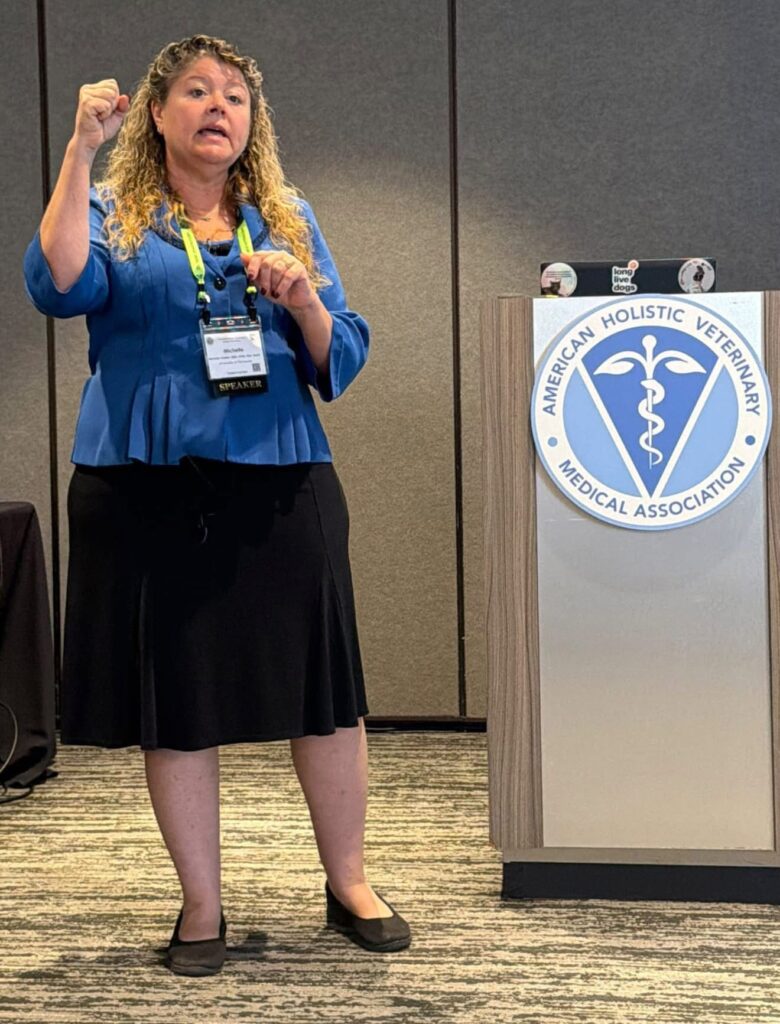
Day two at the AHVMA conference, and I spent a good part of today taking notes and wondering how we can talk so much about keeping dogs healthy while giving so little attention to what happens when we permanently change their hormonal system.
There were wonderful veterinary speakers today, and I have plenty I want to share about them. But I am giving this entire post to Dr. Michelle Kutzler. I am honestly in awe of this woman. The amount she knows, the work she has done, and her ability to explain what that work could mean for the dog sitting in someone’s living room deserve more than a few lines in a conference update.
I kept thinking about the puppies we raise and the families who trust us. We spend years trying to get things right before those puppies are even born. We study pedigrees, compare health testing, evaluate structure and temperament, and lose sleep over decisions most people will never know we had to make. Then a permanent decision about that puppy’s endocrine system can get me reduced to an appointment on the calendar, sometimes with very little discussion of anything beyond preventing a litter.
That bothers me. It should bother us enough to ask better questions.
Before I get into what she taught, let me introduce Dr. Kutzler properly, because this lady has devoted a considerable part of her life to understanding animal reproduction and physiology.
Dr. Michelle Anne Kutzler, MBA, DVM, PhD, DACT, is a board-certified specialist in animal reproduction and a Diplomate of the American College of Theriogenologists. She earned her veterinary degree at Washington State University, completed her reproduction residency at Cornell, and earned a Cornell PhD in physiology. She is a professor at the University of Minnesota and a professor emerita at Oregon State. Her university biography lists more than 100 peer-reviewed publications, more than 30 book chapters, and two books. She chairs the World Small Animal Veterinary Association’s Reproduction Control Committee and co-chairs the scientific committee of the International Symposium on Canine and Feline Reproduction. She is also an AKC Breeder of Merit and judge who breeds, trains, and shows Dachshunds. She has worked with this subject in research, teaching, veterinary practice, and her own breeding experience.
So if someone sees the words “holistic veterinary conference” and immediately decides they can dismiss everything that follows, I would ask them to slow down and actually look at whose work they are dismissing. Her credentials do not settle every question she raises. They certainly justify taking the time to examine it.
One of the most important parts of her lectures was a distinction that ought to be included whenever an owner is making this decision. Preventing reproduction and removing the organs that produce reproductive hormones are different interventions.
We have done them together for so long that many people do not realize they can sometimes be separated. An owner wants to make sure a dog cannot produce puppies. That is a reasonable goal. But does achieving that goal always require removing the ovaries or testicles, and has anyone explained the other consequences before recommending it?
The ovaries and testicles participate in a feedback system involving the brain and pituitary. Hormonal signals go out, the gonads respond, and their hormones help regulate what happens next. Remove the gonads and that feedback changes. The hormones they were producing fall, while other signals coming from the pituitary can rise. One of those is luteinizing hormone, or LH.
Dr. Kutzler discussed LH concentrations rising to as much as approximately thirty times those ordinarily found in intact dogs. Her research asks what sustained exposure to elevated LH could mean for tissues outside the reproductive tract. That is the part I wish more people understood when they hear the phrase “reproductive hormones.” The name does not mean those hormones only matter when an animal is breeding.
She discussed LH receptors in urinary tissues, lymphocytes, thyroid tissue, structures supporting the joints, and certain tumors. There is research investigating what those receptors do and how the tissues respond. The endocrine system is involved in far more of the dog than most people picture when they are booking a spay or neuter.
As a breeder, I find it difficult to spend so much effort supporting development and then treat the hormones involved in that development as a minor consideration. We can argue about exercise, feeding, supplements, growth, and the right age to introduce different activities for hours. Surely we can also make room for a proper discussion about permanently removing hormone-producing organs.
I want to be clear about the evidence because this subject matters too much to get sloppy with it. Some of what she presented is established physiology. Some is research finding associations between gonadectomy and disease. Some is laboratory work examining receptors and cellular responses, and some is clinical experience that still needs controlled trials. Those are different kinds of evidence. We can acknowledge that and still recognize that there is a hell of a lot here worth investigating.
The orthopedic discussion was one place where the consequences became very concrete. She described the Labrador that becomes lame after an ordinary movement and the athletic Border Collie that finishes an activity and then injures a knee during a turn. An owner sees the moment the dog became lame, but that moment may be the end of a process that has been developing for some time.
One Golden Retriever study she discussed found cruciate tears in approximately five percent of early-neutered males and eight percent of early-neutered females, compared with none in the intact groups studied. In that study, early meant before twelve months. It was a particular population, and those findings cannot be applied indiscriminately to every breed. But I would not wave them away simply because most dogs in the group did not rupture a ligament.
The family whose dog is affected is facing pain, restricted activity, a treatment decision, recovery, and a bill. Dr. Kutzler described local surgical costs of five to eight thousand dollars, with rehabilitation potentially adding more. Plenty of families would struggle to find that money. Some would manage it by borrowing or exhausting their savings, and then face another knee problem later with very little left to draw on.
That belongs in a welfare discussion. We cannot talk about the health of dogs as though the people responsible for treating them have unlimited money, unlimited time, and no other demands in their lives.
Her research has identified LH receptors in structures supporting the knee and hip. Their functional role still needs investigation. Genetics, conformation, body condition, growth, and activity remain important, but research into an additional physiological factor deserves attention too. A complicated disease is unlikely to become easier to understand because we refuse to consider another part of the animal.
The immune and thyroid material raised similar questions. She discussed studies associating gonadectomy with increased occurrence of several immune-related disorders, with differences according to disease and sex. Her lymphocyte research found a higher proportion of LH receptor-positive circulating T cells in gonadectomized dogs. She also discussed receptors in thyroid tissue and preliminary work investigating how elevated LH might affect thyroid signaling. These findings give researchers specific questions to pursue; they do not yet establish that lowering LH prevents autoimmune disease or treats hypothyroidism
As someone who cares deeply about nutrition, I appreciated the reminder that a dog’s physiology does not begin and end with its food bowl. We should feed well, manage body condition, and support appropriate activity. We should also investigate the actual animal when something is wrong. Urinary leakage, recurring urinary problems, lethargy, and changes in body condition can require much more than another round of trying different foods.
Behavior was another subject I wish owners heard more about before being assured that neutering would make a difficult dog easier. Fear of strangers, aggression toward another male, owner-directed aggression, and mounting are different behaviors. They do not all have the same cause, and they should not all come with the same promise that surgery will sort them out.
Dr. Kutzler discussed findings of increased fearful or aggressive behaviors after gonadectomy in some populations, while acknowledging that sexually influenced behaviors can respond differently. She described the cheerful puppy that returns later frightened of examination and handling. Hormonal changes were part of the question, but pain, learning, development, inherited tendencies, and environment still require assessment.
We owe families realistic expectations. If a dog is struggling, that dog needs a proper evaluation and appropriate behavioral support. The owner should understand what surgery may help with, what it may not help with, and what remains uncertain. “Get him neutered” can be a very incomplete response to a complicated problem.
The cancer lectures were hard to listen to. One clinical example involved a mast cell tumor in the toe area. She described removing the tumor with a toe, seeing it return, removing another toe, and eventually amputating the limb. It is easy to discuss a tumor in broad terms until its location makes getting adequate margins a major problem and the family is facing another operation.
She also spoke about her son’s twelve-year-old Boxer, which appeared well, greeted the family, and then collapsed before a mass was found during emergency assessment. That account was heartbreaking. A family can be having an ordinary morning and suddenly be trying to make decisions it had no idea it would face that day.
She discussed LH receptors in certain cancers and the possibility of reducing LH as an additional treatment strategy. Laboratory work has shown increased proliferation following receptor activation in two of three canine hemangiosarcoma cell lines studied, and in all three canine T-cell lymphoma cell lines examined in another study. Those findings warrant further investigation. They do not show that an implant extends survival in dogs with those cancers.
She wants controlled clinical research comparing conventional treatment with conventional treatment plus an endocrine intervention. That is how we find out whether the promising mechanism actually makes a useful difference for patients. I want those questions investigated, especially in diseases where owners and veterinarians so often wish they had better options.
She was also clear that intact dogs can get cancer. Please keep that point in the conversation. Hormonal status is one consideration, and the associations differ between diseases, breeds, sexes, and study populations. Turning her lectures into a claim that intact dogs are protected from cancer would misrepresent what she said.
The surgical alternatives were particularly relevant to the decisions breeders and families are making now. A vasectomy can prevent reproduction while retaining the testicles. An ovary-sparing hysterectomy can prevent pregnancy while retaining ovarian function. These procedures are included in AVMA materials and discussed in the WSAVA reproduction guidelines. Owners deserve to know they exist and to hear a proper explanation of their benefits and limitations.
Dr. Kutzler gave the example of a Bernese Mountain Dog breeder who wanted to prevent a puppy’s future use to produce Bernedoodles while preserving hormonal development. Breeders have legitimate concerns about the future use of the dogs they place. An alternative procedure may provide another option, with the age and suitability of surgery assessed for that individual puppy.
She also described a young Great Dane whose shelter placement required sterilization. An ovary-sparing procedure offered a way to satisfy that requirement while retaining ovarian function during development. I appreciated hearing practical examples where the responsibility to prevent reproduction and the physiology of the individual dog were considered together.
Of course, the operation has to be performed correctly. A vasectomy requires attention to the duct and surrounding anatomy, prevention of recanalization, and management of the divided ends to limit sperm leakage. A vasectomized male continues to produce hormones and may still mate. Owners need postoperative guidance and appropriate confirmation of effective clearance before relying on the operation to prevent pregnancy.
An ovary-sparing hysterectomy also has to accomplish complete removal of the relevant uterine tissue, with careful attention to the cervix and associated anatomy. Leaving hormonally responsive uterine tissue can create a risk of stump pyometra. Simply doing a familiar spay procedure while leaving the ovaries should not be assumed to accomplish what is required.
She explained why adequate exposure can mean making a longer incision. For heaven’s sake, give the surgeon enough room to see and safely manage the anatomy. A smaller incision is not much of an achievement if obtaining it compromises the completeness of the operation.
The female will continue to have ovarian cycles. She can attract males and show hormonally influenced behavior, and she may experience an overt false pregnancy involving lactation, nesting, or other signs. Families need to understand those responsibilities before choosing the procedure. Preserving ovarian function does not remove every reproductive management issue.
Documentation was another point that made perfect sense. A puppy goes home described as “spayed,” later develops signs of an ovarian cycle, and arrives at another veterinary clinic. Without a clear history, concern about an ovarian remnant would be understandable. Dr. Kutzler recommended an identifying tattoo, such as an H for hysterectomy or a V for vasectomy, alongside accurate records and communication with the owner.
That is a practical detail with potentially significant consequences. The next veterinarian needs to know what was intentionally preserved, and the family needs to know what changes to expect.
There are tradeoffs, and they need to be discussed plainly. Retaining ovaries means continuing to consider ovarian disease and mammary neoplasia. Dr. Kutzler emphasized teaching owners to notice changes in the mammary glands, something that also matters for dogs with uncertain reproductive histories or those spayed later in life. A new lump deserves assessment. Finding a lesion early can improve the opportunity for treatment, although small size alone cannot guarantee its behavior or whether it has spread.
The dogs already spayed or neutered also deserve a place in this conversation. Dr. Kutzler discussed reducing persistently elevated LH using a GnRH agonist such as deslorelin and, in different circumstances, replacing missing sex hormones. Those approaches have different purposes. They require assessment of the patient, an understanding of the intended effect, and monitoring of the actual response.
She described an older agility dog whose owner wanted improved vitality, followed by increased mounting and libido at the initial testosterone regimen. The treatment was reduced to find a more suitable balance. Her account illustrated why the response of the individual dog matters. She discussed baseline blood work, investigation of liver abnormalities, and continued monitoring.
There is a small, short-term testosterone study showing dose-related effects on LH in castrated dogs, but questions about long-term safety and disease prevention remain. She also did not recommend putting every spayed or neutered dog on preventive medication. Plenty of altered dogs do not have the conditions being discussed. A treatment needs a defined purpose and a way to determine whether it is helping.
I appreciated that. It is possible to take endocrine consequences seriously without deciding that every dog now needs another intervention. The useful next step is to understand the change, investigate the patient’s problem, and determine whether there is a clinical reason to act.
I understand that shelters and population-control programs have difficult realities to manage. Staffing, money, surgical time, and owner compliance all matter. Preventing unwanted litters is a serious responsibility, and Dr. Kutzler described the resistance she has encountered around those practical concerns.
But those realities should not prevent a more individual conversation in a home where a dog can be carefully managed. Recommendations should account for the breed, the dog, its health, and the circumstances it will live in. Owners deserve to know why a recommendation is being made and what alternatives are suitable, available, or impractical in their situation.
As breeders, we can help make that discussion more useful. We can ask what is known about timing in our breeds, what an alternative procedure would involve, what the family will need to manage, and how the surgery will be documented. We can give families enough information to have an informed conversation with their veterinarian and remain available when questions arise years later.
What I took away from today was admiration for a woman who has done an enormous amount of work and is willing to keep asking difficult questions. I do not expect every veterinarian to reach the same conclusion for every dog. I do expect us to keep examining the evidence and improving the explanations we give the people responsible for those dogs.
That matters to me as a preservation breeder because I deliberately help bring these lives into the world. My responsibility cannot stop at choosing a pairing, raising a litter, and finding good homes. It includes being willing to reconsider the advice I give when credible information raises questions I need to understand better.
The puppy grows up. The family lives with the consequences of our advice, and the dog lives with the consequences of the decisions made for it. After listening to Dr. Kutzler today, I feel even more strongly that hormonal health deserves a proper place in those decisions, and I hope more breeders, owners, and veterinarians will give this work the attention it deserves. ❤️🐾
P.S. If you made it this far and thought, “Surely she’s finished talking about hormones,” well… apparently not. 😂 I took a whole lot of notes, and the fuller account of Dr. Kutzler’s lectures is on my blog for anyone who wants to pull up a chair and get into the details 🔗 https://www.blog.danubepoodles.com/2026/10/05/the-hormones-we-remove-the-whole-dog-we-are-responsible-for-🐾❤%EF%B8%8F/
Day two at the AHVMA conference, and I spent a good part of today taking notes and wondering how we can talk so much about keeping dogs healthy while giving so little attention to what happens when we permanently change their hormonal system.
There were wonderful veterinary speakers today, and I have plenty I want to share about them. But I am giving this entire post to Dr. Michelle Kutzler. I am honestly in awe of this woman. The amount she knows, the work she has done, and her ability to explain what that work could mean for the dog sitting in someone’s living room deserve more than a few lines in a conference update.
I kept thinking about the puppies we raise and the families who trust us. We spend years trying to get things right before those puppies are even born. We study pedigrees, compare health testing, evaluate structure and temperament, and lose sleep over decisions most people will never know we had to make. Then a permanent decision about that puppy’s endocrine system can get me reduced to an appointment on the calendar, sometimes with very little discussion of anything beyond preventing a litter.
That bothers me. It should bother us enough to ask better questions.
Before I get into what she taught, let me introduce Dr. Kutzler properly, because this lady has devoted a considerable part of her life to understanding animal reproduction and physiology.
Dr. Michelle Anne Kutzler, MBA, DVM, PhD, DACT, is a board-certified specialist in animal reproduction and a Diplomate of the American College of Theriogenologists. She earned her veterinary degree at Washington State University, completed her reproduction residency at Cornell, and earned a Cornell PhD in physiology. She is a professor at the University of Minnesota and a professor emerita at Oregon State. Her university biography lists more than 100 peer-reviewed publications, more than 30 book chapters, and two books. She chairs the World Small Animal Veterinary Association’s Reproduction Control Committee and co-chairs the scientific committee of the International Symposium on Canine and Feline Reproduction. She is also an AKC Breeder of Merit and judge who breeds, trains, and shows Dachshunds. She has worked with this subject in research, teaching, veterinary practice, and her own breeding experience.
So if someone sees the words “holistic veterinary conference” and immediately decides they can dismiss everything that follows, I would ask them to slow down and actually look at whose work they are dismissing. Her credentials do not settle every question she raises. They certainly justify taking the time to examine it.
One of the most important parts of her lectures was a distinction that ought to be included whenever an owner is making this decision. Preventing reproduction and removing the organs that produce reproductive hormones are different interventions.
We have done them together for so long that many people do not realize they can sometimes be separated. An owner wants to make sure a dog cannot produce puppies. That is a reasonable goal. But does achieving that goal always require removing the ovaries or testicles, and has anyone explained the other consequences before recommending it?
The ovaries and testicles participate in a feedback system involving the brain and pituitary. Hormonal signals go out, the gonads respond, and their hormones help regulate what happens next. Remove the gonads and that feedback changes. The hormones they were producing fall, while other signals coming from the pituitary can rise. One of those is luteinizing hormone, or LH.
Dr. Kutzler discussed LH concentrations rising to as much as approximately thirty times those ordinarily found in intact dogs. Her research asks what sustained exposure to elevated LH could mean for tissues outside the reproductive tract. That is the part I wish more people understood when they hear the phrase “reproductive hormones.” The name does not mean those hormones only matter when an animal is breeding.
She discussed LH receptors in urinary tissues, lymphocytes, thyroid tissue, structures supporting the joints, and certain tumors. There is research investigating what those receptors do and how the tissues respond. The endocrine system is involved in far more of the dog than most people picture when they are booking a spay or neuter.
As a breeder, I find it difficult to spend so much effort supporting development and then treat the hormones involved in that development as a minor consideration. We can argue about exercise, feeding, supplements, growth, and the right age to introduce different activities for hours. Surely we can also make room for a proper discussion about permanently removing hormone-producing organs.
I want to be clear about the evidence because this subject matters too much to get sloppy with it. Some of what she presented is established physiology. Some is research finding associations between gonadectomy and disease. Some is laboratory work examining receptors and cellular responses, and some is clinical experience that still needs controlled trials. Those are different kinds of evidence. We can acknowledge that and still recognize that there is a hell of a lot here worth investigating.
The orthopedic discussion was one place where the consequences became very concrete. She described the Labrador that becomes lame after an ordinary movement and the athletic Border Collie that finishes an activity and then injures a knee during a turn. An owner sees the moment the dog became lame, but that moment may be the end of a process that has been developing for some time.
One Golden Retriever study she discussed found cruciate tears in approximately five percent of early-neutered males and eight percent of early-neutered females, compared with none in the intact groups studied. In that study, early meant before twelve months. It was a particular population, and those findings cannot be applied indiscriminately to every breed. But I would not wave them away simply because most dogs in the group did not rupture a ligament.
The family whose dog is affected is facing pain, restricted activity, a treatment decision, recovery, and a bill. Dr. Kutzler described local surgical costs of five to eight thousand dollars, with rehabilitation potentially adding more. Plenty of families would struggle to find that money. Some would manage it by borrowing or exhausting their savings, and then face another knee problem later with very little left to draw on.
That belongs in a welfare discussion. We cannot talk about the health of dogs as though the people responsible for treating them have unlimited money, unlimited time, and no other demands in their lives.
Her research has identified LH receptors in structures supporting the knee and hip. Their functional role still needs investigation. Genetics, conformation, body condition, growth, and activity remain important, but research into an additional physiological factor deserves attention too. A complicated disease is unlikely to become easier to understand because we refuse to consider another part of the animal.
The immune and thyroid material raised similar questions. She discussed studies associating gonadectomy with increased occurrence of several immune-related disorders, with differences according to disease and sex. Her lymphocyte research found a higher proportion of LH receptor-positive circulating T cells in gonadectomized dogs. She also discussed receptors in thyroid tissue and preliminary work investigating how elevated LH might affect thyroid signaling. These findings give researchers specific questions to pursue; they do not yet establish that lowering LH prevents autoimmune disease or treats hypothyroidism
As someone who cares deeply about nutrition, I appreciated the reminder that a dog’s physiology does not begin and end with its food bowl. We should feed well, manage body condition, and support appropriate activity. We should also investigate the actual animal when something is wrong. Urinary leakage, recurring urinary problems, lethargy, and changes in body condition can require much more than another round of trying different foods.
Behavior was another subject I wish owners heard more about before being assured that neutering would make a difficult dog easier. Fear of strangers, aggression toward another male, owner-directed aggression, and mounting are different behaviors. They do not all have the same cause, and they should not all come with the same promise that surgery will sort them out.
Dr. Kutzler discussed findings of increased fearful or aggressive behaviors after gonadectomy in some populations, while acknowledging that sexually influenced behaviors can respond differently. She described the cheerful puppy that returns later frightened of examination and handling. Hormonal changes were part of the question, but pain, learning, development, inherited tendencies, and environment still require assessment.
We owe families realistic expectations. If a dog is struggling, that dog needs a proper evaluation and appropriate behavioral support. The owner should understand what surgery may help with, what it may not help with, and what remains uncertain. “Get him neutered” can be a very incomplete response to a complicated problem.
The cancer lectures were hard to listen to. One clinical example involved a mast cell tumor in the toe area. She described removing the tumor with a toe, seeing it return, removing another toe, and eventually amputating the limb. It is easy to discuss a tumor in broad terms until its location makes getting adequate margins a major problem and the family is facing another operation.
She also spoke about her son’s twelve-year-old Boxer, which appeared well, greeted the family, and then collapsed before a mass was found during emergency assessment. That account was heartbreaking. A family can be having an ordinary morning and suddenly be trying to make decisions it had no idea it would face that day.
She discussed LH receptors in certain cancers and the possibility of reducing LH as an additional treatment strategy. Laboratory work has shown increased proliferation following receptor activation in two of three canine hemangiosarcoma cell lines studied, and in all three canine T-cell lymphoma cell lines examined in another study. Those findings warrant further investigation. They do not show that an implant extends survival in dogs with those cancers.
She wants controlled clinical research comparing conventional treatment with conventional treatment plus an endocrine intervention. That is how we find out whether the promising mechanism actually makes a useful difference for patients. I want those questions investigated, especially in diseases where owners and veterinarians so often wish they had better options.
She was also clear that intact dogs can get cancer. Please keep that point in the conversation. Hormonal status is one consideration, and the associations differ between diseases, breeds, sexes, and study populations. Turning her lectures into a claim that intact dogs are protected from cancer would misrepresent what she said.
The surgical alternatives were particularly relevant to the decisions breeders and families are making now. A vasectomy can prevent reproduction while retaining the testicles. An ovary-sparing hysterectomy can prevent pregnancy while retaining ovarian function. These procedures are included in AVMA materials and discussed in the WSAVA reproduction guidelines. Owners deserve to know they exist and to hear a proper explanation of their benefits and limitations.
Dr. Kutzler gave the example of a Bernese Mountain Dog breeder who wanted to prevent a puppy’s future use to produce Bernedoodles while preserving hormonal development. Breeders have legitimate concerns about the future use of the dogs they place. An alternative procedure may provide another option, with the age and suitability of surgery assessed for that individual puppy.
She also described a young Great Dane whose shelter placement required sterilization. An ovary-sparing procedure offered a way to satisfy that requirement while retaining ovarian function during development. I appreciated hearing practical examples where the responsibility to prevent reproduction and the physiology of the individual dog were considered together.
Of course, the operation has to be performed correctly. A vasectomy requires attention to the duct and surrounding anatomy, prevention of recanalization, and management of the divided ends to limit sperm leakage. A vasectomized male continues to produce hormones and may still mate. Owners need postoperative guidance and appropriate confirmation of effective clearance before relying on the operation to prevent pregnancy.
An ovary-sparing hysterectomy also has to accomplish complete removal of the relevant uterine tissue, with careful attention to the cervix and associated anatomy. Leaving hormonally responsive uterine tissue can create a risk of stump pyometra. Simply doing a familiar spay procedure while leaving the ovaries should not be assumed to accomplish what is required.
She explained why adequate exposure can mean making a longer incision. For heaven’s sake, give the surgeon enough room to see and safely manage the anatomy. A smaller incision is not much of an achievement if obtaining it compromises the completeness of the operation.
The female will continue to have ovarian cycles. She can attract males and show hormonally influenced behavior, and she may experience an overt false pregnancy involving lactation, nesting, or other signs. Families need to understand those responsibilities before choosing the procedure. Preserving ovarian function does not remove every reproductive management issue.
Documentation was another point that made perfect sense. A puppy goes home described as “spayed,” later develops signs of an ovarian cycle, and arrives at another veterinary clinic. Without a clear history, concern about an ovarian remnant would be understandable. Dr. Kutzler recommended an identifying tattoo, such as an H for hysterectomy or a V for vasectomy, alongside accurate records and communication with the owner.
That is a practical detail with potentially significant consequences. The next veterinarian needs to know what was intentionally preserved, and the family needs to know what changes to expect.
There are tradeoffs, and they need to be discussed plainly. Retaining ovaries means continuing to consider ovarian disease and mammary neoplasia. Dr. Kutzler emphasized teaching owners to notice changes in the mammary glands, something that also matters for dogs with uncertain reproductive histories or those spayed later in life. A new lump deserves assessment. Finding a lesion early can improve the opportunity for treatment, although small size alone cannot guarantee its behavior or whether it has spread.
The dogs already spayed or neutered also deserve a place in this conversation. Dr. Kutzler discussed reducing persistently elevated LH using a GnRH agonist such as deslorelin and, in different circumstances, replacing missing sex hormones. Those approaches have different purposes. They require assessment of the patient, an understanding of the intended effect, and monitoring of the actual response.
She described an older agility dog whose owner wanted improved vitality, followed by increased mounting and libido at the initial testosterone regimen. The treatment was reduced to find a more suitable balance. Her account illustrated why the response of the individual dog matters. She discussed baseline blood work, investigation of liver abnormalities, and continued monitoring.
There is a small, short-term testosterone study showing dose-related effects on LH in castrated dogs, but questions about long-term safety and disease prevention remain. She also did not recommend putting every spayed or neutered dog on preventive medication. Plenty of altered dogs do not have the conditions being discussed. A treatment needs a defined purpose and a way to determine whether it is helping.
I appreciated that. It is possible to take endocrine consequences seriously without deciding that every dog now needs another intervention. The useful next step is to understand the change, investigate the patient’s problem, and determine whether there is a clinical reason to act.
I understand that shelters and population-control programs have difficult realities to manage. Staffing, money, surgical time, and owner compliance all matter. Preventing unwanted litters is a serious responsibility, and Dr. Kutzler described the resistance she has encountered around those practical concerns.
But those realities should not prevent a more individual conversation in a home where a dog can be carefully managed. Recommendations should account for the breed, the dog, its health, and the circumstances it will live in. Owners deserve to know why a recommendation is being made and what alternatives are suitable, available, or impractical in their situation.
As breeders, we can help make that discussion more useful. We can ask what is known about timing in our breeds, what an alternative procedure would involve, what the family will need to manage, and how the surgery will be documented. We can give families enough information to have an informed conversation with their veterinarian and remain available when questions arise years later.
What I took away from today was admiration for a woman who has done an enormous amount of work and is willing to keep asking difficult questions. I do not expect every veterinarian to reach the same conclusion for every dog. I do expect us to keep examining the evidence and improving the explanations we give the people responsible for those dogs.
That matters to me as a preservation breeder because I deliberately help bring these lives into the world. My responsibility cannot stop at choosing a pairing, raising a litter, and finding good homes. It includes being willing to reconsider the advice I give when credible information raises questions I need to understand better.
The puppy grows up. The family lives with the consequences of our advice, and the dog lives with the consequences of the decisions made for it. After listening to Dr. Kutzler today, I feel even more strongly that hormonal health deserves a proper place in those decisions, and I hope more breeders, owners, and veterinarians will give this work the attention it deserves. ❤️🐾
P.S. If you made it this far and thought, “Surely she’s finished talking about hormones,” well… apparently not. 😂 I took a whole lot of notes, and the fuller account of Dr. Kutzler’s lectures is on my blog for anyone who wants to pull up a chair and get into the details 🔗 https://www.blog.danubepoodles.com/2026/10/05/the-hormones-we-remove-the-whole-dog-we-are-responsible-for-🐾❤


Leave a Reply