

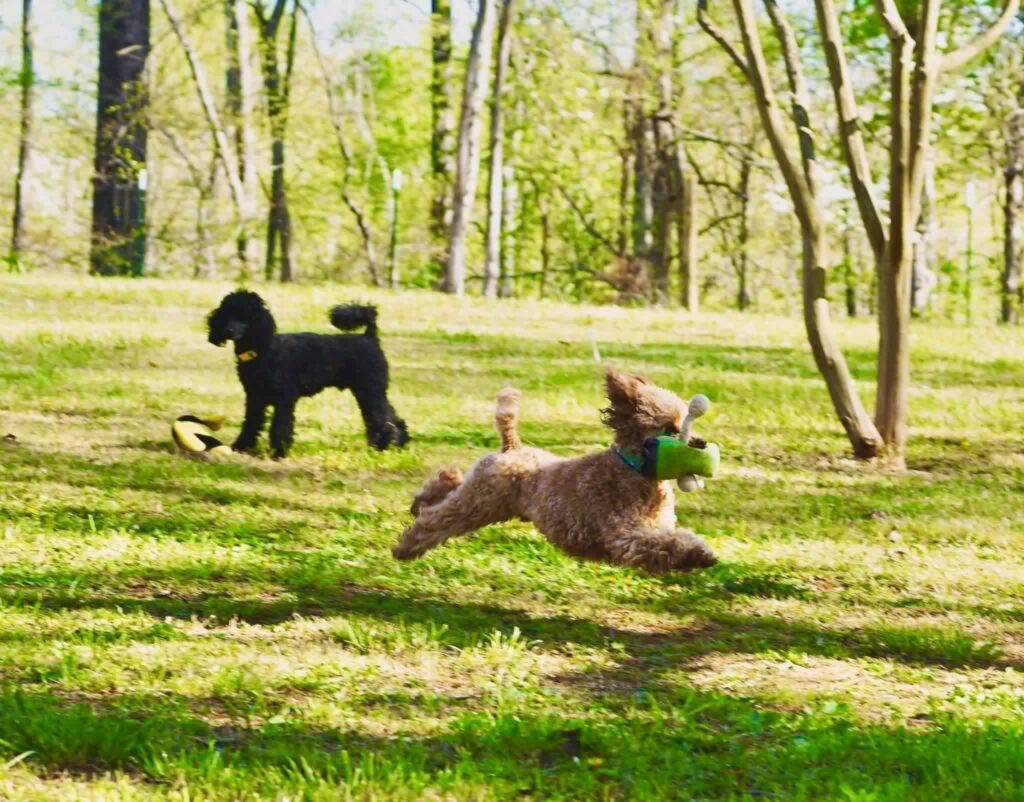
One of the things that concerns me most about intelligent, willing dogs is how much we can ask of them before we realize what it is costing them. A Poodle can be bright, responsive, eager to come with us, and very determined to participate in life, and we can become so accustomed to that willingness that we start using it as evidence that everything must be fine. He still plays. She still jumps. He still finishes the course. She still follows me everywhere. But continuing to do something does not tell us how comfortable it feels.
The change may be small enough that we explain it away. The dog starts hesitating before getting into the car. It stands differently on the grooming table. It pulls a foot away that it used to offer easily. It no longer wants to be picked up in the same way. It becomes irritable when another dog bumps into it, takes longer to settle at night, or chooses to watch a game it once rushed to join. None of those things gives us a diagnosis, but they should give us a reason to pay attention.
With Poodles, grooming is part of life, and that gives us repeated opportunities to notice changes if we are actually looking. Is the dog comfortable standing? Does it keep shifting weight? Is there a new sensitivity when a leg is lifted or the head is positioned? Is a dog being called difficult when the position we are asking it to hold has become uncomfortable? Training and manners matter, but they should never become a reason to stop considering pain.
The same applies to performance. If a dog that understood its work begins refusing, slowing down, changing how it lands, or struggling with something familiar, I want the medical possibilities considered before anyone decides the answer is more pressure and more repetition. Pain is one possibility, and so are fear, confusion, fatigue, the environment, and gaps in training. That is exactly why we need observation and assessment rather than an instant label.
I also think we need to look honestly at how we prepare dogs for the activities we enjoy. A dog can spend most of the week with very little varied movement and then be expected to run, leap, turn, chase a ball, or work intensely because the weekend has arrived and we finally have time. Wanting to move is not the same as being conditioned for everything we ask. Being athletic by breed does not remove the need to develop and maintain the body that has to perform the work.
For my Poodles, being dogs matters. Walking, exploring, moving over appropriate varied ground, using their noses, learning body awareness, resting, and having a life beyond repeated practice all have value. I want a dog with a capable body and an engaged mind, not a dog whose entire physical world consists of a small space followed by an intense burst of the same activity.
When injury happens, I want rehabilitation to have an actual plan. Rest has a purpose. Controlled movement has a purpose. Progression has a purpose. Feeling better for a few days does not necessarily mean the tissue is ready for its previous workload, and medication that improves comfort should not become permission to skip the work of recovery. At the same time, withholding appropriate pain relief to see what the dog will tolerate is not an acceptable way to measure healing.
This is where owners, veterinarians, groomers, trainers, and rehabilitation professionals can contribute different pieces of information. A short video from home may reveal something that does not happen in the examination room. A groomer may notice a standing intolerance. An owner may recognize a change in sleep. A veterinarian can evaluate those observations and decide what they might mean. We lose useful information when any one of those people assumes the others have nothing to offer.
I want us to become less impressed by what a dog will endure and more attentive to what helps it feel well. A dog should not have to become visibly miserable before its discomfort becomes important.
The Poodle who keeps showing up for us deserves someone who is willing to notice when showing up has become harder. ❤️🐾❤️


Leave a Reply