

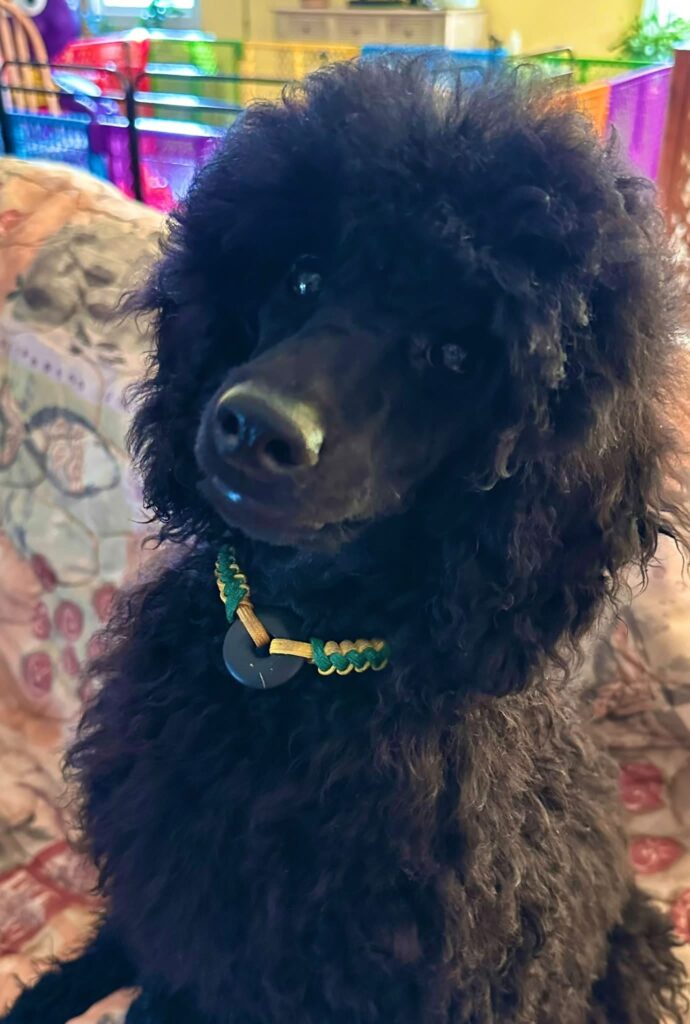
There is a point in the dog world where wanting something badly can interfere with our ability to look honestly at the dog expected to provide it. A title, a breeding, a performance goal, a trip already paid for, a handler already booked, or simply years spent imagining what this particular Poodle might accomplish can become so important that we begin making allowances we would question immediately if the dog belonged to someone else.
Imagine a dog that has started resisting something it previously did comfortably. It no longer wants to stand for grooming, hesitates before jumping into the vehicle, becomes uncomfortable when a particular leg is positioned, or finishes an activity and spends the evening shifting around instead of resting. There may be several possible explanations, but the response deserves more thought than deciding the dog needs to get used to it because the next event is approaching.
This is where we have to examine ourselves. If there were no entry fee, no title within reach, no breeding plans, and nobody watching, would we make the same decision about what the dog should do tomorrow? Would the unusual movement seem more important? Would we give it more time? Would we ask another question before accepting that a little treatment has made everything good enough to continue?
I appreciate veterinary care that helps a dog remain comfortable and active. Treatment can make an enormous difference. But when the purpose of every appointment becomes getting the dog ready for the next demand, somebody needs to step back and ask what is happening across the whole season. Are we making progress, repeatedly managing the same unresolved problem, or gradually asking the dog to do more with less comfort?
This applies to breeding dogs too. A female does not owe us another litter because we waited years for her, imported her, tested her, finished her title, or built an entire plan around what she might produce. A male does not need to remain in a breeding program because his pedigree is difficult to replace if the fuller picture of his health or temperament gives us reason to reconsider. Our investment explains why a decision hurts. It does not decide what the dog should have to bear.
Owners need clear medical information, and veterinarians need enough room to give it without being pressured to produce the answer that keeps the calendar intact. “Can we get through this event?” is a different question from “What is the most reasonable plan for this dog’s next several years?” Both deserve to be asked aloud, because the first can quietly take over when the second remains unspoken.
I am a breeder and I understand having hopes attached to a dog. I also know that loving a breed means accepting that some of our most carefully developed plans will need to change. Retirement, a different activity, a delayed decision, or ending a breeding plan can feel like losing something important. Sometimes we are losing the future we imagined while protecting the animal who is actually here.
Before we ask how to keep going, I want us to ask what the dog is telling us about the cost of continuing. The answer needs to matter enough that we are willing to act on it. ❤️🐾❤️


Leave a Reply