

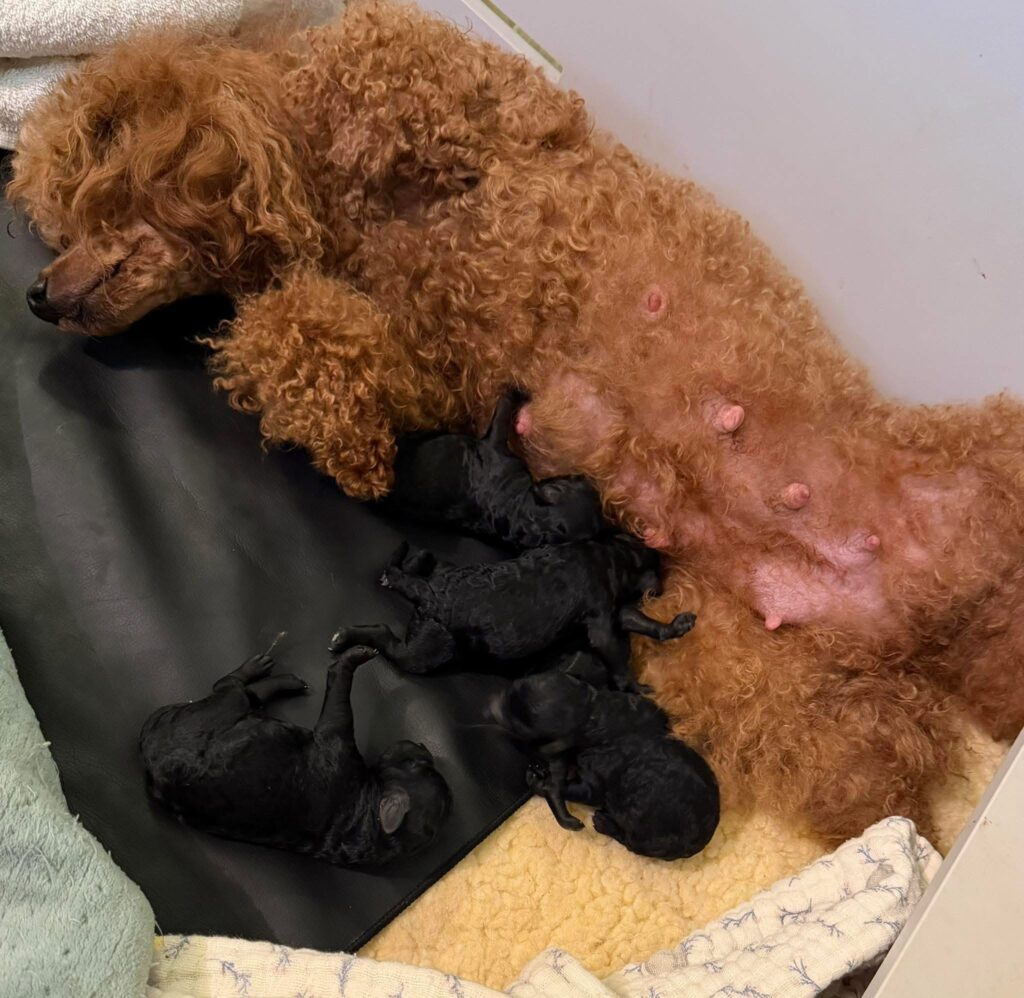
Years ago while digging through Juliette’s books, old breeder correspondence, and the kind of material that somehow convinces you that one more page will only take a minute before you look up and realize half the evening has disappeared, I came across a letter from a breeder describing a kennel that, by every modern standard, appeared to be doing absolutely everything right, with long rows of runs, nursery buildings, carefully planned pedigrees, generations of dogs, strict quarantine procedures, endless records, disinfectant buckets stationed beside doorways, and enough management protocols in place that nobody looking from the outside could have honestly accused them of being careless, negligent, or unwilling to do the work.
Yet parvo and distemper continued moving through litters.
Reading the letter years later, my attention kept drifting away from the disease itself and toward the people fighting it because every page sounded like it had been written by someone working themselves to exhaustion trying to stay one step ahead of the next outbreak, with every new problem bringing another restriction, another sanitation protocol, another attempt to control movement, exposure, and environment until the story began to feel less like the story of people raising dogs and more like the story of people trying to build a fortress against nature itself.
Then there was a sentence buried in the middle of the correspondence that has stayed with me ever since.
“We have become so afraid of disease that the dogs no longer live like animals.”
I remember putting the letter down after reading that because it did not strike me as careless, reckless, or dismissive of disease, but rather as one of those observations that becomes uncomfortable precisely because there is enough truth in it that you cannot simply dismiss it and move on.
Juliette’s response wasn’t centered around treatments, medications, or disinfection protocols, and instead kept drifting back toward fresh air, sunlight, stressed mothers, confinement, overcrowding, and puppies growing up in environments so controlled that very little of the natural world ever touched them during the most important developmental periods of their lives, while repeatedly returning to a question that felt both simpler and far more uncomfortable than the questions most people were asking.
Why was vitality disappearing?
Among everything she wrote, one sentence remained lodged in the back of my mind long after I finished reading the letter.
“Health is not built by the absence of germs alone. It is built by the presence of vitality.”
That thought found its way back into my head tonight while sitting beside Chianti.
Hair from clipping her was still stuck to my leggings, the clippers were lying beside me where I had stopped halfway through shaving her mammary area, and Chianti was busy rearranging blankets with the level of determination usually displayed by someone convinced that every decision made on their behalf has been deeply offensive and must be corrected immediately. 😆
I’ve always clipped mothers short before whelping because it is practical, commonly recommended, and simply one of those things that becomes routine after enough litters pass by, yet while sitting there with my hand resting on her abdomen and feeling puppies shifting beneath the surface, I found myself thinking about how different the next few hours would be for them than for us.
Within a matter of hours those puppies will enter a world they cannot see, and everything important during those first moments will be discovered through scent, warmth, texture, pressure, instinct, and trust long before they understand where nourishment, comfort, and safety are supposed to come from.
Looking down at Chianti, I found myself wondering whether removing every bit of hair was actually helping them or whether I was simply repeating a procedure because it had always been done that way, and while I cannot honestly tell you whether leaving a little softness behind will make any difference at all, years spent around animals have taught me that some of the most worthwhile questions are the ones that refuse to provide immediate answers.
Part of the reason a grounding mat found its way into my whelping setup comes from those same questions because while I fully understand that a grounding mat is not the earth itself, I also find it difficult to completely ignore the reality that for thousands of years mothers delivered puppies while connected directly to soil, sunlight, weather, seasonal rhythms, and environmental inputs that modern animals experience less and less of with every passing generation.
People are often very quick to explain why something from nature no longer matters and surprisingly reluctant to ask whether it mattered in the first place.
That thought reminded me of an older breeder who once listened patiently while I explained temperatures, humidity levels, supplements, emergency supplies, backup plans, and enough contingency plans to survive a small natural disaster before finally laughing and saying, “Honey, sometimes you stare so hard at the puppies that you completely miss the mother beside them.”
At the time I thought she was talking about maternal behavior.
Years later I suspect she was talking about something much larger because time spent around old horsewomen, livestock people, hunting dog breeders, and generations who learned animals through observation rather than endless discussion eventually teaches you that some of the most valuable knowledge comes from paying attention to small things, whether it is a mare carrying herself differently before foaling, a brood bitch abandoning expensive bedding for a patch of cool dirt, or an experienced mother correcting a rude puppy without consulting a chart, protocol, committee meeting, or social media discussion.
Animals are constantly providing information about what they need, what they do not need, what is working, what is failing, and what they are trying to adapt to.
The real challenge often has far less to do with obtaining more information and far more to do with remaining quiet long enough to recognize what has been sitting right in front of us all along.
Breeding keeps humbling me in the same uncomfortable way over and over again because the deeper you go, the less it becomes about controlling life and the more it becomes about listening carefully enough not to interrupt it unnecessarily.
Dogs cannot verbally explain discomfort.
Newborn puppies cannot describe stress, confusion, exhaustion, overwhelm, regulation, or recovery with language humans understand.
Which means the responsibility ultimately falls back onto breeders willing to sharpen observation deeply enough to recognize the quiet biological conversations happening underneath the surface long before disease ever becomes loud enough for modern systems to acknowledge it.
Today, after another round of blanket negotiations, blanket relocations, and blanket-related political unrest inside the whelping area 😆, Chianti finally settled down across the grounding mat, the room became quiet, puppies shifted beneath her, and my mind drifted back to Juliette’s letter and that old breeder’s comment.
The older I get, the more I think they were both pointing toward the same thing.
“Honey, sometimes you stare so hard at the puppies that you completely miss the mother beside them.”
I’ve never forgotten that. ❤️🐩❤️


Leave a Reply