

Most breeders know how much calcium they are giving.
Far fewer know whether all calcium sources deserve to be treated as nutritionally equivalent.
That question changed the way I think about reproduction, growth, recovery, raw feeding, and supplementation as a whole.
Key Takeaways:
- Calcium source matters, not just calcium quantity.
- Bone delivers calcium within a complete biological matrix.
- Reproductive calcium management involves regulation and mobilization, not simply supplementation.
- MCHA more closely resembles the mineral structure naturally found in bone.
- The question is not whether calcium products work, but whether all calcium sources deserve to be considered nutritionally equivalent.
CALCIUM IS NOT CALCIUM
A few years ago I was sitting beside a whelping box in the middle of the night watching a female who, by every measure available to me, should have been progressing more efficiently than she was. She was healthy, appropriately conditioned, consuming a species-appropriate diet, receiving attentive care, and showing none of the obvious red flags that would have suggested trouble was coming, yet somewhere along the way the momentum simply began to fade and the contractions that should have been moving the process forward seemed far less productive than I expected.
Everything turned out fine. The puppies arrived safely. Their mother recovered beautifully. Nobody was rushed into an emergency clinic. Nobody’s life hung in the balance.
Yet the experience left me with a question that lingered long after the puppies were nursing, the bedding had been changed, and the exhaustion that accompanies every whelping had finally settled over the house.
Over the years I have become increasingly aware that many conversations surrounding calcium focus almost exclusively on supplementation while paying remarkably little attention to the body’s own regulatory systems. Hormones such as parathyroid hormone and calcitonin continually influence calcium balance, moving minerals into and out of storage as circumstances require. The more I learned about those mechanisms, the less interested I became in viewing calcium as a simple input-output equation.
What exactly was I giving her when I reached for calcium?
The question mattered because reproductive physiology is remarkably indifferent to marketing language. A laboring female does not care what a product label promises. Her muscles either contract or they do not. Her body either has access to the minerals required at precisely the moment they are needed or it does not. When puppies are waiting to be born, the difference between those outcomes suddenly feels far more important than ingredient claims or advertising copy.
At the time, I accepted what appeared to be a straightforward consensus, namely that reproductive health could be adequately supported by providing a nutrient called calcium, an assumption reinforced by product labels, marketing materials, professional discussions, and the quiet confidence that often accompanies ideas few people think to examine more closely.
If something was marketed specifically for reproduction, labor support, or breeding dogs, I assumed somebody somewhere had already examined the details and arrived at the conclusion that this represented the most biologically appropriate option available.
The longer I have worked with dogs, however, the less comfortable I have become with assumptions that everybody repeats but very few people examine.
Because once I started paying attention, I noticed something peculiar.
We spend enormous amounts of time discussing whether dogs receive enough calcium, yet remarkably little time discussing where that calcium originates, what accompanies it, how it exists in nature, and whether the source bears any resemblance to what a canine body evolved to consume in the first place.
That distinction may sound insignificant until you begin applying the same logic elsewhere.
Common sense tells us that the source of a nutrient matters; otherwise, every protein would be interchangeable, sardines and soybean oil would occupy the same nutritional category, and synthetic vitamin isolates would be indistinguishable from nutrient-dense organs.
Yet for some reason calcium often receives a pass.
The longer I examined the issue, the less convinced I became that calcium was the real subject at all. The deeper question seemed to be whether we had become so accustomed to thinking in nutrients that we had forgotten how to think in foods. Somewhere along the way, calcium became calcium, protein became protein, and fat became fat, as though the biological environments that originally delivered those nutrients no longer mattered.
The conversation stops at the word itself.
As breeders, we probably notice this more than most because our relationship with calcium extends far beyond occasional supplementation. Reproductive physiology, skeletal development, lactation demands, recovery periods, aging bodies, digestive challenges, and growth all bring us back to the same mineral repeatedly, forcing us to think about it in situations where the consequences of getting things wrong become very visible very quickly.
Eventually that curiosity pushed me toward ingredient panels.
The more labels I read, the more I found myself asking whether we had quietly confused the ability to raise calcium levels with the goal of providing biologically complete nutrition.
Those are not necessarily the same objective.
Reproductive calcium physiology is considerably more complex than simply supplying additional calcium. The body must maintain the ability to absorb, store, mobilize, and regulate calcium precisely when demand suddenly increases during labor and early lactation. In other words, successful calcium management is not merely about how much calcium enters the body, but whether the body remains capable of accessing and utilizing it when the moment arrives.
A typical labor gel may contain calcium carbonate, calcium lactate, sugars, flavoring agents, preservatives, stabilizers, and various compounds intended to improve manufacturing consistency, shelf life, palatability, or absorption.
Can such products increase calcium availability? Certainly.
To be clear, I am not suggesting that these products are ineffective or that breeders who rely on them are somehow doing things incorrectly. Many have produced healthy litters while using traditional calcium supplements and labor support products. My interest has always been narrower than that. I simply want to understand whether all calcium sources deserve to be treated as nutritionally equivalent.
My concern was never whether these products worked. My concern was whether isolating calcium from the nutritional environment in which nature presents it changes the biological experience entirely.
Because when I look at a raw meaty bone, I do not see an isolated mineral.
I see calcium accompanied by phosphorus, magnesium, proteins, trace minerals, and the structural framework in which those nutrients naturally exist.
Bone itself is not simply a calcium delivery system. It is a living composite tissue in which minerals exist within a protein matrix, creating relationships that influence structure, storage, and biological function. That reality may help explain why the body often responds differently to nutrients delivered within whole-food frameworks than to isolated compounds supplied independently.
What finally changed my perspective was realizing that the body never encounters calcium by itself in nature.
Nature delivers something much larger than a mineral alone, providing bone, nourishment, structural components, and the intricate relationships that exist among nutrients when they remain in their original context.
Everything arrives connected to something else.
That observation eventually led me toward Microcrystalline Hydroxyapatite, not because it was heavily advertised, aggressively promoted, or wrapped in particularly impressive marketing language, but because it represented something I had begun valuing more with every passing year: resemblance to actual food.
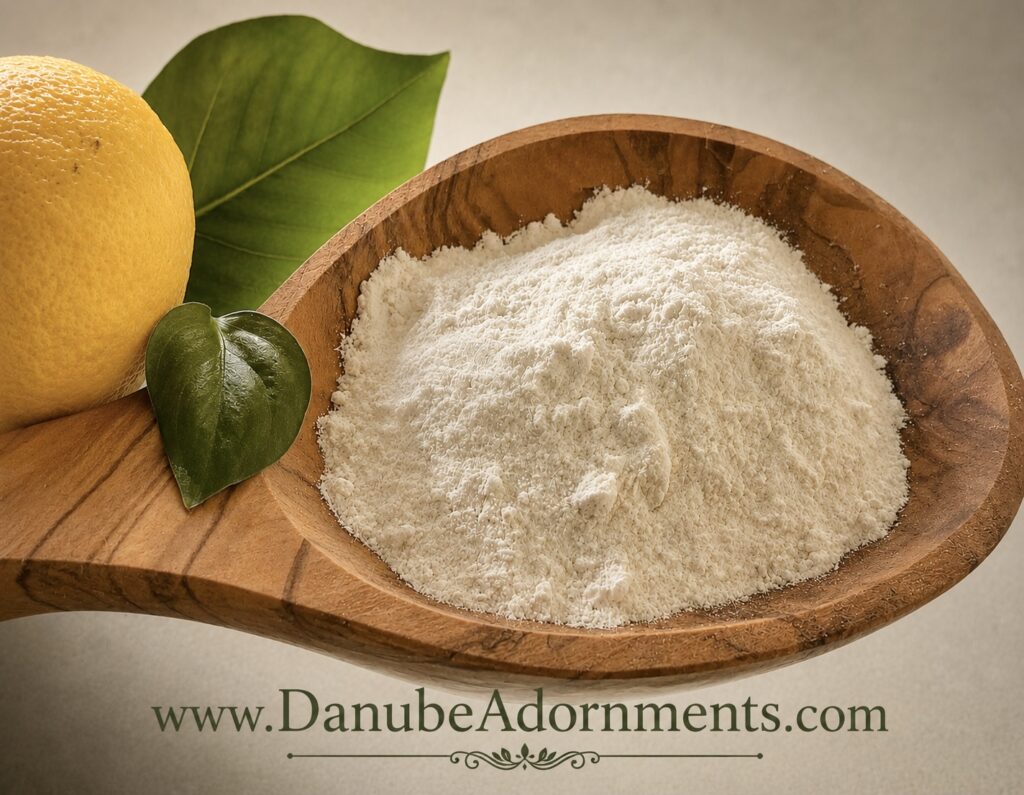
MCHA is not merely calcium in powdered form.
Unlike calcium carbonate or eggshell calcium, which primarily provide isolated calcium, Microcrystalline Hydroxyapatite retains the naturally occurring mineral structure found within bone itself, including calcium, phosphorus, proteins, collagen-associated compounds, and trace minerals that exist together within skeletal tissue.
The significance of that distinction cannot be measured simply by looking at the guaranteed analysis because the difference is philosophical as much as nutritional.
One approach begins with isolated compounds and attempts to reconstruct nature. The other begins with nature and attempts to preserve what already exists.
That perspective is why MCHA has earned a permanent place in my program whether I am supporting a pregnant female, helping during labor, adjusting mineral intake for growing puppies, working through temporary digestive challenges, or assisting older dogs whose ability to consume large amounts of bone has changed with age.
That perspective is why MCHA has earned a permanent place in my program, supporting everything from pregnancy and labor to lactation, puppy growth, digestive challenges, and older dogs consuming less bone.
The goal was never to assemble an impressive supplement cabinet or keep pace with changing nutritional fashions, but to determine which option most faithfully reflects the forms of nourishment the body was designed to recognize and utilize.
Anyone who knows me knows that my first instinct is almost always food. After enough years feeding raw meaty bones, balancing litters, collecting placentas, supporting nursing mothers, and watching puppies build their skeletons one meal at a time, it became increasingly difficult for me to accept that all calcium sources deserved equal consideration simply because the label happened to contain the same word. I own 13 freezers because I would rather solve nutritional challenges with actual ingredients than with bottles, powders, and marketing claims. If there is a way to accomplish something with bone, organs, fish, eggs, goat milk, or whole prey, that is usually where I begin. Which is precisely why MCHA earned my attention in the first place. It was one of the very few supplements that felt less like a manufactured substitute and more like an extension of the food itself.
For a long time I asked how much calcium a dog required. Today I find myself asking additional questions as well. What form is that calcium taking? What accompanies it? How closely does it resemble the nutritional environment in which canine physiology evolved to encounter it? And what assumptions have we inherited simply because they became common enough to stop questioning?
If nature intended dogs to obtain calcium from bone, why would bone not remain the standard against which every supplemental source is measured?
That single question altered the way I evaluate nutrition, reproduction, growth, recovery, and supplementation as a whole.
What fascinates me is not that different calcium products exist. What fascinates me is how rarely anyone seems interested in asking whether they are actually comparable. We scrutinize protein sources. We debate fats. We compare organ meats. We analyze processing methods. Yet when the word calcium appears on a label, many people stop asking questions entirely. The longer I work with dogs, the less willing I become to assume that two products deserve to be treated as equivalent simply because they share a single nutrient on the guaranteed analysis.
And perhaps that is why seeing MCHA back in stock felt less like the return of a product and more like the return of a tool that aligns with the way I have come to think about canine nutrition.
Because I can already hear the obvious question: “Of course you like it. You sell it.”
Fair enough.
A 455-gram bag contains approximately 100,100 milligrams of elemental calcium based on the current Certificate of Analysis showing 22% calcium.
By comparison, obtaining the same amount of calcium from a popular hydroxyapatite capsule product would require roughly 400 capsules.
The point is not that capsules are bad. The point is that breeders balancing raw diets, supporting pregnancy, managing lactation, and feeding multiple dogs often operate at a scale where practical bulk nutrition matters.
I would rather show people the numbers and let them decide for themselves. Transparency should never be a threat to a good product.
If somebody finds a source that offers the same whole-bone matrix, the same quality standards, the same nutrient profile, and a better value, I genuinely want to know about it. My loyalty has never been to a product. My loyalty is to the dogs.
And once that shift occurs, it becomes difficult to look at calcium the same way again.
Perhaps that is why I was genuinely relieved to see MCHA return. Not because I believe every nutritional challenge can be solved with a supplement, and certainly not because I think powders should replace food, but because there are moments when life refuses to cooperate with ideal circumstances and having a tool that remains remarkably close to nature’s original blueprint becomes incredibly valuable. After years of raising litters, feeding raw diets, supporting mothers through labor, and caring for dogs from birth through old age, I have become convinced that source matters, context matters, and structure matters. Once you begin looking through that lens, calcium stops being the conversation entirely and becomes a reminder that nutrition was never really about isolated nutrients in the first place. It was always about the foods that carry them. ❤️🦴🐾


Leave a Reply