

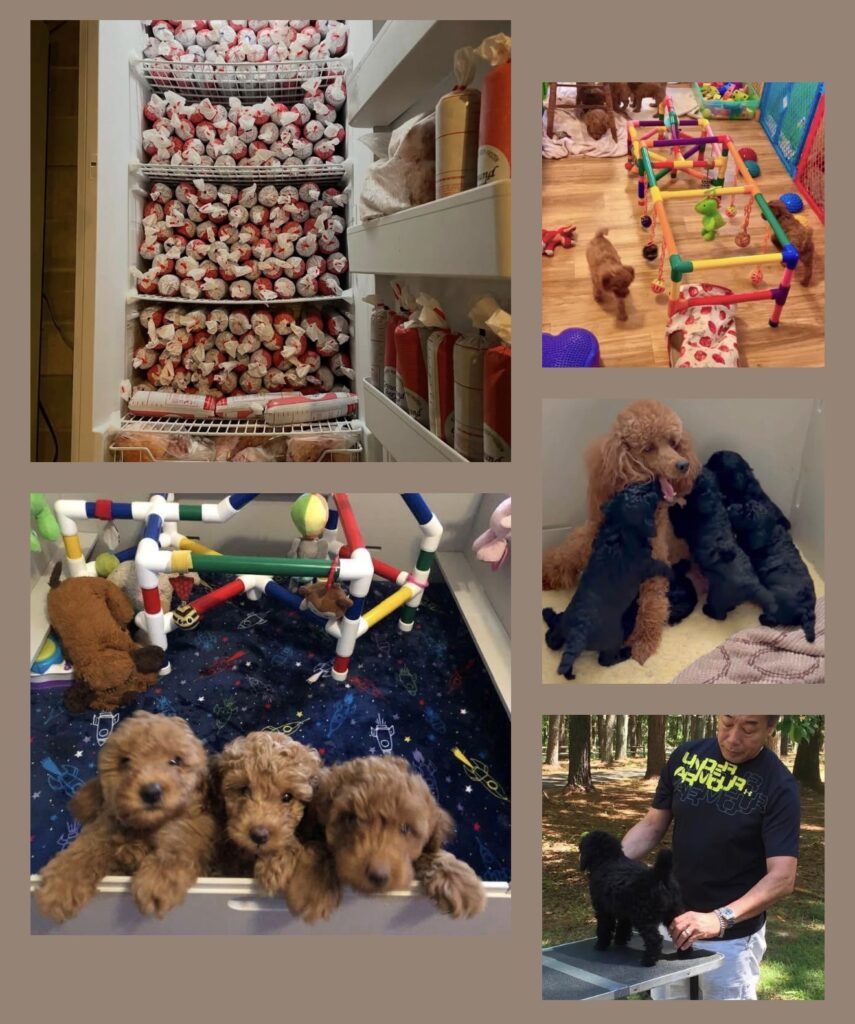
Every now and then someone tells me, “Well, that is easy for you.”
I usually laugh a little when I hear that because there is almost nothing about the way I live that happened easily. People see the dogs running across ten acres, the puppies eating raw food, the garden, the freezers, the articles, the piano students, and all the knowledge I have gathered over the years, but they do not see how many ordinary days it took to build any of it.
This morning I got up while the house was still quiet, made coffee, read my Bible, prayed, and let the dogs outside before the Tennessee heat settled in. Then I watered the garden, picked vegetables, and tried to untangle the irrigation hoses that had somehow ended up twisted around everything after the weekend mowing.
By then the puppies were awake and loudly convinced they had not eaten in days. Their bedding needed changing, the bowls needed washing, and five little black faces followed me from one side of the room to the other to make sure I did not somehow forget why I had walked into the kitchen.
Before I finished my own breakfast, I had fed the dogs, answered messages from puppy families, returned emails, and called several local farmers about goat milk, chicken feed, bones, carcasses, and other supplies. Later I would drive through the mountains to pick everything up, load coolers that I already knew my back would complain about, come home, unload them, prepare food, rotate dogs, refill water buckets, care for the chickens, wash a Poodle, package orders, feed the puppies again, and deal with all the little things that do not look important until nobody does them.
And somewhere in the middle of all of that, I needed to write.
Writing is the easiest thing for me to drop because no dog starts barking when I ignore it, no bowl stays empty, and nobody calls to ask why I missed an appointment. I can always tell myself I will write tomorrow, but tomorrow has its own dogs, laundry, garden, phone calls, orders, and coolers full of meat.
I finally had to accept that there is never going to be extra time waiting for me at the end of the day. I either make time to write or I do not write.
Tomorrow, much of it will begin again. People ask how I manage all of it, and the honest answer is that some days I do not know. There are mornings when I look at everything that needs to happen and wonder how any reasonable person could fit it into one day. Then I begin with the first hungry animal and go from there.
Buying the dogs’ food would save me hours. The trip to the farmer could wait, the garden would survive another day, and nobody would know whether I had written anything. I could lower the standard a little, tell myself I was simply being practical, and probably make my life much easier.
The problem is that every time I postpone something important, postponing it becomes a little easier. Following through works the same way. After enough years, those small choices stop looking small because they have built the life around me.
I am not unaware of how much work any of this requires. I simply think more often about why I am doing it than about how hard it feels.
A few days ago, my husband and I spent most of the day processing several hundred pounds of beef for the dogs. There were coolers everywhere, organs that needed separating, tripe to clean, hearts to trim, meat to package, and freezers that somehow had to hold all of it when we finished. By the end of the day, my hands were sore, my fingers hurt, my back was angry, and I smelled exactly like someone who had spent hours standing over parts of a cow.
Someone once laughed and told me I must be crazy, and maybe I am, but somewhere in the middle of cleaning tripe, trimming hearts, separating organs, and trying to make everything fit into the freezers, I realized I was smiling.
I was cleaning a stomach with four separate chambers and holding a heart that had beaten every moment of that animal’s life, and I found myself thinking about how carefully God had made it. Nothing was random. Each part had done a job, and many of those same parts would now nourish another animal instead of being thrown away. What many people see as waste, I see as nourishment waiting to become part of another life.
Standing there, I started thinking about the strange circle of it all. The cow would nourish my dogs, and some of those dogs would eventually go into homes where they might sleep beside a child, comfort someone through grief, or become part of a family’s ordinary life. Most of the time, we never see how far one act of care travels.
My dogs do not have to earn back what I spend on them. They do not owe me puppies, stud fees, show wins, or enough income to make the numbers look sensible. I chose to bring them into my life, and caring for them is my responsibility whether they ever earn a title, produce a litter, or return anything measurable to me.
The reward is usually much quieter than a payment or a ribbon. It is watching one of my old dogs sleep peacefully in the house where he has always belonged, seeing a young dog run across the pasture with strength and joy, or receiving a photograph of one of my puppies asleep beside a child who already cannot imagine life without him.
I value titles because they can tell us something useful about structure, movement, temperament, or working ability, but a ribbon cannot tell me whether a dog will be deeply loved, live well, or become the kind of companion a family remembers for the rest of their lives. Producing a dog who earns applause is not the greatest accomplishment of a breeder. Producing one who is sound, stable, capable, and deeply loved matters far more.
That is why a breeder must live for the dogs rather than expect to live from them.
Trouble begins when the dogs are expected to finance the standard of care we believe they deserve. Once a breeding program must continually produce enough income to justify itself, decisions about timing, health, temperament, structure, and retirement become easier to compromise. A litter starts looking like income, puppies begin to look like inventory, and an aging dog can slowly become an expense instead of a responsibility.
I never want to look at a pedigree and forget that every name represents a living dog, or hold a puppy and forget that its life will continue far beyond my home. My job is not to see how much these dogs can produce for me, but to protect what they are and pass it forward without damaging it along the way.
None of this means I am unaware that easier options exist. There are simpler ways to feed dogs, raise a litter, spend a Saturday, teach, write, garden, earn a living, or care for something over many years.
Much of that work is not exciting while you are doing it. There can be months or years when the effort is greater than anything visible you can point to, and that is usually when a person begins wondering whether continuing is worth it.
We have become very good at finding ways around anything uncomfortable, and I do not think that has always helped us. I am not saying people should work themselves into the ground or make life harder just to prove something. Rest matters, the body matters, and sometimes the wisest thing a person can do is stop.
But resting because you need to recover is not the same as walking away every time something requires planning, patience, effort, or an inconvenient amount of time.
A life built around avoiding anything difficult eventually becomes very small. The older I get, the more I understand that love changes the way effort feels. It does not make the work disappear, but it changes whether I resent doing it.
Loving something does not make the physical part easier. My back still hurts after lifting coolers, my hands ache after grinding meat, and there are days when washing dogs, carrying feed, working in the garden, and standing over the sink preparing food feels like more than my body wants to do.
There are still days when I look at everything unfinished and wonder how I am going to get through it. But I have also had plenty of days when my body was exhausted and I felt completely content, and I think that is why I have never spent much time wishing for a life with less responsibility.
I have never wanted to spend my life sitting in an office and watching the clock until the weekend. I like that I may spend one hour driving through the mountains to meet a farmer, the next teaching a child at the piano, and the evening studying pedigrees, talking with a puppy family, working in the garden, washing a Poodle, preparing food, or writing something that has been sitting in my mind all day.
People sometimes ask how any of these things belong together, but to me they have never felt separate. Teaching, raising dogs, preparing food, writing, studying, and working in the garden all ask the same thing of me: pay attention, keep learning, and take good care of what God has put in front of me.
Of course, the day rarely goes exactly as I planned. An animal suddenly needs attention, a delivery is late, a piece of equipment quits working, a phone call takes an hour longer than expected, or my body simply refuses to cooperate with the list I made that morning.
I used to think discipline meant following the plan exactly. Now I think it means knowing what matters enough that, when the day falls apart, I can rearrange the work without forgetting why I was doing it.
There are also plenty of times when experience and common sense matter more than having perfect conditions. Homesteading, breeding, animal care, and ordinary life do not happen the way they do in a book. Supplies run out, weather changes, animals do something completely unexpected, and the tool you need is usually nowhere near where you are standing.
That is when you find out whether you actually understand the job or only learned how it was supposed to look under ideal circumstances.
Improvising does not mean being careless. It means knowing enough to look at what is in front of you, use what you have, and solve the problem without forgetting that a living thing may be depending on the decision.
Most of what I know came from doing the work over and over, making mistakes, paying attention, and having to figure things out on days when quitting would have affected an animal, a student, a family, or someone else who was counting on me.
I did not choose any of this because it was easy. I kept choosing it because I believed it mattered.
One day the dogs I love will be gone, someone else will care for the garden, and there will be a last puppy I wash, a final order I package, a last student I teach, and one more piece I play at the piano before that part of my life is finished.
I hope something of the work continues after I am no longer the one doing it. Maybe a puppy I raised will help a family through a difficult season. Perhaps a child will remember that learning music taught her not to quit when something became hard. Someone may feed a dog differently because of something I wrote, and a future generation of Poodles may be a little stronger because of decisions no one ever connects to my name.
When I look back, I do not want the first thing I remember to be how tired I was. I want to know that I used what I had, continued learning, rested when I truly needed to, and did not repeatedly walk away from good work simply because it became inconvenient.
More than anything, I hope I will know that I loved well. Love often asks more of us than convenience ever would, but it also has a way of making the work feel less like a burden and more like the life we were meant to live.❤️🐾❤️


Leave a Reply