

A dog improves with treatment, everybody finally breathes again, and then the vomiting returns, the appetite becomes unpredictable, or the cough never quite disappears. Another temporary improvement leaves a frustrated family wondering what they are missing, while the people caring for that animal try to understand why the progress did not last.
At AHVMA, a lecture about environmental exposures and detoxification brought me back to a question that matters deeply to me as a veterinary technician, nutritionist, and Natural Preservation Breeder: how thoroughly are we looking at the world around an animal when we are trying to understand what is happening inside its body?
Food, water, soil, the home itself, treats, toys, supplements, and material carried indoors on our shoes all belong in that history, including exposures we recognize and others we would never think to mention during an appointment. Our dogs live in environments we choose for them, without the ability to read a label, question a supplier, or explain that something changed six weeks before they began feeling unwell. Recognizing those details and bringing them into the conversation is our responsibility.
🐾 THE PERSONAL EXPERIENCE BEHIND THE QUESTIONS
The speaker described severe illness that was eventually attributed to heavy metal toxicity, recalling headaches, hair loss, exhaustion, excessive thirst, and a dramatic change in exercise tolerance. Finding an explanation had been difficult, but in her account, a biochemist eventually collaborated with her physician on a treatment plan, and within nine weeks she was well enough to run and place in a race.
Her recovery was a personal experience rather than proof that every patient with similar symptoms has the same problem, yet it helped explain why she became particularly attentive to patients whose symptoms persisted despite treatment. She also disclosed her laboratory consulting relationship and described years of using that laboratory’s services. That disclosure belongs alongside her clinical experience, because appreciating what a clinician has observed still leaves us with important questions about test validation, the meaning of the results, and the evidence supporting the next step.
🐾 ACUTE POISONING AND CHRONIC EXPOSURE
An acute exposure may begin with a recognizable event, such as an animal getting into a medication, pesticide, or rodenticide. Stabilizing the patient, identifying the actual substance, obtaining veterinary toxicology guidance, and preventing further exposure become immediate priorities. The speaker emphasized contacting an animal poison control service and bringing the product container whenever possible.
A story from early in her practice made the importance of that information painfully clear. She had assumed that a reported rat poison exposure involved an anticoagulant, but the product turned out to be an old strychnine preparation. The description “rat poison” could not provide the information needed to guide care, because the ingredient, concentration, amount, timing, and individual patient all matter. Contaminated fur, skin, or paw pads may also allow exposure to continue, making appropriate decontamination part of treatment in some cases.
Chronic exposure presents a different challenge. It may occur over weeks or years, with intermittent signs, incomplete responses to treatment, and no obvious moment when everything went wrong. Her message was to investigate when the history provides a reason, particularly when symptoms keep recurring or a diagnosed condition does not fully explain the patient’s course.
🐾 CLUES THAT DESERVE A CLOSER LOOK
Persistent unexplained signs, recurring gastrointestinal or respiratory problems, poor responses to treatment, known environmental concerns, and similar complaints affecting an owner and pet were among the situations highlighted in the lecture. These findings can justify a broader investigation, although they do not establish a diagnosis.
Animals with cancer and pets coming from poor or unknown environments were also discussed as patients whose exposure history may deserve particular attention. In some circumstances, a dog can serve as a sentinel, drawing attention to a shared environmental problem affecting the household. That possibility does not establish that the animal and person have the same illness, but a shared home, water source, or food exposure may be worth examining.
🐾 THE TESTING “TRIFECTA”
Her testing approach focused on metals and minerals, glyphosate exposure, and mycotoxins. Fur mineral analysis was presented for metals and minerals, while urine testing was discussed for glyphosate and mycotoxins.
One slide described a laboratory cohort of 3,452 patients, with elevated metals or minerals reported in 16% of samples, excluding arsenic from that percentage. Aluminum, boron, mercury, and other elements were represented. Those results describe the group presented; they do not establish that 16% of all pets have metal poisoning or that every elevated fur result explains a patient’s symptoms.
Detecting a substance, documenting exposure, and diagnosing illness caused by that substance are distinct findings. Fur analysis cannot replace every other toxicology test, and urine findings require context as well. A number alone cannot establish the source, total body burden, or whether the substance caused the illness.
One of the strongest statements on her slides was that testing should answer a clinical question. Before ordering a test, we should understand what we are trying to learn and how the answer could change the animal’s care.
🐾 POSSIBLE SOURCES OF EXPOSURE
Water, food, soil, household materials, and the broader environment were all discussed. Well water came up in relation to arsenic, industrial history in relation to environmental contamination, and shoes or work boots as ways contaminated material can enter a home. A dog walking across that floor and then licking its feet experiences the material differently from the person who carried it inside.
The speaker also described questioning supplement purity, including products containing cranberry, and checking whether manufacturers actually test for contaminants. The practical lesson was to examine the product and its testing rather than assume an ingredient is contaminated or safe because of its reputation.
Questions about metals in some medications and vaccine formulations arose as well. Interpreting those concerns requires attention to the actual compound, dose, route, and evidence, because the presence of an element does not by itself establish toxicity.
In another clinical account, a client feeding carefully selected organic ingredients received a high glyphosate result for his dog, prompting him to reconsider their shared food sources. That anecdote does not establish a finding about an entire retailer or every organic diet, but it raises a useful question about how much we actually know about the products we trust.
🐾 MOLD AND MYCOTOXINS
Mold is a fungus, whereas mycotoxins are substances produced by certain fungi under particular conditions. Visible mold does not automatically identify which toxins are present or establish that a toxic dose has been received. The absence of visible mold also cannot guarantee that food is free of mycotoxins.
Both food and environmental sources were discussed, along with the importance of investigating moisture problems and renovation history. Effects differ according to the substance and exposure, so a recurring cough, diarrhea, or poor appetite still requires a proper differential diagnosis. Many conditions can produce those signs.
🐾 THE GUT AND THE WHOLE PATIENT
The slides connected exposure, the intestinal barrier, the microbiome, and possible effects elsewhere in the body. Potential presentations included vomiting, diarrhea, poor appetite, and weight loss, while the speaker also described lethargic patients whose families noticed that they no longer wanted to do the things they once enjoyed.
Certain toxic exposures can interfere with enzymes, increase oxidative stress, disrupt mitochondrial function, and affect multiple organs. Depending on the substance, the brain, liver, kidneys, and gastrointestinal tract may all be involved. For me, that discussion reinforced the importance of considering the whole patient and the full history while continuing to investigate other explanations.
🐾 THE PHASES OF DETOXIFICATION
The lecture organized detoxification into Phase I transformation, Phase II conjugation, and Phase III elimination. Phase I includes enzymes such as cytochrome P450 that modify many compounds, with some reactions producing reactive intermediates requiring further processing.
Glutathione conjugation, sulfation, glucuronidation, methylation, amino acid conjugation, and acetylation were included in the discussion of Phase II. Phase III involves transport and elimination, including routes through bile, stool, and urine.
Her warning concerned increasing one part of the process without considering the others, because faster processing does not automatically improve the outcome and can create problems. Before reaching for another “detox” product, the animal’s nutrition, hydration, organ function, medications, and ability to eliminate waste deserve assessment.
🐾 NUTRITIONAL SUPPORT AND INDIVIDUAL NEEDS
For Phase I, the slides discussed adequate protein, B vitamins, magnesium, zinc, iron, and cruciferous vegetables or sprouts. The speaker repeatedly emphasized that a nutrient’s appearance on a list does not mean a patient needs supplementation.
Calcium-to-magnesium and zinc-to-copper relationships were used as examples of why adding more of one mineral may worsen an imbalance. Her approach also included vitamin D, B12, folate, and, in selected cases, amino acid testing.
NAC, glycine, whey, sulfur-containing vegetables, berries, apples, carrots, and other foods were discussed for Phase II, along with herbs such as turmeric, reishi, ashwagandha, ginseng, schisandra, and eleuthero. These were proposed tools within her clinical approach rather than a shopping list for every dog. Appropriateness still depends on the animal’s diet, diagnosis, species, medications, and tolerance.
🐾 GLUTATHIONE AND ANTIOXIDANT DEFENSE
Glutathione received particular attention because of its roles in antioxidant defense and conjugation. Its building blocks include cysteine, glycine, and glutamate, and the speaker discussed supporting those pathways with nutrients as well as using oral liposomal or injectable glutathione in selected patients.
SAMe was discussed as a separate liver-support tool; it is not the same substance as glutathione. Other proposed supports included taurine, carnosine, and NAD+ precursors. Her antioxidant slides named glutathione peroxidase, catalase, and superoxide dismutase, together with vitamin E, vitamin C, selenium, and silymarin.
The individual patient’s needs should guide those choices, rather than the number of products available to add. She specifically warned about sending an animal home with a bag of supplements and starting everything at once, because an already struggling gut may respond very badly.
🐾 SUPPORTING ELIMINATION
The kidneys handle many water-soluble metabolites and metabolic wastes, making hydration and renal function important parts of the discussion. Bile flow, appropriate fiber, healthy stool output, and limiting the reabsorption of certain substances from the intestine through enterohepatic recirculation were also emphasized.
Choline, taurine, suitable fats, beets, and cruciferous vegetables were discussed as potential nutritional supports within an individualized plan. Soluble and insoluble fiber were considered according to the patient’s gastrointestinal needs and microbiome.
Healthy fats were presented as support for inflammation, cell membranes, and other functions, with the clarification that they do not directly chelate or remove metals. Binders require careful selection as well, including consideration of what they bind, whether they interfere with medications or nutrients, and how they affect the patient.
🐾 SPECIES DIFFERENCES AND FEEDING
Cats need their own approach because of differences in glucuronidation, sulfation, amino acid conjugation, and glutathione handling. Reducing the size of a dog’s protocol does not make it appropriate for a cat.
Feeding was another important distinction. The speaker discussed adjusting meal frequency in selected dogs while warning against strict fasting in cats and against applying fasting to debilitated patients. Adequate nutrition remains part of recovery.
Rest and appropriate activity were included, too, with the animal’s condition guiding the approach rather than expecting a sick patient to fit a predetermined protocol.
🐾 INTEGRATIVE TOOLS AND THEIR LIMITATIONS
Medicinal mushrooms, herbal formulations, ozone, CBD, essential oils, homeopathy, organ-support products, herbal baths, and other adjunctive approaches were included in the lecture. Named products included New Vita formulations, KidneyEase, LiverEase, HeartEase, and an ION gut-support product, while injectable glutathione and MIC were also mentioned.
These represented the speaker’s clinical choices and proposals and should not be presented as equally proven methods of removing toxins. Her remarks about herbal foot baths or rapid gut-barrier effects likewise do not establish that those methods remove a clinically meaningful toxin burden in dogs or cats.
The mushroom discussion included reishi, chaga, cordyceps, wood ear, and turkey tail, with attention to product composition, beta-glucans, fiber, and proposed antioxidant or prebiotic effects.
Purity remained a recurring theme. Checking manufacturing practices and contaminant testing helps address the concern that a supportive product could introduce another exposure. A certificate of analysis provides information about what is in a product, however, without establishing that it will treat a particular disease.
Her slides explicitly acknowledged limitations in the evidence, including few veterinary detoxification trials, frequent extrapolation from human data, and the distinction between a plausible mechanism and a demonstrated clinical benefit. Those limitations deserve a place in the conversation alongside the proposed approaches.
🐾 MONITORING THE RESPONSE
Her monitoring framework included CBC, chemistry, urinalysis, organ function, exposure markers, clinical response, and appropriately timed repeat testing. She also emphasized checking what the family had actually implemented before interpreting follow-up results.
That review includes whether the exposure has been addressed, how well the plan has been tolerated, any nutritional changes, and whether prescribed interventions have been used. Monitoring should help determine whether the animal is safer and healthier, beyond simply producing another report.
🐾 THE SEPARATE CANCER BIOMARKER LECTURE
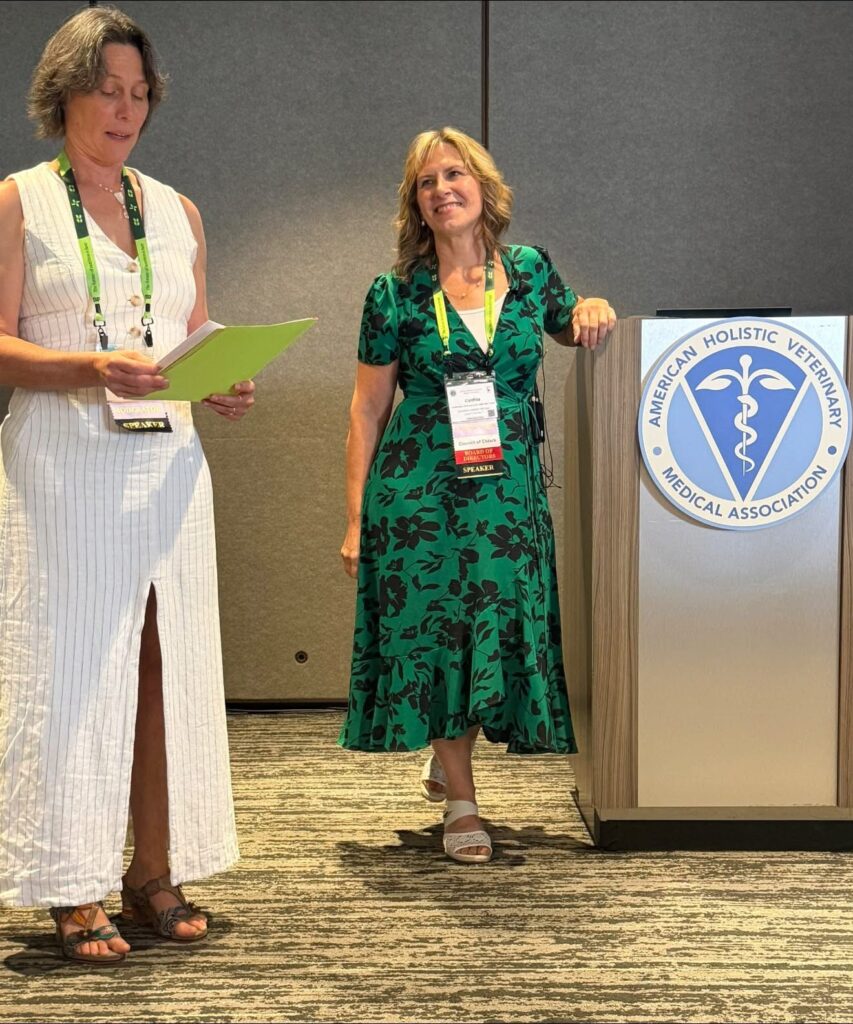
The cancer biomarker slides identified Dr. Cynthia Maro and disclosed her consulting relationship with VDI Labs. She distinguished screening an apparently healthy animal for a concerning signal, diagnosing the cause of a mass, symptom, or abnormal finding, and monitoring changes in an established disease. These clinical questions are related but cannot be used interchangeably.
The slides discussed VDI’s combination of TK1 and inflammatory markers, Nu.Q’s nucleosome measurements, and IDEXX Cancer Dx. Historical tests were reviewed as well, including OncoK9, the lymphoma blood test, and OncoPet RECAF.
Study design was an especially useful part of that discussion. Comparing samples from dogs already known to have cancer with those from healthy controls can provide information about a test. Following apparently healthy dogs forward after screening examines a different question: how the test performs in the population we hope to screen.
One cited TK1/CRP study involved 360 apparently healthy dogs followed for at least six months. A separate nucleosome study reported 49.8% overall sensitivity and 97% specificity, with detection varying substantially by cancer type.
Those figures cannot establish a universal ranking of tests, because study populations, tumor types, thresholds, and intended uses differ. They do illustrate the need to understand what a test may miss, what other conditions can elevate its markers, and what should happen after a positive result.
🐾 FOLLOWING A POSITIVE SCREEN
Physical examination, radiographs, ultrasound or other indicated imaging, further diagnostic sampling, and repeat testing when appropriate were emphasized on the slides. A screening result alone cannot confirm cancer, while a negative result cannot exclude every cancer.
The speaker described a “diagnostic movie,” using serial results to show a trend rather than interpreting one snapshot in isolation. Willow, an older German Shepherd, illustrated changing markers over time. Lulu, an eight-year-old Newfoundland with chronic nonspecific illness and intermittent poor appetite, illustrated the complexity of evaluating a patient when finances limit imaging.
The supplied slides do not establish a final diagnosis for either dog, so neither story should be given an ending we do not have.
Communication was as important as testing in this discussion. Acknowledging the owner’s fear, explaining uncertainty clearly, and providing a specific next step help turn a concerning result into a plan.
💚 WHAT I BROUGHT HOME
I came away wanting to ask better questions about changes preceding symptoms, what an animal eats and drinks, the air it breathes, the surfaces it walks on and licks, and everything being given alongside prescribed treatment. Understanding what a test can actually tell us, the evidence supporting a proposed intervention, and how we will determine whether we helped belongs in that same conversation.
As a breeder, I think about pedigrees, structure, temperament, nutrition, and the future of my puppies. This lecture brought my attention back to the daily life surrounding all of those things, including the water bowl, food storage, the floor beneath their feet, and the products we bring home because we love them and want to help.
We cannot control every exposure or prevent every illness, but we can remain observant, investigate thoughtfully, and keep learning. A dog returning with the same problem and the family trying so hard to help deserve that attention, particularly when a better question might reveal something we have been missing. 💚🐾


Leave a Reply