

Well y’all, I’m sneaking back into the Juliette series. 😆
It’s been one of those weekends filled with overlapping responsibilities, constant interruptions, and the unmistakable feeling that the clock is moving faster than everything on the to-do list.
Between preparations for puppies expected to arrive at any moment, breeder responsibilities demanding attention from multiple directions, regular grooming schedules, handmade shungite collar projects spread across the workspace, and enough laundry to qualify as a second occupation, life has felt a little western around here lately.
Living in Tennessee must be having an influence because Southern expressions keep finding their way into everyday conversation without permission. Give it a few more months and “fixin’ to” will probably become part of my vocabulary before I even notice it. 😂
No matter how full the days become, Juliette’s work always manages to pull my attention back toward the bigger picture. Before the puppies decide to make their grand entrance, let’s move into the next phase.
Modern canine culture often operates from an assumption so deeply embedded that most people rarely stop long enough to question it:
Newer automatically means better.
Technological advancement unquestionably transformed medicine, transportation, communication, agriculture, manufacturing, and scientific capability, yet many chronic conditions now considered “ordinary” in dogs would have appeared profoundly abnormal to generations who lived much closer to land, livestock, seasonal rhythms, working animals, and continuous environmental observation.
Historical context matters because biological baselines shift quietly across generations until dysfunction eventually begins masquerading as normality simply through repetition.
Natural Rearing emerged during exactly such a transition.
Juliette de Bairacli Levy was not writing from internet theory, modern wellness branding, or fashionable distrust toward institutions. Her observations developed while industrialization was actively transforming food systems, breeding practices, veterinary culture, urbanization, environmental exposure, and the relationship between animals and human society itself.
The world surrounding dogs was changing rapidly.
Her work documented what that transformation was doing biologically.
🐑 𝐃𝐎𝐆𝐒 𝐖𝐄𝐑𝐄 𝐎𝐍𝐂𝐄 𝐃𝐄𝐕𝐄𝐋𝐎𝐏𝐄𝐃 𝐀𝐑𝐎𝐔𝐍𝐃 𝐅𝐔𝐍𝐂𝐓𝐈𝐎𝐍 𝐈𝐍𝐒𝐓𝐄𝐀𝐃 𝐎𝐅 𝐂𝐎𝐍𝐕𝐄𝐍𝐈𝐄𝐍𝐂𝐄
For most of history, canine life remained connected directly to environmental purpose.
Livestock guardians protected flocks through harsh weather and difficult terrain.
Sighthounds traveled enormous distances beside nomadic groups.
Farm dogs regulated vermin populations continuously.
Herding dogs moved livestock daily across physically demanding environments.
Hunting dogs functioned through endurance, environmental intelligence, sensory sharpness, and structural resilience rather than through aesthetic marketing.
Function shaped development.
Environmental challenge shaped physiology.
Natural selection pressures shaped stability.
Village dogs, shepherd dogs, landrace populations, and working bloodlines survived under conditions demanding recovery capacity, strong digestion, reproductive soundness, emotional steadiness, environmental adaptability, durable structure, and resilient nervous systems capable of tolerating real stress repeatedly without collapsing physiologically.
Weak constitutions struggled under those conditions.
Biology responded accordingly.
🌾 𝐕𝐈𝐋𝐋𝐀𝐆𝐄 𝐌𝐄𝐃𝐈𝐂𝐈𝐍𝐄 𝐀𝐍𝐃 𝐓𝐇𝐄 𝐋𝐀𝐍𝐆𝐔𝐀𝐆𝐄 𝐎𝐅 𝐎𝐁𝐒𝐄𝐑𝐕𝐀𝐓𝐈𝐎𝐍
One of the most fascinating aspects of Juliette’s travels involved the kinds of people she learned from.
Knowledge frequently came from shepherds, pastoral communities, Romani camps, livestock keepers, traditional breeders, herbal healers, hunters, and rural families whose understanding developed through long-term immersion beside animals rather than through fragmented specialization detached from daily life.
Patterns became visible through repetition across generations.
Subtle physiological shifts became easier to recognize because environmental conditions remained relatively stable over long periods of time.
Because those communities lived alongside their animals year after year, generation after generation, they were able to recognize subtle changes that would have been nearly impossible to notice through isolated encounters, whether that meant digestive systems that no longer seemed quite as robust, breeding animals that did not reproduce with the same consistency their predecessors once had, nervous systems that appeared less steady under pressure, structural weaknesses emerging where strength had previously been expected, growing sensitivity to environmental stressors, or a gradual loss of the endurance and recovery capacity that older generations often described as completely unremarkable because it had once been so common.
Longitudinal observation created a fundamentally different relationship with biology than isolated episodic interaction ever could.
Modern specialization frequently studies fragments.
Traditional stewardship studied patterns.
That philosophical distinction matters enormously.
🧠 𝐎𝐁𝐒𝐄𝐑𝐕𝐀𝐓𝐈𝐎𝐍 𝐂𝐑𝐄𝐀𝐓𝐄𝐒 𝐀 𝐃𝐈𝐅𝐅𝐄𝐑𝐄𝐍𝐓 𝐊𝐈𝐍𝐃 𝐎𝐅 𝐊𝐍𝐎𝐖𝐋𝐄𝐃𝐆𝐄
Continuous daily contact with animals reveals forms of information impossible to fully capture inside short clinical encounters separated from environmental context.
Living alongside animals day after day creates a kind of knowledge that rarely develops through isolated snapshots because the smallest changes begin to tell a larger story, from movement that no longer carries the same ease and confidence, to stress responses that seem disproportionate to the situation, to recovery that takes longer than it once did, to appetites that fluctuate without obvious explanation, to dogs that struggle to adapt to environmental shifts they previously handled with ease, and even to subtle temperament changes that often appear long before more obvious signs of imbalance make themselves known.
Old breeders frequently noticed patterns modern culture forgot because their observations occurred across entire lifetimes, bloodlines, seasons, pregnancies, litters, developmental stages, environmental transitions, and aging processes rather than through isolated symptomatic snapshots disconnected from the organism’s larger biological story.
Relationship deepened observation.
Observation deepened understanding.
🏭 𝐈𝐍𝐃𝐔𝐒𝐓𝐑𝐈𝐀𝐋𝐈𝐙𝐀𝐓𝐈𝐎𝐍 𝐂𝐇𝐀𝐍𝐆𝐄𝐃 𝐌𝐎𝐑𝐄 𝐓𝐇𝐀𝐍 𝐅𝐎𝐎𝐃
Transformation occurred gradually enough that many people failed to recognize how profoundly canine biology itself was being reshaped underneath the surface.
The transformation did not occur through a single dramatic event but through countless small changes accumulating over time, as open land gave way to expanding cities, evenings once governed by darkness became illuminated long after sunset, natural movement was gradually replaced by more sedentary routines, stimulating and unpredictable environments gave way to increasingly controlled surroundings, large-scale breeding operations became more common, and chemical exposure quietly became woven into everyday life in ways previous generations could scarcely have imagined.
Before industrial pet food existed, dogs largely consumed raw animal parts, leftover broths, milk, bones, fish, hunted prey, table scraps, and regionally available nourishment connected directly to agricultural life.
As kibble became increasingly woven into everyday canine life, the conversation around feeding gradually shifted away from observations rooted in biology and toward systems built around convenience, scalability, and commerce, where products could be stored for long periods, manufactured in enormous quantities, transported across vast distances, sold to growing numbers of consumers, and supported by marketing campaigns so influential that many people eventually began trusting advertisements more than the observable responses of the animals standing right in front of them.
The nutritional philosophy gradually shifted away from observational biology and toward industrial formulation models optimized heavily around scalability and convenience.
💊 𝐏𝐇𝐀𝐑𝐌𝐀𝐂𝐄𝐔𝐓𝐈𝐂𝐀𝐋 𝐄𝐗𝐏𝐀𝐍𝐒𝐈𝐎𝐍 𝐀𝐍𝐃 𝐓𝐇𝐄 𝐂𝐎𝐌𝐌𝐄𝐑𝐂𝐈𝐀𝐋𝐈𝐙𝐀𝐓𝐈𝐎𝐍 𝐎𝐅 𝐏𝐄𝐓 𝐂𝐀𝐑𝐄
As industrial systems continued expanding, veterinary culture evolved alongside them, becoming increasingly centered around pharmaceutical interventions, growing schedules of preventive medications and vaccinations, broader reliance on chemical management strategies, and steadily rising exposure to synthetic compounds throughout everyday life, while approaches focused on suppressing symptoms often proved far easier to scale commercially than the slower and more complicated work of investigating environmental influences, developmental conditions, nutrition, lifestyle, and other potential contributors to declining health.
Over time, convenience began replacing stewardship in many areas of animal care, management increasingly took precedence over observation, and commercial pet care grew into one of the largest industries in existence, reshaping public perception so profoundly that many people gradually learned to view health through the lens of products, protocols, and interventions rather than through long-term observation of the organism, its environment, and the conditions under which vitality either flourishes or declines.
Modern consumers increasingly learned to interpret health through products, protocols, and interventions rather than through developmental conditions, environmental coherence, biological rhythm, and long-term observation of the organism itself.
🌱 𝐎𝐋𝐃𝐄𝐑 𝐁𝐑𝐄𝐄𝐃𝐄𝐑𝐒 𝐎𝐅𝐓𝐄𝐍 𝐑𝐄𝐌𝐄𝐌𝐁𝐄𝐑 𝐀 𝐃𝐈𝐅𝐅𝐄𝐑𝐄𝐍𝐓 𝐁𝐈𝐎𝐋𝐎𝐆𝐈𝐂𝐀𝐋 𝐁𝐀𝐒𝐄𝐋𝐈𝐍𝐄
Many older breeders still speak through observational language rather than through branding language because they witnessed dogs before many modern chronic conditions became normalized socially.
Many older breeders still speak through observational language rather than branding language because they remember a time when stronger digestion, greater stamina, harder feet, steadier nervous systems, and a lower degree of environmental sensitivity were often considered ordinary rather than exceptional, while litters developed under conditions that were generally less industrialized, cumulative exposure to synthetic chemicals remained far lower than it is today, and daily life maintained a much closer connection to the outdoors, seasonal rhythms, weather patterns, and the countless environmental influences that quietly shape biological development.
None of this suggests the past was perfect, because every era carries its own challenges and limitations, but it does suggest that different environments tend to produce different biological outcomes over time, and physiology ultimately reflects the conditions under which it develops whether those influences are recognized immediately or only become apparent generations later.
🌿 𝐇𝐈𝐒𝐓𝐎𝐑𝐘 𝐌𝐀𝐓𝐓𝐄𝐑𝐒 𝐁𝐄𝐂𝐀𝐔𝐒𝐄 𝐈𝐓 𝐑𝐄𝐒𝐓𝐎𝐑𝐄𝐒 𝐂𝐎𝐍𝐓𝐄𝐗𝐓
Without historical perspective, modern dysfunction gradually begins appearing inevitable simply because healthier biological baselines disappear from collective memory.
Natural Rearing was never merely rebellion against modernity.
The philosophy emerged through observation of what strengthened vitality, what weakened vitality, what environments supported resilience, what developmental conditions shaped stable organisms, and what industrialized living gradually disconnected animals from biologically coherent life over time.
Juliette documented that transition during a period when much of society viewed industrial progress as an unquestionable good, embracing the conveniences and innovations transforming daily life while paying far less attention to the subtle biological consequences unfolding beneath the surface.
Perhaps that is precisely why her work continues to resonate so deeply today.
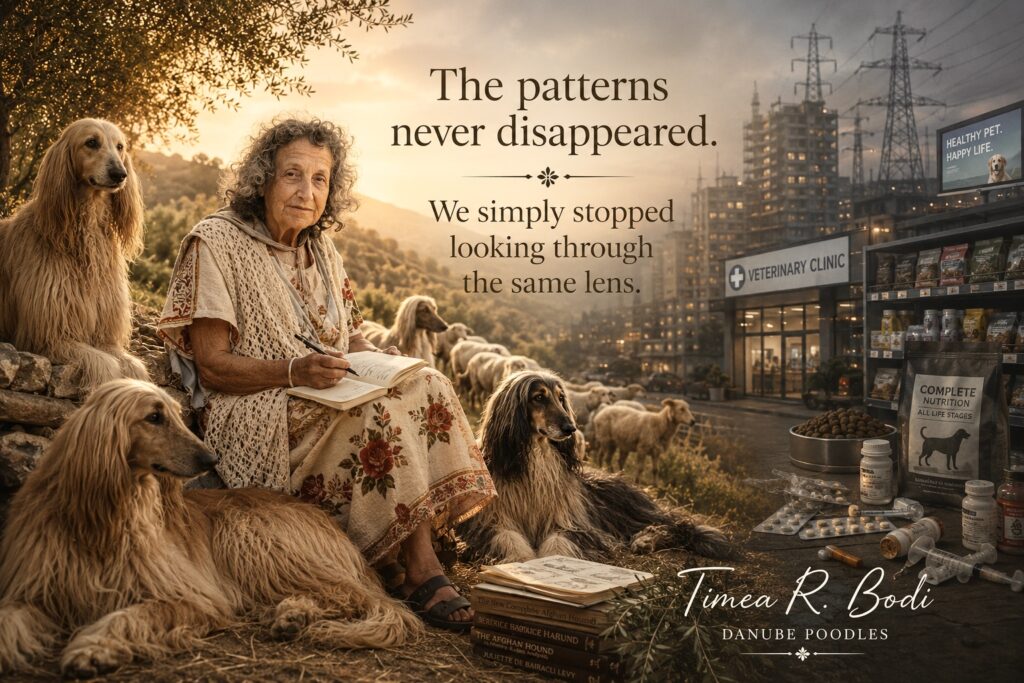
The patterns she observed never truly disappeared, nor did the biological principles governing vitality, resilience, fertility, digestion, recovery, and adaptation.
What changed was the lens through which those patterns were interpreted, as modern culture gradually shifted its attention toward management, intervention, and technological solutions, often overlooking the environmental and developmental influences that had once been considered impossible to ignore. ❤️🐾❤️


Leave a Reply