

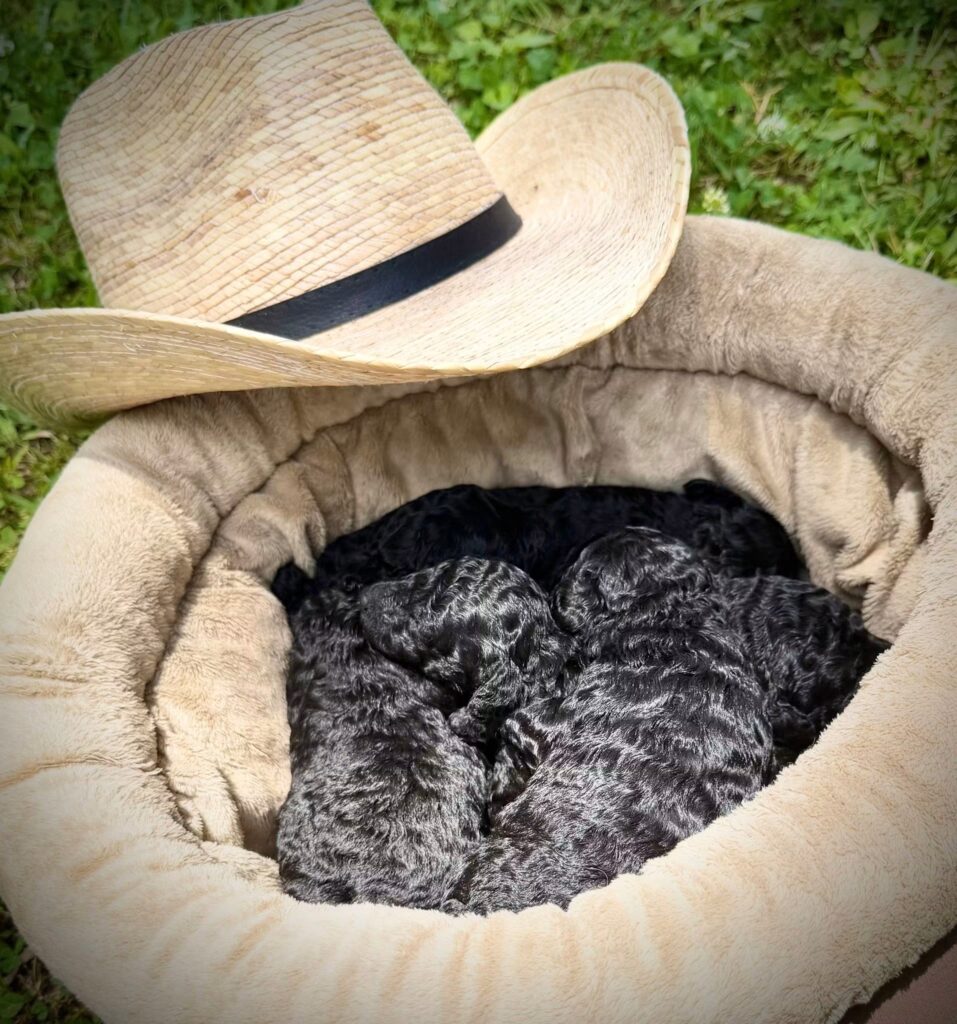
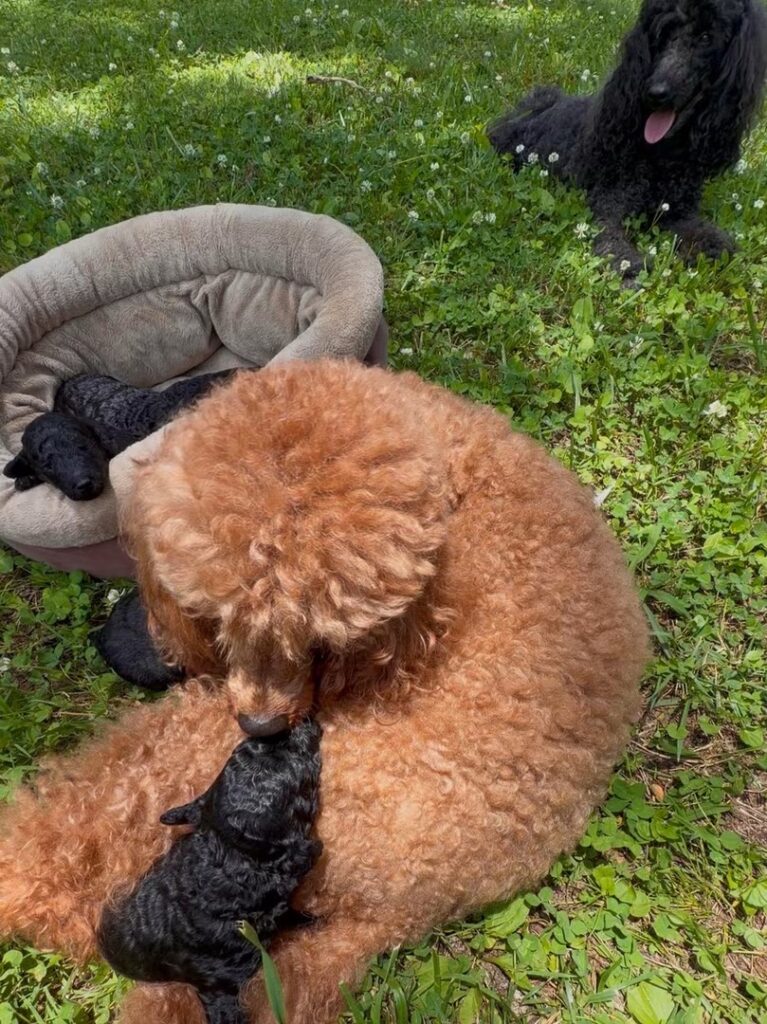
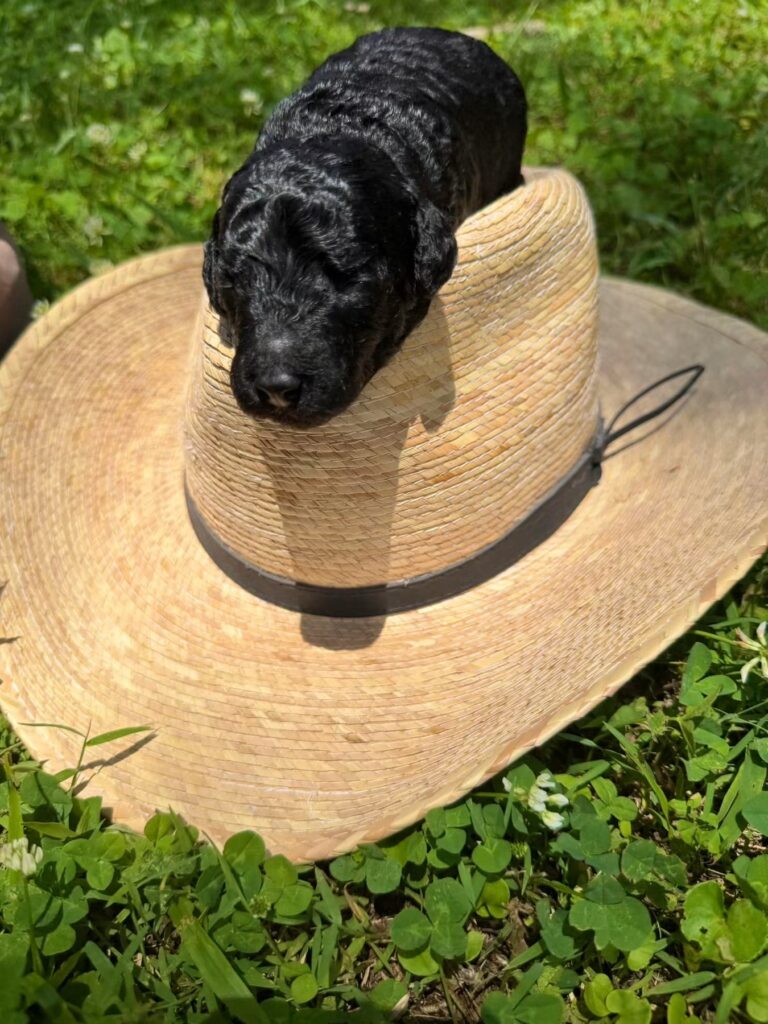
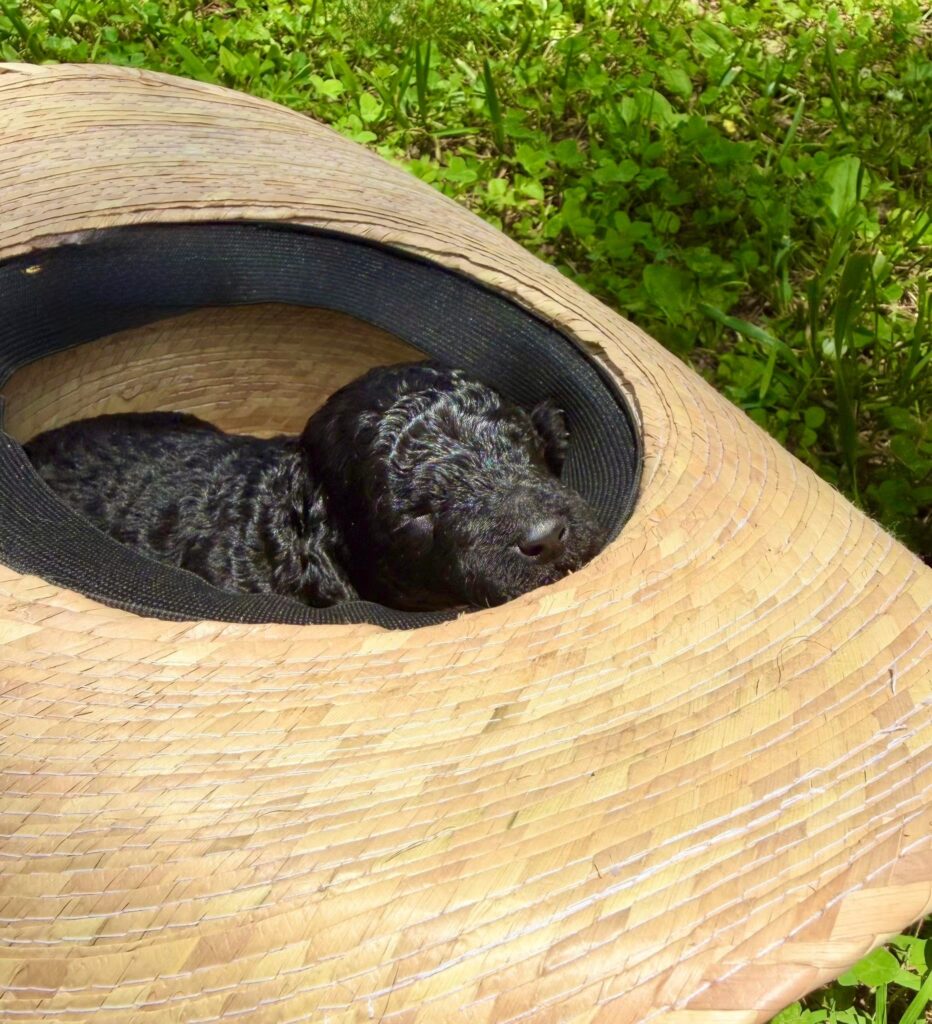
Yesterday I was standing in the puppy room watching five black Miniature Poodle puppies who are still far too young to do much of anything except sleep, nurse, and occasionally pile themselves into positions that seem physically impossible. Yet the moment Chianti settled down nearby, those tiny bodies suddenly transformed into determined little missiles. Eyes barely open, legs still figuring out their purpose, coordination largely optional, and somehow every single puppy knew exactly where Mom was. Watching them crawl across blankets, over siblings, and through whatever obstacles happened to be in the way, drawn toward her as reliably as a magnet finds steel, I found myself laughing because Poodles have a remarkable ability to reveal exactly who they are long before they ever step into a show ring.
That thought followed me out to the freezers, stayed with me while I carried food bowls through the yard, and continued rattling around in my head while the guinea fowl conducted another emergency broadcast regarding a threat that almost certainly did not exist.
What kept bothering me was a sentence from the breed standard, not because of the qualities it describes so clearly, but because of the assumptions it never bothers to make. The description presents “a very active, intelligent and elegant-appearing dog, squarely built, well proportioned, moving soundly and carrying himself proudly,” then simply stops, as though the reader already understands that these expectations apply to the breed itself rather than to a particular size. Nothing in that language suggests smaller dogs deserve allowances for poor structure, reduced athleticism, compromised movement, or weaker construction, nor does it imply that one variety should be admired primarily for appearance while another carries the responsibility for function. The standard describes a Poodle, leaving the height measurement to vary while the essential qualities remain exactly where they belong.
Over the years I have noticed a curious tendency within the dog world to lower expectations the moment a breed becomes smaller, as though a reduction in height somehow changes the requirements for sound anatomy, efficient movement, physical durability, or functional design. That reasoning has never made much sense to me. A Toy Poodle still depends upon the same principles of structure and biomechanics as any other dog. A Miniature does not become exempt from correct construction because it stands a few inches shorter, nor does a Standard gain exclusive ownership of athleticism by occupying more vertical space. The measuring wicket may record different numbers, but function remains function.
My years of teaching piano have probably shaped the way I think about questions like this because music has a way of exposing the difference between appearance and fundamentals. A young child sitting at the keyboard is still bound by the same principles that govern a concert pianist. Proper posture, balance, timing, coordination, and technique do not become optional because the hands are smaller or the piece is less demanding. The repertoire may change, the physical dimensions may differ, and the level of difficulty may vary, yet the foundational requirements remain exactly where they have always been. Dogs strike me much the same way. Sound structure, efficient movement, functional anatomy, and physical balance do not cease to matter simply because the dog occupies less space. Scale may change from one variety to another, but the underlying design remains remarkably consistent.
The longer I have participated in dog shows, breeding programs, veterinary medicine, nutrition, puppy evaluations, and all the countless conversations that happen around grooming tables and ringside chairs, the more convinced I become that we occasionally forget what the standard is actually describing.
Coat, presentation, color, grooming, and all the details that make spectators stop ringside tend to receive an extraordinary amount of attention, yet the sentence itself begins somewhere far more important by describing a dog possessing intelligence, balance, proportion, confidence, athletic ability, and the physical capacity to move efficiently throughout its life. That sequence strikes me as deliberate because the traditional trim was never intended to manufacture qualities that were absent; its purpose was to reveal qualities already present beneath the coat. Hair can enhance an outline, emphasize angles, and showcase condition, but it cannot create soundness where soundness does not exist, compensate for structural weaknesses, or produce balance that was never built into the dog in the first place. Those facts may occasionally be inconvenient in a world that often rewards appearance, but reality has never altered itself simply to accommodate convenience.
My Romanian side has never been particularly good at ignoring things that do not make sense. Once a question starts pulling at me, I usually keep following the thread until I find whatever is hiding underneath. After turning this particular sentence over from several directions, the conclusion that keeps emerging feels remarkably straightforward. The standard is not describing an ornament, a hairstyle, a presentation piece, or a carefully groomed decoration designed primarily to catch the eye. What it describes is a dog possessing athletic ability, intelligence, balance, sound construction, confidence, and the physical capacity to move through the world exactly as it was intended to move. Everything else, including coat, trimming, conditioning, and presentation, exists to support those qualities rather than substitute for them. Looking back over years spent in veterinary clinics, around grooming tables, inside show rings, studying pedigrees, evaluating litters, and living with Poodles every day, the individuals that remain most vivid in my memory were rarely the ones whose grooming impressed me the most.
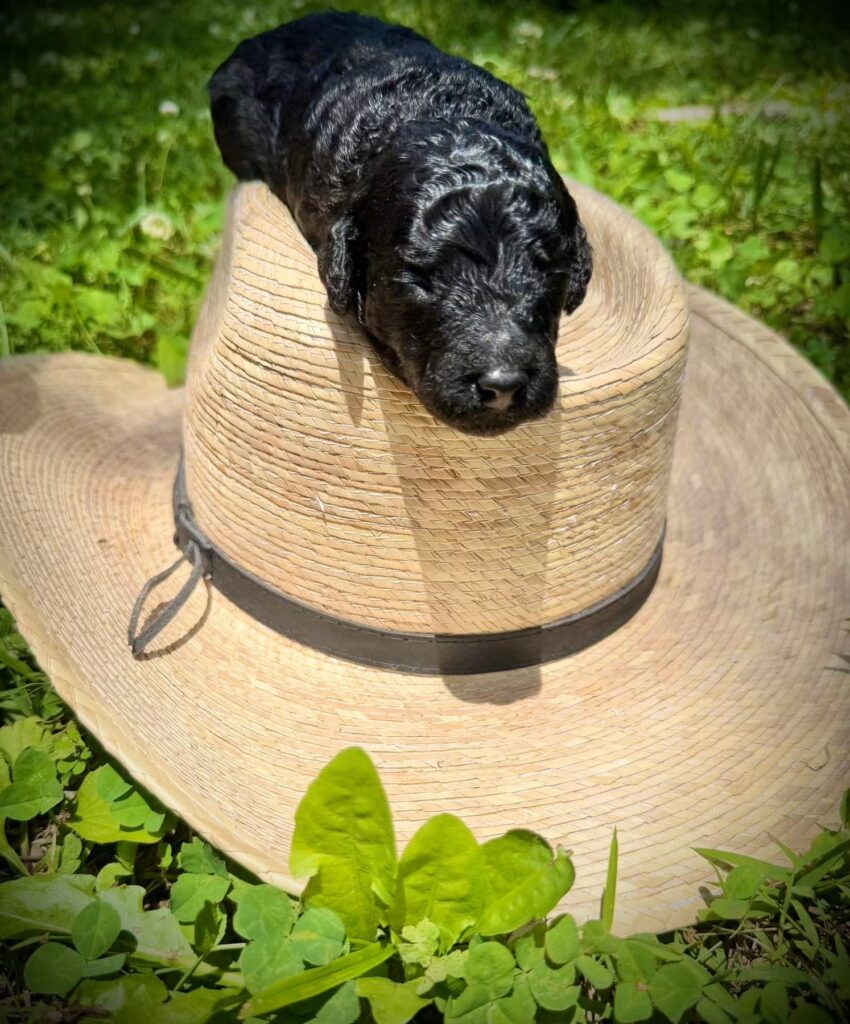
The dogs that stayed in my memory possessed a presence that extended far beyond appearance, carrying themselves with the kind of effortless confidence that comes from being built correctly, moving correctly, and existing exactly as they were intended to exist.
The dogs that stayed in my memory possessed a presence that extended far beyond appearance, carrying themselves with the kind of effortless confidence that comes from being built correctly, moving correctly, and existing exactly as they were intended to exist.
The longer I spend with Poodles, the more convinced I become that the writers of the standard understood something we occasionally forget.
Hair was never supposed to be the dog. Presentation was never supposed to replace function. Beauty was never supposed to come at the expense of soundness.
An athlete wrapped in elegance is what the standard describes, not an ornament wrapped in hair.
Those who wrote it knew exactly what they were trying to preserve.
Whether we still do remains an open question. ❤️🐾📌
P.S. Before the puppies accuse me of discussing breed standards without properly introducing them, I’ll mention that one black male from this litter is still looking for his future family. If you know someone searching for a well-bred Miniature Poodle raised with an emphasis on health, temperament, structure, and stewardship, applications are still being accepted. ❤️🐾


Leave a Reply