

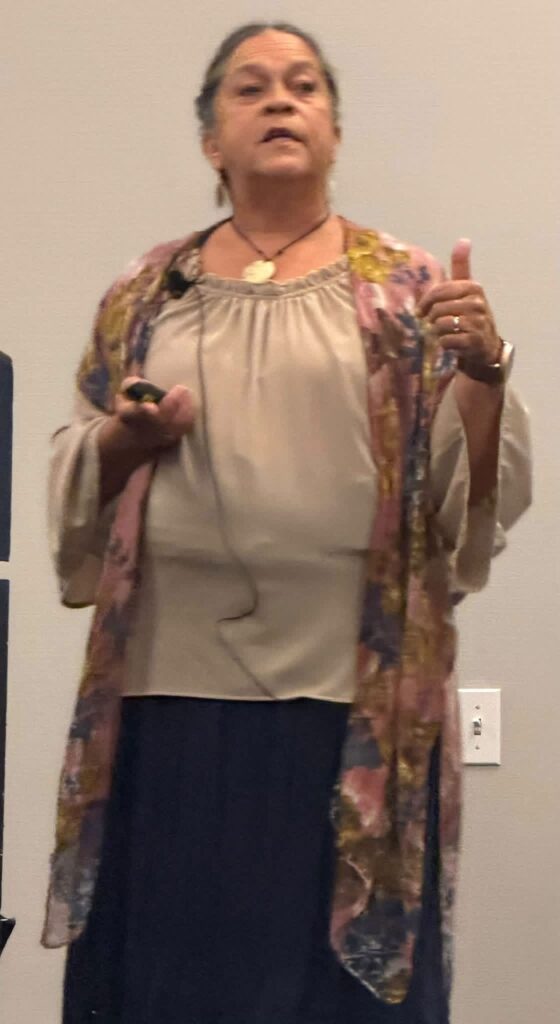
✈️ I am writing this on the airplane home from AHVMA, with a notebook that needs its own notebook, a phone that is threatening to become a veterinary textbook, and dogs at home who are probably wondering why I had to fly across the country to learn how to take better care of creatures who have already explained their priorities quite clearly: good food, plenty of outside time, and me staying where they can keep an eye on me. Fair enough, kids. But somewhere between genetics, chronic inflammation, the environment surrounding our cells, and photographs of animals whose families were trying desperately to find another way forward, Dr. P.J. Broadfoot’s lecture got me thinking about how much we can know about a disease and how much we can still overlook about the animal living with it.
Because once a dog has a diagnosis, that diagnosis can take over the whole conversation, and understandably so, especially when somebody says cancer and suddenly the room feels smaller and every decision feels like it needed to be made yesterday. We want to know what it is, how far it has gone, what can be done, and how much time we might have, but somewhere in the middle of all that fear and urgency there is still a dog who needs to eat, sleep, digest, move, recover, and feel safe, and whose body did not stop being a whole, connected, living body just because one part of it finally gave us something we could put a name on.
Dr. Paula Jo “P.J.” Broadfoot came to that conversation with a background that immediately got my attention, because before earning her veterinary degree, cum laude, from Kansas State University in 1981, she studied Animal Science and Industry with an emphasis on genetics. She established her practice in Van Buren, Arkansas, in 1982, has taught through the College of Integrative Veterinary Therapies, lectured internationally, and co-authored Integrating Complementary Medicine into Veterinary Practice. AHVMA honored her with the Carvel Tiekert Lifetime Achievement Award in 2023, and she delivered its fortieth-anniversary keynote in 2025. Her background also includes consulting for Heel and scientific review work for VetriScience, which is relevant context when we discuss products associated with this field, but what kept my attention in that room was hearing how she connected her thinking to patients she had followed through illness, setbacks, treatment changes, and years of life.
You know genetics was going to get the Poodle breeder in me sitting up a little straighter, because I spend a ridiculous amount of time thinking about dogs who have not even been born yet, studying the generations behind them and asking what I might be carrying forward, what I need to protect, and what I need to have the courage to change. But a puppy does not leave the whelping box and spend the next fifteen years living inside its pedigree. That puppy eats actual food, breathes actual air, experiences stress, gets infections, has injuries, develops muscle, loses muscle, grows older, and lives in whatever environment we provide, so while the inheritance matters enormously, there is a whole lifetime happening around it that deserves more than a passing mention when something goes wrong.
That was where Broadfoot’s discussion of the extracellular matrix started making sense to me beyond the fancy words, because the cells in our bodies have surroundings, too, and those surroundings help shape how tissues function. Think about the structure and material between cells, the collagen, elastin, other molecules, and interstitial fluid, and the relationships among circulation, lymphatic movement, nerves, immune activity, and repair. Broadfoot drew on work associated with Alfred Pischinger to bring attention to that environment, and although the lecture’s therapeutic interpretations need their own examination, the underlying question stayed with me: why would we look at a sick cell as though it lives alone, disconnected from everything around it?
We understand this perfectly well when we look at our dogs from the outside. Nobody seriously expects a puppy to thrive because it has good papers while ignoring what it is fed, whether it gets to move, how it rests, and what sort of life it is living, yet once disease develops we can become so absorbed in the visible problem that the rest of the picture starts slipping out of view. The rash gets the appointment, the diarrhea gets the prescription, the mass gets the scan, and all of those things may need exactly that attention, but who is stepping back and asking what else has changed, what keeps recurring, what the dog is struggling to recover from, and whether the plan is helping the animal as well as changing the symptom?
And before anybody hears that as an argument against relieving symptoms, goodness, no. A dog in pain needs relief, a dog struggling to breathe needs help, and dangerous inflammation does not become admirable because somebody calls it natural. What bothers me is when relief becomes the end of our curiosity, when the same problem keeps coming back and we keep getting it quiet without asking enough about why it keeps finding its way back into the conversation. There is nothing wrong with helping a dog feel better while investigating what is happening; in fact, that seems like a pretty reasonable job description for people who say they care about dogs.
Broadfoot used homotoxicology as one framework for thinking through chronic illness, describing the body’s responses to influences called homotoxins and moving through six phases: excretion, inflammation, deposition, impregnation, degeneration, and dedifferentiation or neoplasia. She discussed regulation, compensation, the “biological division,” and changes in disease expression, including concepts called vicariation and Hering’s law. Those are parts of that therapeutic model, rather than a proven sequence that every sick dog follows, but I could see why the framework encourages a practitioner to look at the history of an illness instead of treating every new symptom as an entirely separate event. The responsibility, of course, is to keep looking at what is actually happening in the patient, because a draining skin lesion still needs assessment and a new breathing problem still needs investigation, regardless of how neatly either one might fit somebody’s theory.
Her questions about treatment benefits and unwanted effects also deserve to stay in the conversation, because “we have always used this” ought to be the beginning of an explanation, not the whole explanation, whether we are talking about a medication, a supplement, or something somebody’s cousin swears cured her neighbor’s dog. What are we trying to accomplish, how will we know whether it is helping, what could go wrong, and when do we reconsider? Some of the statistics in the lecture needed more context than a slide could give them, and I am not going to turn an old human medical statistic or a collection of adverse-event reports into a sweeping verdict on veterinary medicine, but I will absolutely bring home the habit of asking what benefit the patient is getting and what the patient is paying for it.
That same care matters when we talk about immune disease, because Broadfoot discussed altered proteins, immune responses, medication-related influences, and research on antibodies following vaccination, subjects that can make people frightened before they have had time to understand what was actually measured. An antibody change is not automatically proof of clinical autoimmune disease, and it does not tell us by itself what caused an individual dog’s illness. I want those questions investigated seriously, with the dog’s genetics, infections, history, and actual clinical findings in view, because a frightened owner needs help making a thoughtful decision, and fear can make even a very complicated explanation feel deceptively simple.
Then we got into nanopharmacology, complex homeopathic preparations, and the idea that small amounts can influence biological processes, with musical and tuning-fork comparisons that, naturally, caught the piano teacher in me. I understand the appeal of thinking about coordination rather than simply turning up the volume, because an orchestra needs its parts working together, and anybody who has heard a beginner discover the sustaining pedal knows that more sound does not necessarily mean better music. But the comparison explains an intention; it does not settle the mechanism, and a low dose, a nanoparticle preparation, and an ultra-dilution need to be understood on their own terms. What is actually in the preparation matters, and so does the question of what it has been shown to do.
There was research to discuss, too, including human Vertigoheel trials, a cell-culture study involving Carcinosin, Phytolacca, Conium, and Thuja in human breast cancer cell lines, and a Lymphomyosot experiment in mice with melanoma. I want room for those findings to be examined, because dismissing a question before looking at it does not make us better thinkers, but a result in a dish or a mouse is still a starting point for further work, and a human vertigo trial answers a different question from whether a preparation helps a dog with cancer. For those of us loving an animal through serious illness, those distinctions are deeply personal, because we are trying to decide where to put our hope, our money, our time, and the days our dog has left, and we deserve enough clarity to understand what a finding can reasonably offer.
Autologous blood therapy, which Broadfoot called autosanguis, was a major part of her practical presentation, using the patient’s own blood with selected preparations and adjusting treatment according to the response. She described different approaches, routes, follow-up treatments, and take-home preparations, along with a rotating schedule involving names such as Hepar, Coenzyme, Solidago, Ubichinon, and Thyroidea compositum. Her memorable phrase was, “When in doubt, dilute the patient,” which certainly gives a person something to write in the notebook, but the details involved clinical work, and the lecture did not turn those combinations into a universal recipe. What interested me most was how she followed the animals and changed course when their responses changed, because any plan worth having needs room for the patient to tell us that something is helping, something is failing, or something else needs attention.
📖🐾 Here come the individual cases, and I have marked them so my peeps who want the patient stories can find them easily, while those who want to skip ahead can scroll down to 💚🐩 MY POODLES, MY TAKEAWAY. No homework police on this flight, I promise.
🐕🦴 DAISY: PAINFUL BONE DISEASE AND QUALITY OF LIFE
Daisy, an eight-year-old Irish Wolfhound with painful swelling around the tibia, brought that home in a particularly difficult way. The radiographs raised concern for osteosarcoma, but her family declined biopsy, so the diagnosis remained suspected, and Broadfoot reported another year of life after treatment, with a reduction in the mass during the first six months before changes in the bone brought increasing mechanical problems and pain. Daisy was described as alert and joyful, yet eventually euthanized because of that pain, and I kept thinking about how much a story like hers asks us to hold at once: the time with her family, the reported improvement, the uncertainty about the diagnosis, and the fact that the bone still became too painful to allow a comfortable life. Her joy mattered, and so did knowing when joy could no longer outweigh what her body was asking her to endure.
🐕🌿 GOODNESS: CHRONIC ILLNESS AND AN UNEVEN RECOVERY
Goodness, a mixed-breed dog with a history described as chronic ehrlichiosis, had another kind of story, with weakness, poor appetite, gastrointestinal distress, previous treatment, and a recovery that did not behave like a tidy little advertisement. Energy improved, vomiting developed, the plan changed, and activity continued to wax and wane, with setbacks after exertion or travel; later, longstanding skin lesions began draining dark, thick, odorous material, which Broadfoot interpreted within her inflammatory framework. What stayed with me was the unevenness of it, because anybody who has cared for a chronically ill animal knows the feeling of having a good day and desperately wanting it to mean that every day from there will be good. We need to notice improvement without asking it to promise more than it can, and we need to assess new problems without automatically deciding they are signs of healing.
🐕🦷 DUSTY: A JAW TUMOR AND YEARS OF FOLLOW-UP
Dusty had a large, locally invasive jaw mass, underwent debulking surgery, and received additional treatment, with follow-up reporting only slight growth over four years and a life that continued until euthanasia at fifteen; the pathology was acanthomatous epulis, associated with what is now commonly called canine acanthomatous ameloblastoma. Broadfoot described maintained weight and a dog who remained bright and active, with later difficulties involving an aging, degenerating hip, and that is the sort of detail that brings a patient back into the picture for me, because Dusty’s life involved more than what was happening in his jaw. The surgery and the tumor’s biology belong beside the additional preparations when we consider his outcome, but so do those years of living and the ability to keep doing the things that made life worthwhile to him.
🐕🔎 RUBY TUESDAY: A SMALL MELANOMA FOUND EARLY
Ruby Tuesday, a six-year-old Doberman, had a pigmented lesion discovered during a dental procedure, only three to four millimeters in size, which was surgically removed and found to have a low mitotic index and nonaggressive features. Her family chose additional biological therapy, and later follow-up reported no recurrence about eighteen months after excision, which is encouraging, but the size, pathology, and removal of that original lesion are essential to understanding the story. Ruby reminded me why looking carefully, finding something small, obtaining pathology, and following the patient matter so much, because “melanoma” alone does not tell us everything about the behavior of a particular tumor, and families need the details that help explain their own dog’s situation.
🐕🔥 KETCH: SERIOUS BURNS AND THE WORK OF HEALING
Ketch, a five-year-old Labrador with serious burns involving the face and limbs, brought the discussion into wound healing, with photographs documenting improvement over the weeks following a multimodal treatment plan. Those images were powerful, but burns involve much more than the appearance of the skin, because comfort, hydration, nutrition, infection control, mobility, and the depth of the injury all belong in the conversation. I could appreciate the healing Broadfoot documented while recognizing that photographs alone cannot tell us how much each part of the treatment contributed, and the case made me think again about how much work the entire body is doing when we are watching one visibly damaged area recover.
🐕🩺 CALLIE: FROM BEING CARRIED IN TO WALKING BACK THROUGH THE DOOR
Callie’s history included severe fever, wasting, neurological abnormalities, profound weakness, and an uncertain underlying diagnosis, and she arrived carried on a blanket, mostly unresponsive, after a month of illness and a discussion of euthanasia. Broadfoot described blood therapy and supportive products, but Sarcoptes was also identified and treated, followed by a heavy hookworm burden identified and treated, and those findings deserve their full place in the account of a dog who reportedly walked into the clinic five days after being carried in and continued gaining weight afterward. Whatever questions remain about the contribution of each treatment, there was an animal whose needs had to be investigated across the whole body, and the parasites were part of that body’s burden, too. The change in function was striking, and so was the reminder to keep looking for treatable problems when a patient arrives with a complicated, frightening history.
🐴🌱 GINGER: SKIN DISEASE, ITCHING, AND COMFORT
Ginger, a horse with skin problems involving the limbs, received a combination of preparations and topical treatment, with Broadfoot reporting reduced itching and sensitivity, roughly fifty percent improvement after four days, and a later owner report describing substantial changes in all four limbs. These were clinical observations and owner impressions, rather than standardized trial measurements, but I paid attention to what was being followed: appearance, sensitivity, and comfort. Anybody who has watched an animal struggle with persistent itching knows that the visible skin problem is only part of the experience, because being unable to settle comfortably has a way of taking over the rest of that animal’s day.
🐴🌬️ DOLLY: RESPIRATORY DISEASE AND THE NEED TO CHANGE COURSE
Dolly’s long history of cough and suspected heaves included earlier improvement followed years later by severe respiratory distress, and her later case was especially worth listening to because the slide said plainly that dexamethasone, antihistamines, and blood therapy had not changed that crisis. Broadfoot then described a further approach involving nebulized thymus extract and other preparations, with a later update stating that Dolly was still alive at twenty-five in 2025. A related mouse study involving a thymus-derived peptide was a research lead, rather than proof of that exact equine treatment, but keeping the failed treatments in Dolly’s history made the account more meaningful to me. When a patient is struggling, we need the honesty to say what has not worked so we can make the next decision with our eyes open.
🐕🐈 SUNNI AND BOO: PAIN, RECURRING SKIN PROBLEMS, AND UNANSWERED QUESTIONS
Sunni, the Australian Shepherd unable to rise because of acute lumbar pain, and Boo, the cat with recurring skin problems after repeated treatment, raised more questions about diagnosis and follow-up, while a human postoperative case broadened the presentation further. Sunni’s photographs captured moments after treatment without providing a complete neurological diagnosis, and the available history for Boo did not give enough follow-up to claim an outcome, but both cases kept bringing me back to the importance of asking what remains unresolved. Across the presentation, names such as Traumeel, Lymphomyosot, Coenzyme, Ubichinon, Engystol, Viscum, and various compositum preparations kept appearing, and I could have come home with a notebook full of products and still missed the part that mattered most to me: which changes were being followed, what the animal could do now that it could not do before, and where another examination, another test, or a change in treatment became necessary.
💚🐩 MY POODLES, MY TAKEAWAY
Because as a breeder, I cannot spend years saying longevity matters and then become interested only in the parts of health that fit on a certificate, and as someone caring for dogs through their entire lives, I cannot assume that getting a symptom quiet means I have understood everything I need to understand. Health testing matters, structure matters, temperament matters, and the inheritance we choose to carry forward matters, but so do food intake, digestion, dental health, muscle, movement, sleep, comfort, and the changes we notice because we know that dog well enough to recognize when something is off. None of those things gives us a guarantee against cancer or chronic disease, and I will never turn a sick dog into an accusation against the person who loves it, but they give us places to pay attention and questions we have a responsibility to keep asking.
I think about the families who trust us with a puppy and about the older dog that puppy will become, because loving the beginning is the easy part, even when it comes with sleepless nights and a washing machine working overtime. The harder part is continuing to look carefully when the answers get complicated, when the dog needs more care, when the treatment that helped last month is no longer enough, and when we have to make a decision that no amount of knowledge will make painless. I want veterinary care that takes those realities seriously, and I want to remain teachable enough to consider another question without becoming so excited about a new idea that I stop checking what it actually means for the dog in front of me.
Broadfoot gave me plenty to investigate, but the thought that followed me out of the room was the animal behind every photograph, because somewhere beyond each slide there had been a family watching a dog eat or refuse dinner, get up or fail to get up, sleep comfortably or pace through the night, and trying to figure out what the next good decision ought to be. That is where all our theories eventually have to meet real life, in the kitchen, beside the bed, on the clinic floor, with an animal whose experience cannot be reduced to the name of its disease.
My dogs will never read this post, which is probably fortunate because they would immediately point out that I could have used this time to think about their dinner, but they are the reason I keep showing up to learn. They are the reason a lecture about connective tissue turns into questions about breeding, aging, comfort, and responsibility, and the reason I want to understand both what a treatment might accomplish and what remains uncertain. So here I am, somewhere between San Diego and home, trying to make sense of too many slides while my notebook considers filing a workplace complaint, and looking forward to getting back to the dogs who make all this effort matter. I want to keep looking at the whole dog, through every diagnosis and every stage of the life I promised to care for. 💚🐾


Leave a Reply