

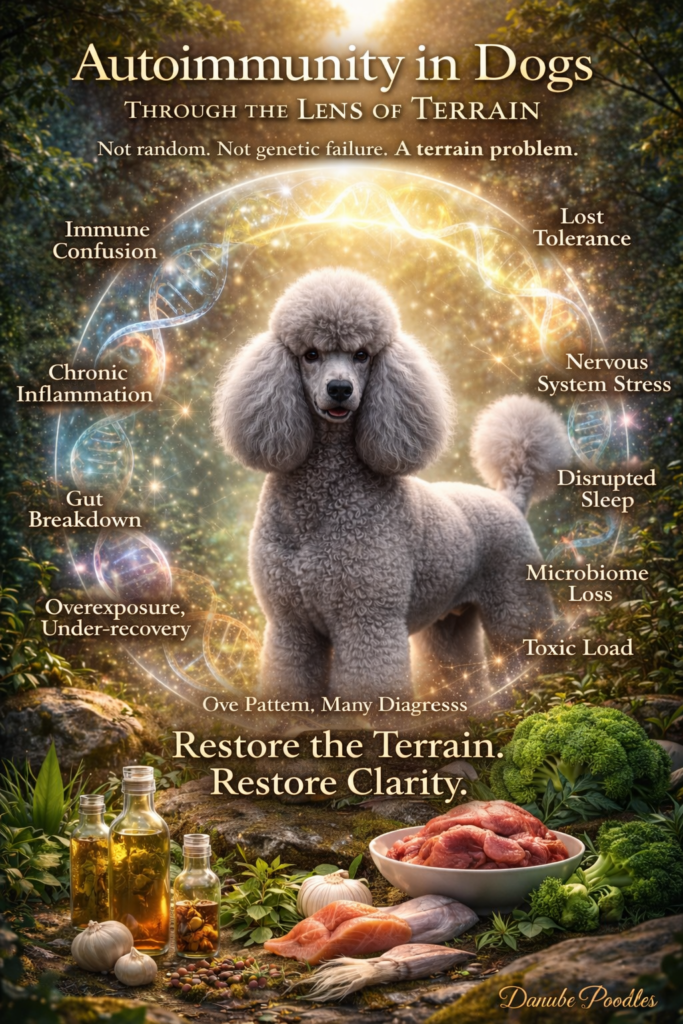
The Rising Pattern No One Wants to Name
Immune-mediated disease in dogs is no longer rare, nor is it random. It presents under different diagnostic labels, yet the underlying pattern continues to repeat with unsettling consistency. Dogs are being diagnosed with immune-mediated hemolytic anemia, immune thrombocytopenia, pemphigus, lupus-like syndromes, autoimmune thyroiditis, inflammatory bowel conditions with immune involvement, and chronic allergic states that slowly progress into deeper systemic dysfunction. The affected tissue changes from case to case, but the mechanism beneath it remains strikingly similar.
This rise is not the result of canine genetics suddenly deteriorating. Genetic shifts do not occur at the speed at which these conditions are appearing. What has changed is the internal and external terrain in which the canine body is expected to function. Food quality has shifted away from biological appropriateness. The microbial world has been reduced and sterilized. Chemical exposure has become constant. Sleep cycles have been disrupted. Stress has become normalized. The gut has been repeatedly challenged. The immune system has been interrupted, redirected, and often suppressed without resolution of the underlying imbalance.
The immune system does not become destructive without reason. It responds to signals. When those signals remain distorted long enough, the system begins to lose clarity. Protection becomes confusion. Response becomes overreaction. Recognition begins to fail.
𝑾𝒉𝒂𝒕 𝑨𝒖𝒕𝒐𝒊𝒎𝒎𝒖𝒏𝒊𝒕𝒚 𝑨𝒄𝒕𝒖𝒂𝒍𝒍𝒚 𝑰𝒔 𝒊𝒏 𝒂 𝑫𝒐𝒈
The immune system exists to distinguish between what belongs and what does not. This distinction, often referred to as immune tolerance, is developed through a complex process involving thymic education, antigen presentation, and regulatory signaling. In a healthy dog, immune cells are trained to recognize the body’s own tissues as self and to remain unresponsive to them, while still maintaining the ability to react to genuine threats.
Autoimmunity represents a failure of this tolerance. Immune cells that should have been silenced or eliminated remain active and begin targeting the body’s own structures. In dogs, this may manifest as destruction of red blood cells, platelets, skin structures, endocrine tissues, joints, or components of the nervous system. The specific tissue involved determines the diagnosis, but the deeper issue lies in the loss of immune discernment.
This failure does not occur in isolation. It is the result of accumulated signals that alter immune behavior over time. Molecular mimicry, epitope spreading, and bystander activation are recognized mechanisms through which immune responses initially directed at foreign targets begin to cross-react with self-tissues. These processes are not random errors but consequences of an environment that continually challenges immune regulation.
𝑻𝒉𝒆 𝑰𝒍𝒍𝒖𝒔𝒊𝒐𝒏 𝒐𝒇 𝑺𝒆𝒑𝒂𝒓𝒂𝒕𝒆 𝑫𝒊𝒔𝒆𝒂𝒔𝒆𝒔
Conventional frameworks separate immune-mediated conditions by the organ system affected. One dog is labeled with a blood disorder, another with a skin condition, another with thyroid dysfunction. This separation creates the impression of distinct diseases rather than expressions of a shared underlying disturbance.
In reality, these conditions often cluster. A dog with chronic allergies may later develop gastrointestinal instability. A dog with long-standing digestive disruption may begin to show dermatological issues. Over time, the same animal may move through multiple diagnoses as the terrain continues to deteriorate. The pattern reflects a single system losing stability rather than multiple unrelated failures.
Addressing the terrain shifts the focus away from isolated symptoms and toward the environment that allowed immune tolerance to collapse. This approach recognizes that restoring balance upstream has the potential to influence multiple conditions simultaneously.
𝑻𝒉𝒆 𝑮𝒖𝒕 𝒂𝒔 𝒕𝒉𝒆 𝑪𝒆𝒏𝒕𝒆𝒓 𝒐𝒇 𝑰𝒎𝒎𝒖𝒏𝒆 𝑰𝒏𝒔𝒕𝒓𝒖𝒄𝒕𝒊𝒐𝒏
A significant portion of immune activity resides in and around the gut. The intestinal lining functions as both a physical barrier and an immunological interface. It allows nutrients to pass into circulation while preventing larger particles, microbial toxins, and inflammatory compounds from entering the body.
When this barrier is compromised, intestinal permeability increases. Substances that should remain contained begin to cross into systemic circulation, where they encounter the immune system. Partially digested proteins, bacterial fragments, and endotoxins stimulate immune responses that may become chronic if exposure persists.
This process creates the conditions necessary for molecular mimicry. Proteins from food or microbes may share structural similarities with the dog’s own tissues. Once the immune system is primed against these external proteins, cross-reaction with self-tissue becomes possible. The gut is not merely involved in immune function; it is often where the first signals of immune confusion originate.
𝑮𝒆𝒏𝒆𝒕𝒊𝒄𝒔 𝒂𝒔 𝑺𝒖𝒔𝒄𝒆𝒑𝒕𝒊𝒃𝒊𝒍𝒊𝒕𝒚, 𝑵𝒐𝒕 𝑫𝒆𝒔𝒕𝒊𝒏𝒚
Certain dogs carry genetic variations that increase susceptibility to immune dysregulation. These may involve differences in antigen presentation, detoxification capacity, endocrine resilience, or inflammatory signaling. These genetic factors influence vulnerability but do not guarantee disease.
The expression of these genes depends heavily on environmental input. Many dogs with genetic susceptibility never develop autoimmune conditions because the triggers required to activate that susceptibility are absent or minimized. Others encounter repeated exposures that gradually shift the terrain toward instability.
Genetics provide the blueprint, but the environment determines how that blueprint is read. The presence of risk does not dictate outcome. It defines where attention must be placed.
𝑴𝒊𝒄𝒓𝒐𝒃𝒊𝒂𝒍 𝑫𝒆𝒑𝒓𝒊𝒗𝒂𝒕𝒊𝒐𝒏 𝒂𝒏𝒅 𝑰𝒎𝒎𝒖𝒏𝒆 𝑴𝒊𝒔𝒆𝒅𝒖𝒄𝒂𝒕𝒊𝒐𝒏
The immune system develops its regulatory capacity through interaction with a diverse microbial environment. Early exposure to bacteria, soil organisms, environmental microbes, and maternal microbiota plays a critical role in shaping immune tolerance.
Modern canine lifestyles often limit this exposure. Sterile indoor environments, reduced contact with natural elements, frequent use of antimicrobial products, and disrupted maternal microbial transfer alter the development of the microbiome. A less diverse microbiome provides fewer signals for regulatory immune pathways, particularly those involving T regulatory cells.
This reduced microbial education can result in an immune system that is more reactive and less capable of distinguishing between harmless and harmful stimuli. The absence of appropriate exposure does not protect the immune system; it leaves it untrained.
𝑬𝒏𝒗𝒊𝒓𝒐𝒏𝒎𝒆𝒏𝒕𝒂𝒍 𝑻𝒐𝒙𝒊𝒄 𝑳𝒐𝒂𝒅
The modern environment introduces a wide range of compounds that the canine body was not designed to process. Pesticides, herbicides, synthetic chemicals, heavy metals, mold toxins, and pharmaceutical residues contribute to a cumulative burden that affects multiple physiological systems.
These compounds can disrupt gut integrity, alter microbial balance, interfere with endocrine signaling, and increase inflammatory activity. The immune system responds to this burden by increasing vigilance and activity, which over time may contribute to dysregulation.
Detoxification pathways become overwhelmed when exposure exceeds capacity. The result is a state of persistent inflammation in which immune tolerance becomes increasingly difficult to maintain.
𝑺𝒕𝒓𝒆𝒔𝒔 𝒂𝒏𝒅 𝒕𝒉𝒆 𝑰𝒎𝒎𝒖𝒏𝒆-𝑵𝒆𝒓𝒗𝒐𝒖𝒔 𝑺𝒚𝒔𝒕𝒆𝒎 𝑪𝒐𝒏𝒏𝒆𝒄𝒕𝒊𝒐𝒏
The relationship between the nervous system and the immune system is direct and continuous. Chronic stress alters cortisol dynamics, which in turn affects immune signaling. While acute stress responses may temporarily suppress inflammation, prolonged stress leads to dysregulation, including cortisol resistance and increased inflammatory activity.
Dogs experience stress through environmental instability, emotional tension within the home, confinement, overstimulation, lack of rest, social disruption, and physical discomfort. These factors influence gut function, microbiome composition, and immune behavior.
A nervous system that remains in a state of activation cannot support proper immune regulation. Healing requires conditions that allow the body to shift into a state of safety and repair.
𝑺𝒍𝒆𝒆𝒑 𝒂𝒏𝒅 𝑪𝒊𝒓𝒄𝒂𝒅𝒊𝒂𝒏 𝑹𝒆𝒈𝒖𝒍𝒂𝒕𝒊𝒐𝒏
Immune function relies on circadian rhythm. Processes such as cytokine regulation, cellular repair, and hormonal balance occur during periods of rest. Disruption of sleep patterns interferes with these processes and contributes to inflammatory imbalance.
Dogs require consistent cycles of activity and rest, exposure to natural light, and an environment that supports uninterrupted sleep. Artificial lighting, irregular schedules, and constant stimulation disrupt these rhythms and place additional strain on immune regulation.
Sleep is not passive recovery. It is an active and necessary component of immune balance.
𝑵𝒖𝒕𝒓𝒊𝒕𝒊𝒐𝒏𝒂𝒍 𝑭𝒐𝒖𝒏𝒅𝒂𝒕𝒊𝒐𝒏𝒔 𝒐𝒇 𝑰𝒎𝒎𝒖𝒏𝒆 𝑻𝒐𝒍𝒆𝒓𝒂𝒏𝒄𝒆
Immune regulation depends on adequate nutritional input. Essential nutrients support cellular signaling, antioxidant defenses, enzyme function, and tissue repair. Deficiencies impair these processes and contribute to dysregulation.
Bioavailable nutrients such as zinc, selenium, magnesium, retinol, vitamin D, omega-3 fatty acids, and B vitamins play critical roles in maintaining immune tolerance. These nutrients are most effectively obtained from species-appropriate, minimally processed food sources, including organ meats, connective tissues, and whole prey.
A diet that provides calories without sufficient micronutrient density fails to support the immune system at the level required for proper regulation.
𝑻𝒉𝒆 𝑫𝒊𝒆𝒕𝒂𝒓𝒚 𝑻𝒆𝒓𝒓𝒂𝒊𝒏 𝒊𝒏 𝑫𝒐𝒈𝒔
Food influences immune behavior directly. Diets that are highly processed, repetitive, or composed of low-quality ingredients contribute to inflammation and reduce microbial diversity. In contrast, diets that align with the biological needs of the dog support digestive integrity and immune balance.
A terrain-focused approach emphasizes fresh, species-appropriate nutrition, appropriate protein sources, and the inclusion of nutrient-dense components that support overall physiology. The goal is not only to remove inflammatory inputs but to provide the materials necessary for repair and regulation.
𝑻𝒉𝒆 𝑹𝒐𝒍𝒆 𝒐𝒇 𝒕𝒉𝒆 𝑮𝒖𝒕 𝒊𝒏 𝑹𝒆𝒄𝒐𝒗𝒆𝒓𝒚
Restoring gut integrity is central to reestablishing immune tolerance. This process involves removing ongoing irritants, supporting the intestinal lining, and rebuilding microbial diversity. It also requires addressing the nervous system, as gut function is closely tied to parasympathetic activity.
When the gut begins to heal, the signals reaching the immune system change. Reduced exposure to inflammatory compounds allows regulatory mechanisms to regain influence, gradually restoring balance.
𝑰𝒏𝒕𝒆𝒈𝒓𝒂𝒕𝒊𝒏𝒈 𝑴𝒆𝒅𝒊𝒄𝒂𝒍 𝒂𝒏𝒅 𝑻𝒆𝒓𝒓𝒂𝒊𝒏-𝑩𝒂𝒔𝒆𝒅 𝑨𝒑𝒑𝒓𝒐𝒂𝒄𝒉𝒆𝒔
In cases where immune-mediated disease is actively causing tissue damage, medical intervention may be necessary to prevent immediate harm. Immunosuppressive therapies can reduce acute destruction and stabilize the patient.
However, these interventions do not address the terrain that contributed to the development of the condition. Without changes to the underlying environment, the factors driving immune dysregulation remain in place.
An integrated approach considers both immediate management and long-term restoration. Medical support may be used when necessary, while terrain-based strategies work to rebuild the conditions required for immune tolerance.
𝑻𝒉𝒆 𝑪𝒆𝒏𝒕𝒓𝒂𝒍 𝑹𝒐𝒍𝒆 𝒐𝒇 𝒕𝒉𝒆 𝑵𝒆𝒓𝒗𝒐𝒖𝒔 𝑺𝒚𝒔𝒕𝒆𝒎 𝒊𝒏 𝑯𝒆𝒂𝒍𝒊𝒏𝒈
The nervous system regulates immune activity through direct signaling pathways, including the vagus nerve. Increased vagal tone supports anti-inflammatory processes and enhances immune regulation. Reduced vagal activity is associated with increased inflammatory signaling.
Practices that support nervous system balance, including consistent routine, environmental stability, natural exposure, and emotional regulation, contribute to improved immune function. Healing is not limited to physical interventions; it requires addressing the full spectrum of physiological regulation.
Final Perspective
The immune system is not inherently flawed. It adapts to the environment it is placed in. When that environment becomes incompatible with biological design, the system begins to respond in ways that appear pathological but are rooted in confusion rather than malfunction.
Restoring the terrain changes the signals the immune system receives. This process is gradual and requires consistency, but it aligns with the fundamental biology of the organism.
The goal is not to silence the immune system but to help it regain clarity. When the environment supports regulation, the system can return to its original role.
Protection, not self-destruction. ❤️🐾❤️


Leave a Reply